










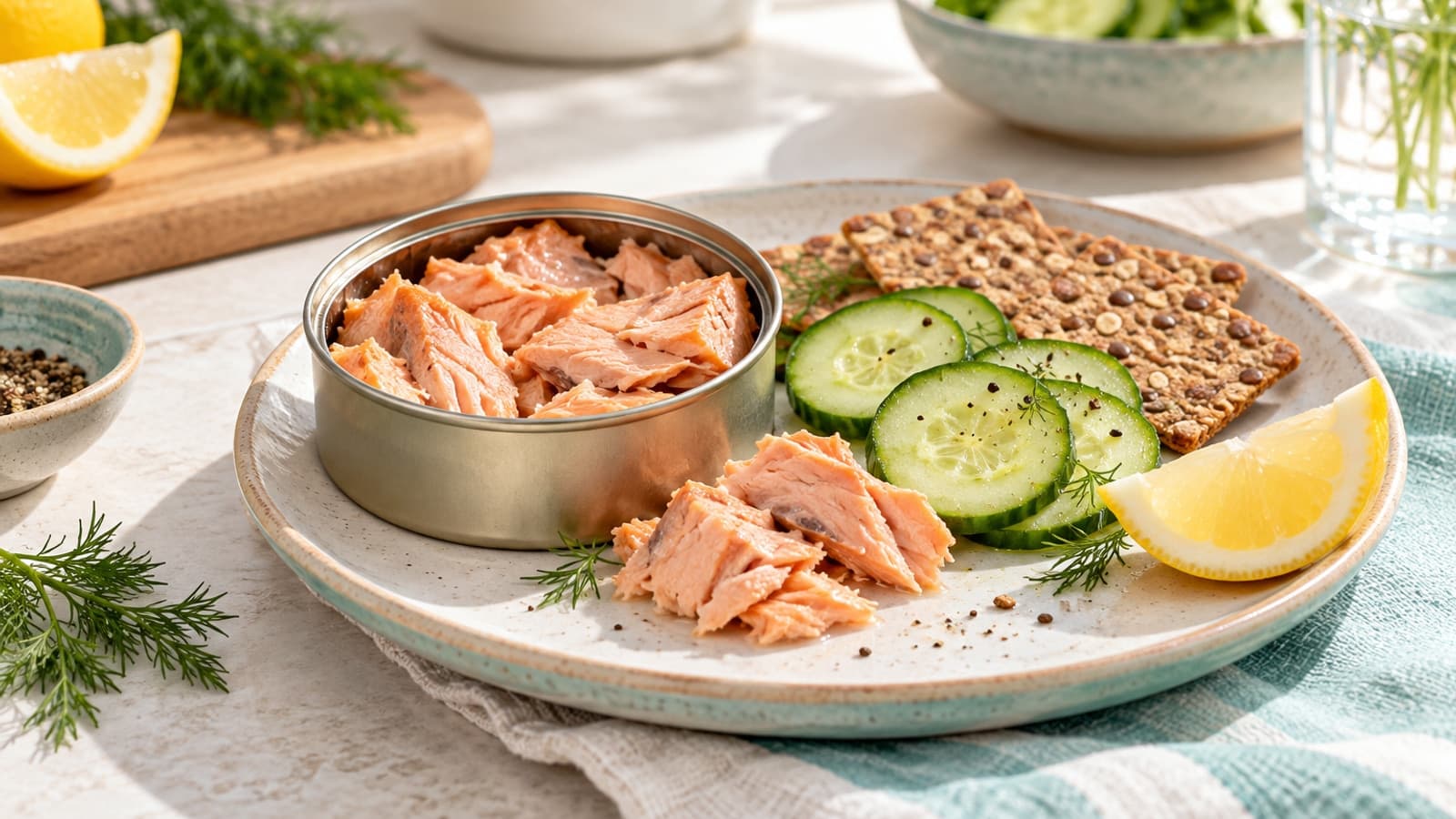
A tin of fish can turn crackers, rice or toast into lunch without much cooking. The tricky part comes at the shelf: light tuna, white tuna, salmon, sardines, water-packed, oil-packed. Which one should you take home?
Start with the flavor you like, then check the fish itself and what’s in the can. The type of fish matters more than the shape of the can.
Pick a fish you’ll enjoy
Canned salmon can be mixed with a little yogurt or mayonnaise for a sandwich, or added to a rice bowl. Some varieties include soft bones and skin; read the package if you prefer a particular texture. Sardines have a stronger flavor and can be served on toast or with crackers and lemon.
Tuna comes in several forms. Canned light tuna and albacore, also called white tuna, are different choices. If you like one more than the other, that matters. It’s also useful to know that albacore typically has more mercury than canned light tuna.
Try a small can before stocking the pantry. You might prefer fish packed in water for one meal and oil for another. Seasoned pouches can be handy, but their ingredients and flavorings differ; read the label if you have an allergy or need to avoid a particular ingredient.
Fish itself is an allergen. If you have a fish or seafood allergy, follow your own care plan and check with your clinician about what is safe for you. Don’t rely on the front of a package to identify every ingredient.
Keep mercury in mind
Salmon, sardines and canned light tuna are among lower-mercury choices. Albacore or white tuna falls into a category that should be eaten less often by people who are or might become pregnant or are breastfeeding.
For those adults, current guidance uses a four-ounce serving and suggests two to three servings a week from lower-mercury “best choices,” or one serving from the “good choices” category, such as albacore, with no other fish that week. Guidance for children uses smaller amounts that vary by age. If you’re choosing for a child or need advice for your own circumstances, ask a qualified clinician or dietitian.
You don’t have to memorize the mercury category of every fish while standing in the aisle. Varying the type you buy and checking the species can be a helpful start.
Compare the rest of the label
Look at the serving size, sodium and any added sauce or seasoning. Two cans of the same size can have different ingredients and amounts of sodium. If you drain the liquid, the food you actually eat may differ from the portion described on the label; don’t assume an exact change without information for that product.
Compare the price of the amount you expect to use, too. A larger can may be economical for a household that will finish it, while a smaller tin can be convenient for one lunch. Choose the size that fits your budget and storage plan.
Give an open can a plan
Unopened shelf-stable tins belong in a cool, dry place; follow the package if it says otherwise. Avoid cans that are bulging, leaking, rusted or badly damaged. Once opened, transfer the fish to a covered food-safe container, refrigerate promptly and follow the package’s directions for use.
Try salmon with cucumber and crackers, sardines on toast, or a little tuna mixed into a warm rice bowl. These are flexible meal ideas, not portions you must finish. If your appetite is smaller on a GLP-1, start with an amount that feels comfortable and add more if you’re hungry.
For a broader conversation about protein, our guide to discussing your needs with a dietitian can help you prepare. Keep the fish you like on hand and lunch is already partway there.