










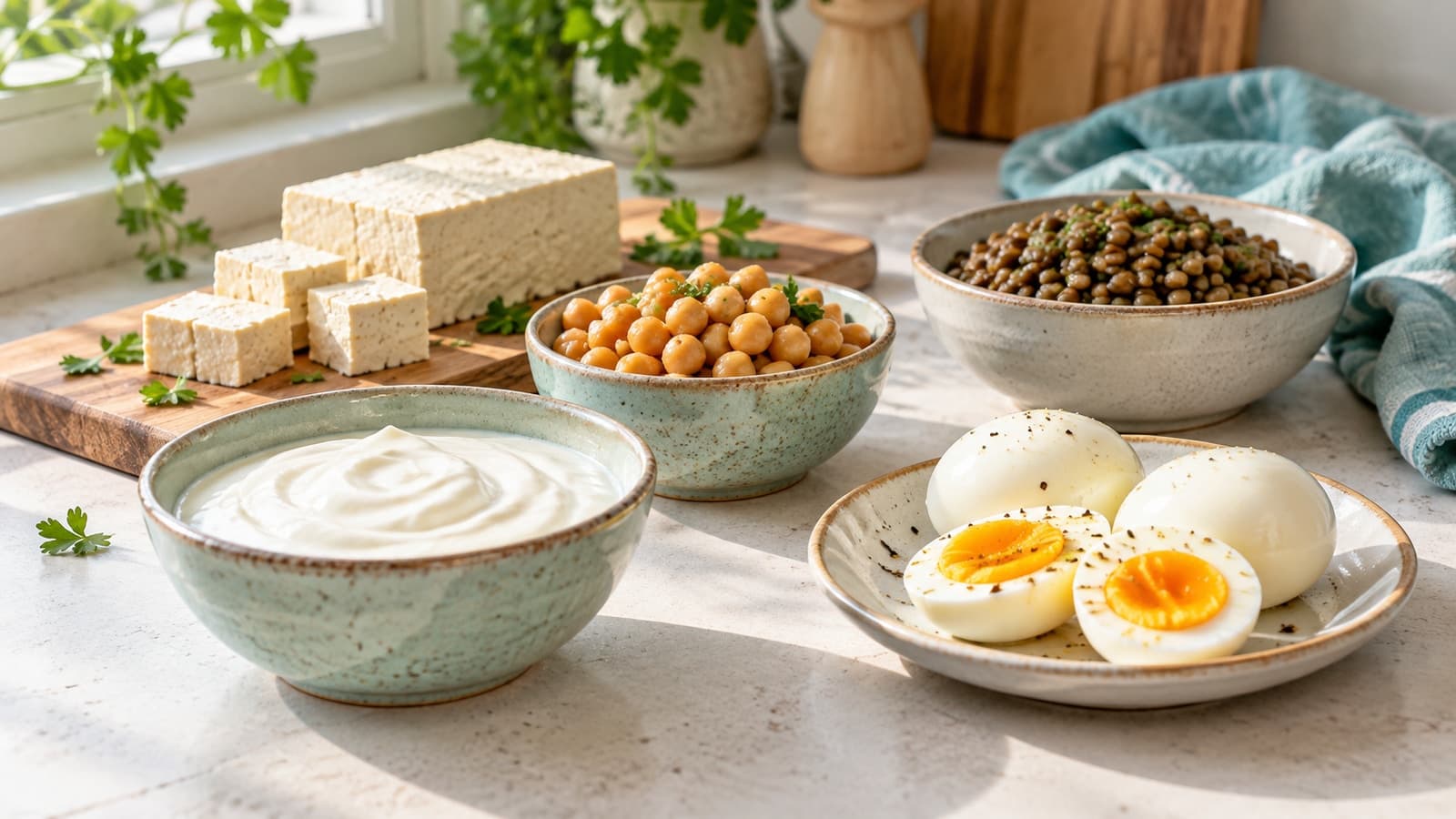
If you’re taking a GLP-1, you’ve probably seen plenty of advice to “eat more protein.” That can leave out the part you actually need: how to make it work when you feel satisfied after less food.
Protein is one part of a nourishing diet. It matters for muscle and other body tissues, but there isn’t one daily target that fits every reader. Your age, activity, health conditions, body size, and overall intake all belong in that conversation.
Start with what you already eat
Look at a typical day before buying anything new. Does breakfast include yogurt, milk, eggs, tofu, or another protein food? Does lunch have beans, lentils, fish, poultry, or an equivalent option? Is dinner mostly a starch because that’s the easiest thing to prepare?
This isn’t a scorecard. It helps you spot one useful change. You might add an egg to toast, include tofu in a rice bowl, or put beans into soup. If a food doesn’t agree with you, there are other options.
Make the portion comfortable
A very large serving can feel like too much when appetite is low. Smaller amounts across several eating opportunities may be more practical. For example, yogurt at breakfast and beans at lunch can spread the task across the day.
Texture and preparation matter too. Some people find softer foods easier to manage than a dry piece of meat. A lentil soup, scrambled eggs, or a moist fish dish may sound more appealing. Choose according to your own comfort, allergies, and dietary needs.
Avoid letting protein crowd out everything else. Fruit, vegetables, grains, fats, and fluids still have roles. A dietitian can help you balance the whole pattern rather than chase a number in isolation.
Ask for a target that has a reason behind it
Useful questions include:
- How much protein is appropriate for my health and activity level?
- Does kidney disease or another condition change that advice?
- Can we work out a few meal combinations using foods I like?
- What should I do if I’m regularly unable to eat enough?
- Would a supplement solve a real gap, or would ordinary food work?
Bring a couple of days of meal notes if that feels manageable. They don’t have to be weighed or perfectly measured to make the discussion useful.
Pair the food plan with movement
Protein alone isn’t a complete muscle-preservation plan. Appropriate strength activity and enough overall nourishment also matter during weight change. If exercise is new to you, ask about a comfortable starting routine.
For now, choose one meal where a protein food is usually missing and try a simple addition. Build from what you can eat consistently, then use professional guidance to tailor the details.