










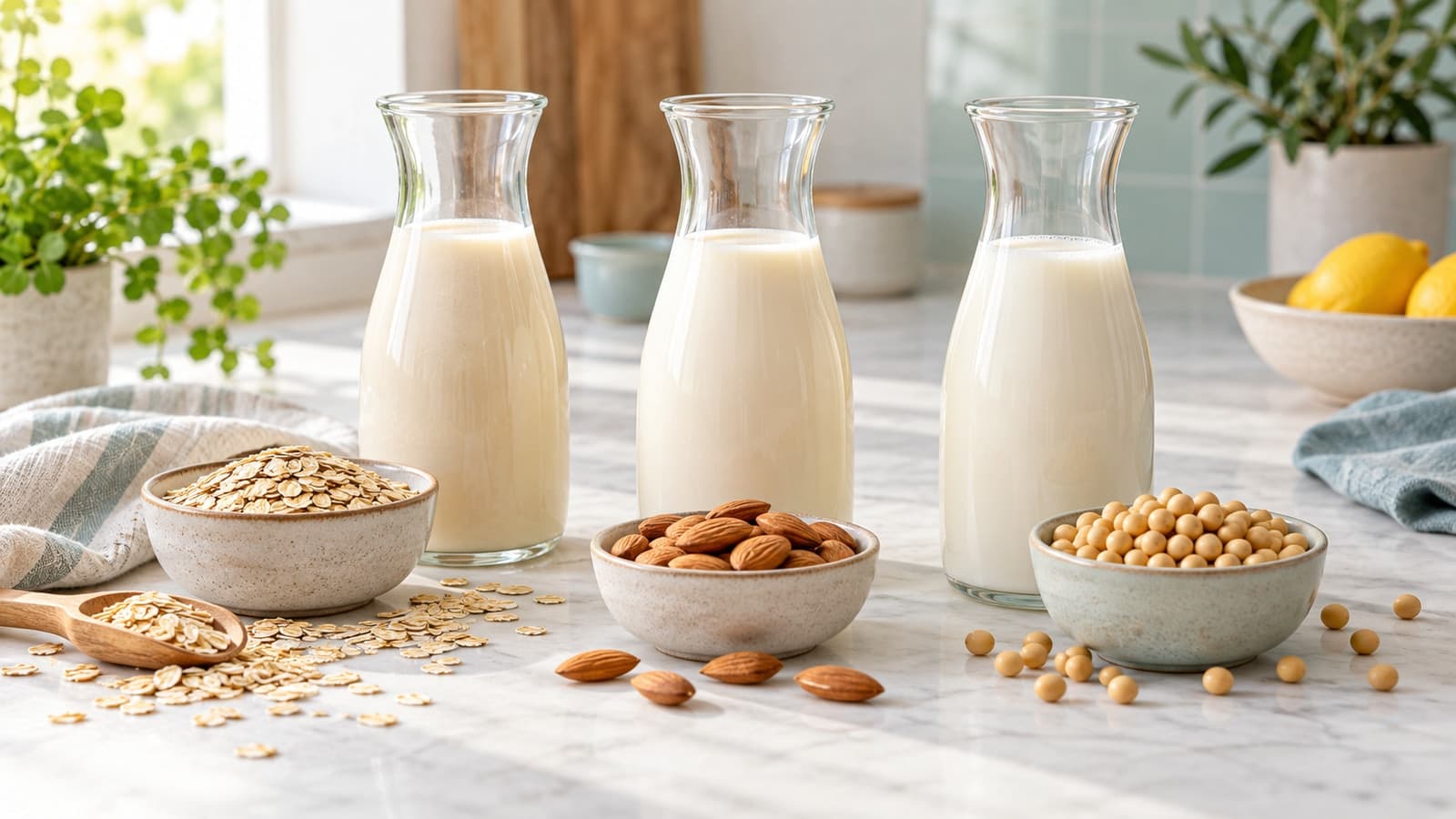
You reach for a carton of plant-based milk and find yourself choosing among soy, oat, almond, pea and several versions of each. Some promise a creamy coffee; others advertise protein or added vitamins. Which one belongs in your refrigerator?
Start with how you'll use it, then turn the carton around. The front of the carton won’t tell you the whole story.
Compare protein for the amount you pour
Plant-based drinks are not nutritionally identical. Protein depends on the ingredients and the particular product, so check the Nutrition Facts panel rather than guessing from the name.
For a concrete example, when we checked three manufacturer labels in October 2026, one unsweetened soy drink listed 8 grams of protein per cup, one original oat drink listed 3 grams, and one unsweetened almond drink listed 1 gram. Those are three specific products, not fixed numbers for their entire categories. Formulas change; use the label on the carton you buy.
Also compare serving sizes. If a label gives values for a cup but you add only a splash to coffee, you'll get a fraction of that amount. If the drink is the base of breakfast, the protein difference may matter more to you.
A lower-protein drink can still be a choice you enjoy. You might simply pair it with another protein food, such as eggs, yogurt or tofu, if those fit your needs and preferences.
Look for calcium and vitamin D
Some plant drinks have nutrients added, while others don't. Look for calcium and vitamin D on the Nutrition Facts panel, especially if the drink regularly takes the place of dairy in your meals.
Products within the same category can differ. A short ingredient list or a familiar flavor doesn't tell you whether a carton is fortified. Check the actual label, including the serving size, and consider what else you eat across the day.
If you're unsure whether your usual diet provides enough of a particular nutrient, a dietitian can help you look at the whole pattern rather than relying on a single drink.
Match it to the kitchen job
Taste and texture are practical concerns, not afterthoughts. One drink may taste good cold but separate in hot coffee. Another may be pleasant in oatmeal but too sweet for a savory sauce.
If you plan to cook with it, consider an unsweetened, unflavored version. For a latte, you may prefer a product made for frothing. Try a small carton first if you're experimenting; a bargain isn't much help if the rest sits untouched.
Compare added sugars if that matters for your meal. Vanilla, chocolate and original versions can differ, and “original” doesn't necessarily mean unsweetened. The Nutrition Facts panel makes the comparison clearer than the color of the packaging.
Check allergies and storage
Choose around your own allergies. A soy drink contains soy, and an almond drink contains almonds; blends may include more than one ingredient you need to avoid. Read the ingredient and allergen information on the specific product each time you shop if you manage a food allergy.
Shelf-stable and refrigerated cartons may have different storage instructions. Follow the package directions before and after opening, and check how long the drink should be kept once opened.
If you use only a little at a time, a smaller carton may lead to less waste even when the larger one costs less per ounce. Compare the price with how much you're likely to finish before it should be discarded.
If you're eating less on a GLP-1, the drink you choose can be one small part of making meals enjoyable and useful. Our guide to vegetarian and vegan eating has more ideas for the rest of the day.
A carton that tastes good, fits your budget and offers the nutrients you're looking for is a useful place to start.