










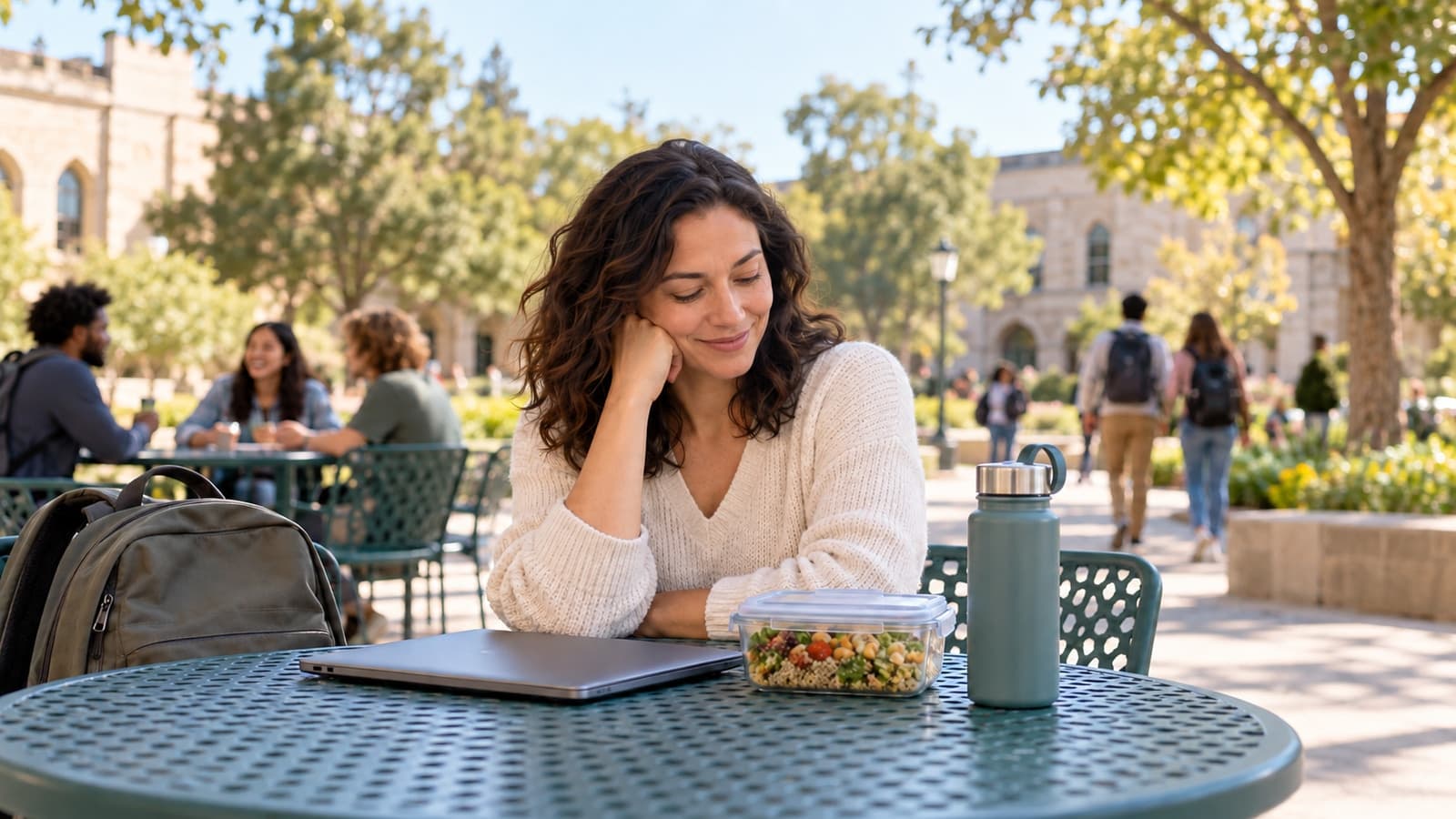
Your first class starts at nine. The next one is across campus, the bus home leaves at four, and somewhere in the middle you’re supposed to find lunch.
Going back to school as an adult often means fitting study around work, family and a commute. If a GLP-1 has changed your appetite, a plan that travels with you can be more useful than hoping the perfect break appears.
Read the day before packing
Start with the timetable in your bag. Which classes run back-to-back? Is there a genuine break, or just ten minutes to cross the building? Check when the cafeteria is open and whether you’ll have access to a refrigerator, microwave or drinking-water refill.
Choose one likely meal break and a backup for a delayed bus, an extra lab or a class that runs long. You might have breakfast at home, eat a packed lunch between lectures and keep a shelf-stable snack for the ride back. On another day, an evening class may call for a different arrangement.
If your appetite is smaller than it used to be, food divided into separate containers can be easier to use across the day. A sandwich half, fruit and a yogurt, for example, give you choices without requiring you to finish everything in one sitting. Refrigerated foods need a reliable way to stay cold.
Pack for your actual backpack
An insulated lunch bag with cold packs can help protect perishable food. Keep it closed, and use a small food thermometer when you need to check that it stays at 40°F or below. If the trip is long and you cannot keep lunch cold, select food that is safe unopened at room temperature instead.
A ready-to-eat bean pouch, crackers with a nut or seed butter that suits your needs, and whole fruit are possible combinations. Read the package: some shelf-stable foods need refrigeration once opened. Bring a spoon and napkin so the meal isn’t dependent on a trip to the student center.
Your water bottle deserves a place in the bag too. If you have a medical reason to limit fluids, follow the individual guidance you’ve been given rather than a classmate’s routine.
Stretch the budget where it counts
Look at what you already have before buying special lunch foods. A portion of last night’s rice and beans, a piece of fruit and water from home may be enough for one day. Prepare and store leftovers safely, and keep cold foods cold during the commute.
Compare the cost of a larger package with individual portions only if you can store and use it. Convenience can be worth paying for on a busy week; a bargain you can’t carry or finish may not be one. Try planning two or three class days at a time instead of buying for a whole semester’s imagined routine.
If food costs are a concern, check whether your campus offers a pantry, meal support or other student resources. Availability and eligibility differ, so ask the school what is currently offered. Using a resource designed for students is a practical choice, not a failure to plan.
Make room for the unexpected
An exam runs over, the café closes early or your lunch simply doesn’t sound good that day. A familiar backup makes the disruption less consequential. Keep it separate from papers that could spill into it, and replace it when you use it.
If nausea or another ongoing symptom makes it difficult to eat or drink during the school day, talk with your care team. If you take another medicine that can cause low blood sugar, ask the clinician managing it how to handle delayed meals.
Our budget-friendly eating guide has more ideas for shopping. The best campus lunch is one you can carry, afford and actually get a chance to eat.