










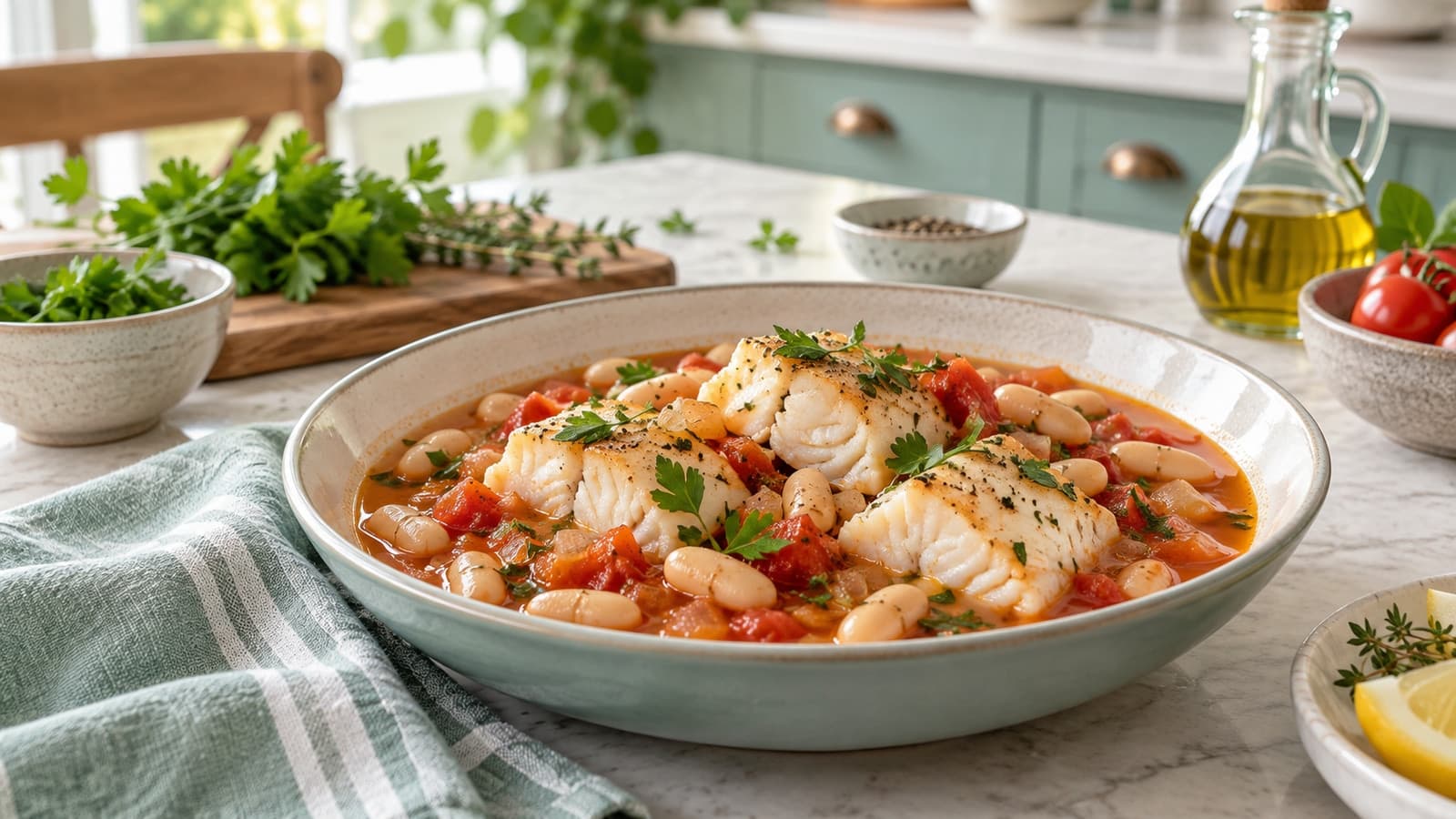
A can of tomatoes, some white beans and a piece of cod can turn into a warm dinner without much fuss. The fish cooks in the broth, so there’s no need to prepare a separate sauce.
Make only what you expect to use, or plan ahead for a safely stored portion. A little bread can go on the side for dipping, though the bowl is good without it.
Pull together the pantry items
For a small pot, start with a cod fillet, canned diced tomatoes, some drained and rinsed cannellini beans, and a little broth or water. Add herbs you enjoy, such as parsley or thyme. Onion and garlic are optional if you like their flavor.
The broth can be loose enough to eat with a spoon or a little thicker for serving over bread. Start with less liquid and add more as the tomatoes simmer. Canned tomatoes and broths vary in seasoning and sodium, so check the labels and taste the broth before it meets the raw fish.
Use fresh cod that has been kept cold or thaw frozen cod safely in the refrigerator. Keep it separate from bread, herbs and other ready-to-eat ingredients. Wash your hands, board and utensils after handling raw fish.
Start the broth
If using onion, cook it in a little oil until softened. Add the tomatoes and broth, then simmer. Stir in the drained beans and any dried herbs. If the mixture looks too thick, add a splash more liquid; if it tastes too sharp for you, choose a different meal or tomato product rather than feeling obliged to finish it.
Cut the fish into similarly sized pieces if that makes portions easier. Put them gently into the simmering broth and cover the pan. A gentle simmer helps the pieces stay together as they cook.
Check the thickest part of the fish with a thermometer. It should reach 145°F. The flesh turns opaque and separates easily when done, but color or a timer alone doesn’t establish the temperature. Check each thick piece; cooking time varies with thickness and the heat of the broth.
Use a clean utensil to lift the cooked fish into bowls. Spoon broth and beans around it, and add fresh herbs if you like. Take care with the hot liquid.
Make a bowl that suits you
The cod and beans both contribute protein, while the tomatoes bring flavor and moisture. The amount of each depends on what you put in the pot. Start with a comfortable bowl and keep more available if you want it.
A piece of toast or a cooked grain can sit alongside. If you prefer fewer beans or a smoother broth, mash some beans with a fork before adding the fish. Mashing changes the texture; it doesn’t guarantee beans will be comfortable for everyone.
Tomatoes may not appeal to you on a day when tart foods feel unpleasant. In that case, a different broth-based fish meal can be a better choice. If you have a fish allergy, avoid the fish and prevent cross-contact; removing a piece from the finished broth isn’t sufficient.
Handle leftovers with care
Divide extra food into shallow containers and refrigerate within two hours, or within one hour when the temperature is above 90°F. Keep the refrigerator at 40°F or below. For a second meal, reheat the broth to a rolling boil and make sure the fish reaches 165°F throughout.
Fish can break apart when reheated, so stir gently and check the temperature with a clean thermometer. Heat only what you expect to eat and follow safe storage guidance for the remaining portion.
For more flexible meal combinations, see building balanced meals on a GLP-1. This bowl can be simple: fish, beans, tomatoes and the herbs you already like.