










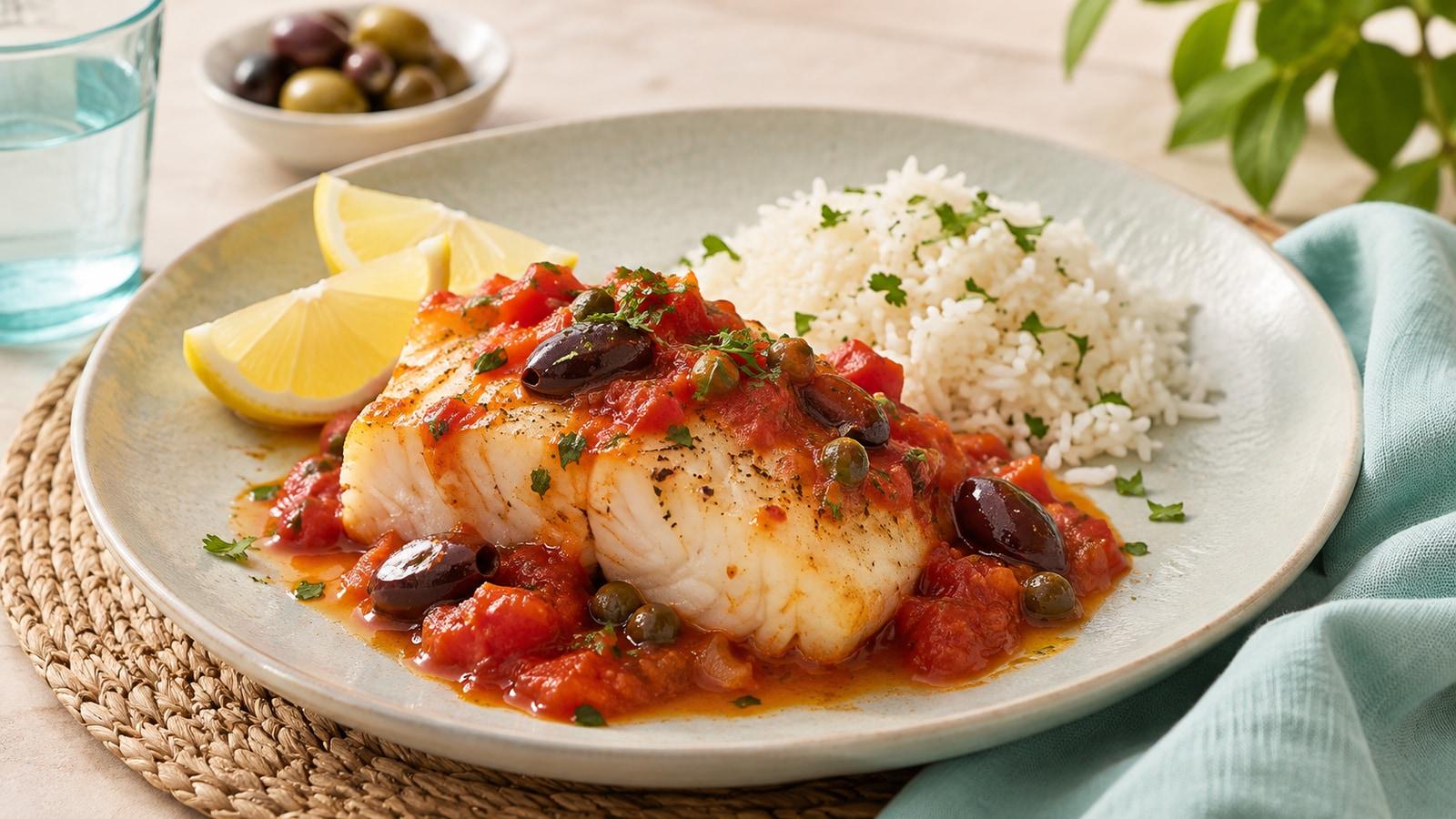
Cod has a mild flavor that works well with a lively tomato sauce. Olives and capers add a salty, briny note, while a short bake keeps the meal straightforward. Serve the fish with rice, potatoes, or a piece of bread to catch the sauce.
The sauce can be prepared while the oven heats. Taste it before adding salt: olives, capers, and canned tomatoes vary quite a bit, and you may find it needs nothing more than a little lemon.
Ingredients
Makes: about 4 servings
Prep: about 15 minutes
Cook: about 20 minutes
- 4 cod portions, about 4–6 ounces each
- 1 tablespoon olive oil
- 1 small onion, thinly sliced
- 2 garlic cloves, minced
- 1 can (14–15 ounces) diced tomatoes
- ¼ cup pitted olives, sliced
- 1 tablespoon capers, drained
- ½ teaspoon dried oregano
- Lemon wedges and chopped parsley, optional
- Cooked rice, potatoes, or bread, optional
Choose pitted olives and slice them before adding to the sauce. If the fish is frozen, thaw it safely in the refrigerator and follow any package directions. Portions of similar thickness will finish at roughly the same time.
Make the sauce and bake
- Heat the oven to 400°F. Wash your hands and rinse the lemon and parsley under running water. Prepare these before handling the raw fish.
- Warm the oil in a skillet over medium heat. Add onion and cook until soft, about 5 minutes. Stir in garlic and oregano briefly.
- Add tomatoes, olives, and capers. Simmer for about 5 minutes. If it looks very thick, add a spoonful of water; if watery, let it reduce a little.
- Spoon some sauce into a baking dish. Place the cod on top, then spoon the remaining sauce around and over it. Wash your hands and any utensils or surfaces that touched raw fish.
- Bake for about 12–18 minutes, depending on thickness, until the thickest part of each portion reaches 145°F. Use a food thermometer rather than relying on color alone.
- Serve with parsley and lemon if you like, using a clean serving spoon for the sauce.
Adjust the briny flavors
Capers are small but assertive. Start with the listed amount or use less if you’re unsure. Rinsing them briefly can soften their briny taste. The same is true of olives; a few slices can season the sauce without requiring a large handful.
Black, green, or a mixture of olives can work, but each tastes different. Check for pits even when the label says pitted, especially if children are eating. Slice them into small pieces so the flavor is spread through the sauce.
Oregano adds a familiar savory note. You can use basil or parsley instead, or leave the herbs simple and finish with lemon. If you like heat, offer chili flakes at the table rather than adding them to the whole dish.
Don’t let the fish dry out
Cod portions can be quite different in thickness. Start checking thin pieces early and remove them when they reach 145°F. A thicker piece may need a few more minutes. Insert the thermometer into the thickest part, avoiding the baking dish.
The tomato sauce helps keep the surface moist, but it doesn’t replace a temperature check. If the sauce is bubbling and the fish hasn’t reached temperature, continue baking and check again. Use a clean utensil to move cooked fish away from any uncooked portions.
If you prefer another mild fish, the cooking time can change. Follow the safe temperature guidance and check each portion. Fish is a common allergen; don’t assume a different fish is safe for someone with a fish allergy.
Build a plate
Cod provides protein, and the tomatoes and onion make a flavorful sauce. Rice, potatoes, or bread can turn it into a larger meal. A side of green beans or a simple salad adds another vegetable and a different texture.
If the sauce tastes too salty, serve a smaller amount over plain rice and add more tomatoes or a little water to the remaining sauce. Lemon can brighten the flavor, though it won’t remove sodium. Keep extra capers at the table for anyone who wants a stronger taste.
For a softer plate, cook the onion until very tender and use crushed tomatoes instead of diced. For more texture, leave the onion in thin slices and add parsley at the end. Both versions use the same basic method.
Handling and leftovers
Keep raw fish separate from ready-to-eat foods. Wash hands, cutting boards, and counters with soap and water after contact with raw seafood. Prepare the salad and lemon first, or use clean equipment for them.
Refrigerate the fish and sauce in shallow containers within two hours, or one hour above 90°F. Keep them at 40°F or below and use within three to four days. If saving rice, cool and refrigerate it within one hour, use it within 24 hours, and reheat it only once. Reheat to 165°F, checking the center of the fish. A covered dish and a spoonful of sauce can help keep it from drying out. Add fresh parsley after warming.
Leftover sauce can go over rice or vegetables, and the fish can be flaked into a warm bowl. Store both safely and keep them refrigerated until you’re ready to use them. For a brothier preparation, our cod in tomato broth with cannellini beans simmers the fish and beans together on the stove.