










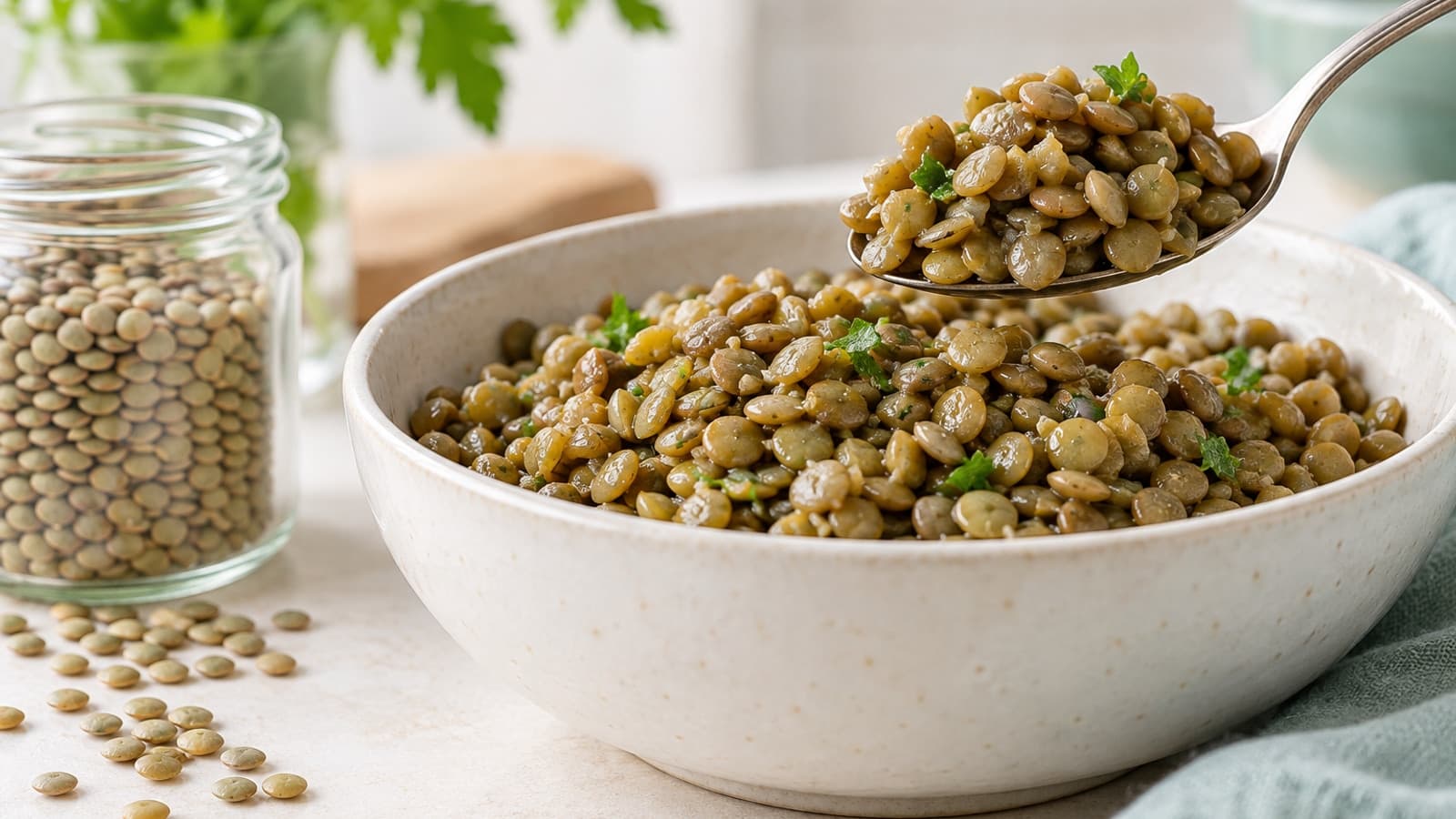
The first time you cook a bag of lentils, it's easy to expect every variety to behave alike. Then the red ones soften into a thick mixture while the green ones keep their shape.
Neither result is a failure. Choose the lentil for the texture you want, and start checking the pot before you assume it's done.
Pick the right starting point
Whole green or brown lentils can be useful when you want distinct pieces for a grain bowl or salad. Split red or yellow lentils tend to cook more quickly and soften into a creamier texture, which can work well in soup or a sauce.
Packages and varieties differ. If the bag gives directions, start there and check the lentils as they cook. A lentil that holds its shape in one batch may need a little longer or shorter in another.
There's room for personal taste too. Some people want a firm bite; others prefer the lentils very tender. “Done” for your meal is partly about what you enjoy, provided the food has been cooked properly.
Sort, rinse and simmer
Spread the dry lentils out and remove any small stones or debris. Rinse them under cool running water. Lentils generally don't need the long soaking step used for many dried beans.
Put them in a saucepan with water, following the package or a reliable recipe. Bring the water to a boil, then lower the heat to a simmer. Check the pot occasionally and add water if the recipe calls for it or the lentils are no longer covered.
Begin checking a little early, especially with split lentils. Taste a cooled lentil to see whether it has reached a texture you like. Drain extra water if your recipe calls for separate lentils; for a soup, you may want to keep the liquid.
Use a pot with enough room and stay nearby until you know how it behaves. A very vigorous boil or an unattended pan can leave you with a mess or less liquid than you expected.
If you're testing a new bag, write down the type and roughly when you began checking. Next time you'll have a useful reference, even though age, size and the particular batch can change the timing.
Use the batch more than one way
For lunch, spoon whole cooked lentils over rice with a cooked vegetable and a sauce you enjoy. Another portion could join pasta sauce or be added to a warm bowl of vegetables. If you made soft red lentils, stir them into a soup or serve them with flatbread.
You can season a small amount differently for each meal. Lemon and herbs may work one day; a familiar spice blend may sound better the next. If acidic or spicy foods bother you, choose another flavor.
Lentils are one source of plant protein, but you don't have to build every meal around them. Rotate in other foods you like and can eat safely. Our vegetarian and vegan guide has more ideas.
Plan for comfort and leftovers
If you're taking a GLP-1 and a large meal feels like too much, serve a modest first amount and keep more available if you want it. Legumes can cause gas for some people, so a smaller amount or a different protein may be more comfortable. Don't keep testing a food that repeatedly makes you feel unwell.
Put cooked leftovers in shallow containers and refrigerate promptly. Reheat leftovers to 165°F throughout; bring leftover soups to a boil. Labeling the container with the date makes it easier to use the batch while it's still within a safe storage window.
Next time, make a note of the lentil type and when you liked its texture. That small detail is more useful than assuming every bag needs the same number of minutes.