










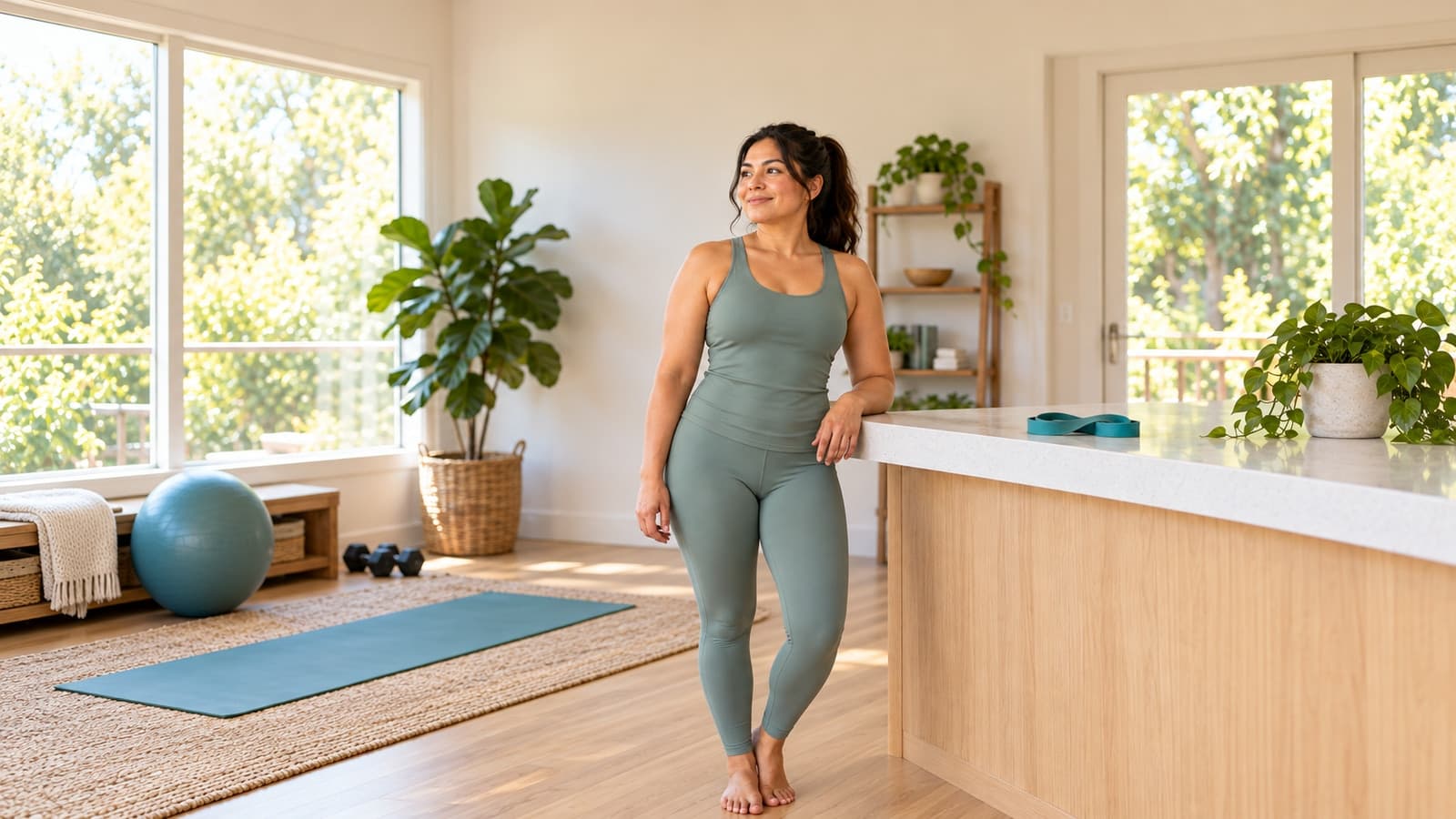
When someone says “core workout,” you might picture a long series of crunches. That’s one kind of exercise, but it isn’t the only way to work the muscles around your middle.
Your trunk helps you stay organized while you reach, carry and change position. Core work can be about control, not a certain look. You can practice it standing or seated, with or without equipment, depending on what feels suitable.
Your core has more than one job
Some exercises involve moving the trunk, as a crunch does. Others ask you to keep your position while your arms or legs move, or while something gently pulls from the side. You don’t need to choose one approach forever. A varied routine can include more than one kind of movement.
The important part is finding a version you can perform without pain and without holding your breath. If floor exercises are uncomfortable or getting down and up is difficult, ask about standing or seated options. A qualified trainer or physical therapist can help choose movements that fit your body and any restrictions.
What does “anti-rotation” mean?
Imagine holding a light resistance-band handle in front of you while the band pulls from one side. The challenge is to stay comfortably facing forward rather than letting the pull turn your trunk. That idea is often called anti-rotation.
A band or cable exercise like this needs a secure attachment, a clear area and appropriate resistance. Ask someone qualified to demonstrate the setup if it’s new to you. A loose anchor or a band with signs of wear isn’t a shortcut worth taking. You can begin with very light tension and stop if you can’t maintain a comfortable position.
You may also hear a trainer use the phrase “gentle brace.” Think of making your middle feel ready for a movement while continuing to breathe. It should not mean sucking in your stomach, gripping as hard as possible or holding your breath throughout the exercise. The cue can be adapted if it doesn’t make sense for you.
Make the exercise fit your day
A short practice could include one comfortable trunk-control exercise within a broader strength session. For example, after learning a supported standing band movement, you might do a small number of repetitions on each side with a rest between them. The exact amount depends on the person and the movement; there’s no need to copy a social-media challenge.
Notice whether your shoulders, hands and feet are comfortable too. If you have to twist, strain your neck or hold your breath to keep up with the band, reduce the tension or ask for a different version. A seated option or an exercise without a band may be more appropriate.
If you have back pain, a recent abdominal procedure, a hernia or another concern that changes what you can do, get individual advice before choosing an exercise. Don’t assume a particular core move is a treatment for pain or a guarantee against injury.
What about belly fat?
Core exercises work muscles; they don’t promise a particular change in the shape or size of your waist. Research on where body fat changes with exercise has produced mixed findings, and the results of a routine can vary. Try choosing a goal such as feeling more comfortable with a movement rather than expecting one exercise to select where weight comes off.
If you’re using a GLP-1, keep food, hydration and recovery in the plan. Contact your care team if treatment symptoms make eating or drinking difficult, and stop exercising for pain or unusual symptoms.
Our home bodyweight strength guide offers other ways to build a manageable session. Crunches can stay on the list if you like them; they don’t have to be the whole list.