










The instructor turns left. Half the room turns right. You’re a beat behind and wondering if everyone noticed.
They’re probably busy remembering their own steps. Nobody is grading your footwork. A dance workout can be a fun way to move, even if you spend the first class learning the pattern rather than keeping up with every song.
Find a class that welcomes first-timers
Look for a beginner, introductory or low-impact class at a community center, studio or gym. A recorded session at home is another option if you’d rather pause and replay. Ask what the class is like: Is the pace steady? Are alternatives offered? Is there seating nearby if you need a break?
The description matters less than the actual instruction. “Beginner” may mean different things in different places, so it’s fine to call ahead or watch a few minutes before joining. An instructor who can explain a simpler version of a movement can make a class easier to follow.
Check the cost and schedule before signing up for a long package. One trial session gives you a chance to see whether you like the music, the room and the teaching style. You can enjoy dancing without making this particular class your regular plan.
Make the room work for you
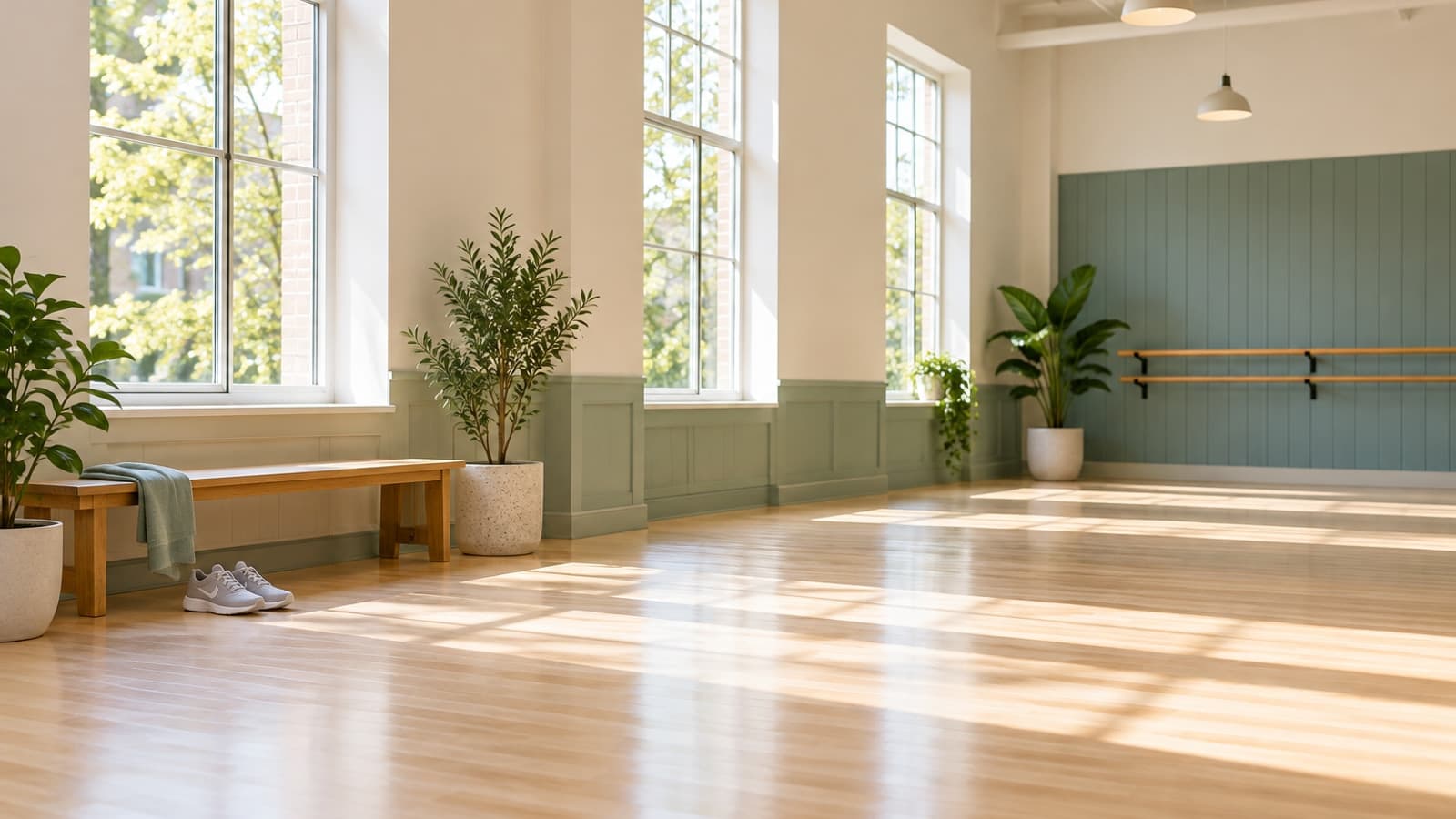
Wear comfortable clothes and shoes suited to the floor and the class. Leave enough space around you to move without bumping another person. At home, move cords, rugs and furniture out of the way and use a well-lit, level surface.
Arriving a few minutes early can help. You can choose a spot where you can see the instructor, locate water and find a place to pause. Tell the instructor privately if you’d appreciate an alternative for a movement or have a relevant limitation.
If standing for the whole session doesn’t suit you, ask about a seated or partly seated option. Check that any chair is stable and that the instructor’s version fits your needs. A clinician or physical therapist can help you decide what’s appropriate if you have balance concerns or persistent pain.
Keep the steps simple
Start by watching the feet, then add arm movements if and when they feel comfortable. If a turn feels awkward, try facing forward. If a jump bothers you, ask whether a step can replace it. Move at a pace where you can pay attention to your surroundings.
When the sequence changes, it’s okay to pause, watch and join in again. You don’t have to make every move larger or faster to belong in the room. Repeating one comfortable step through the chorus is a perfectly reasonable way to stay involved while you learn.
Give yourself a few easier minutes at the beginning and end rather than jumping straight into the hardest part. Take water or rest breaks when you need them. A short practice at home before the next class can help if you enjoy that, but homework isn’t required.
Check in afterward
Notice whether you enjoyed the session and how your body feels later. Some movements may be comfortable while others need adjusting. Stop if you have pain, feel faint or experience unusual breathlessness. If you have new or unexplained chest pain or other possible heart attack symptoms, call 911. Get emergency help for other severe symptoms as well.
If a GLP-1 has left you vomiting, dizzy or unable to drink normally, contact your care team and address that before exercise. Bring water and make time for food that works for you, even on a day when your appetite is quieter.
You might discover that you love the music but prefer a shorter class, a different instructor or dancing in your living room. That’s useful information. Our joint-friendly cardio guide has more ideas if you’d like alternatives. The goal is to find movement you like coming back to, not to master a routine on day one.