










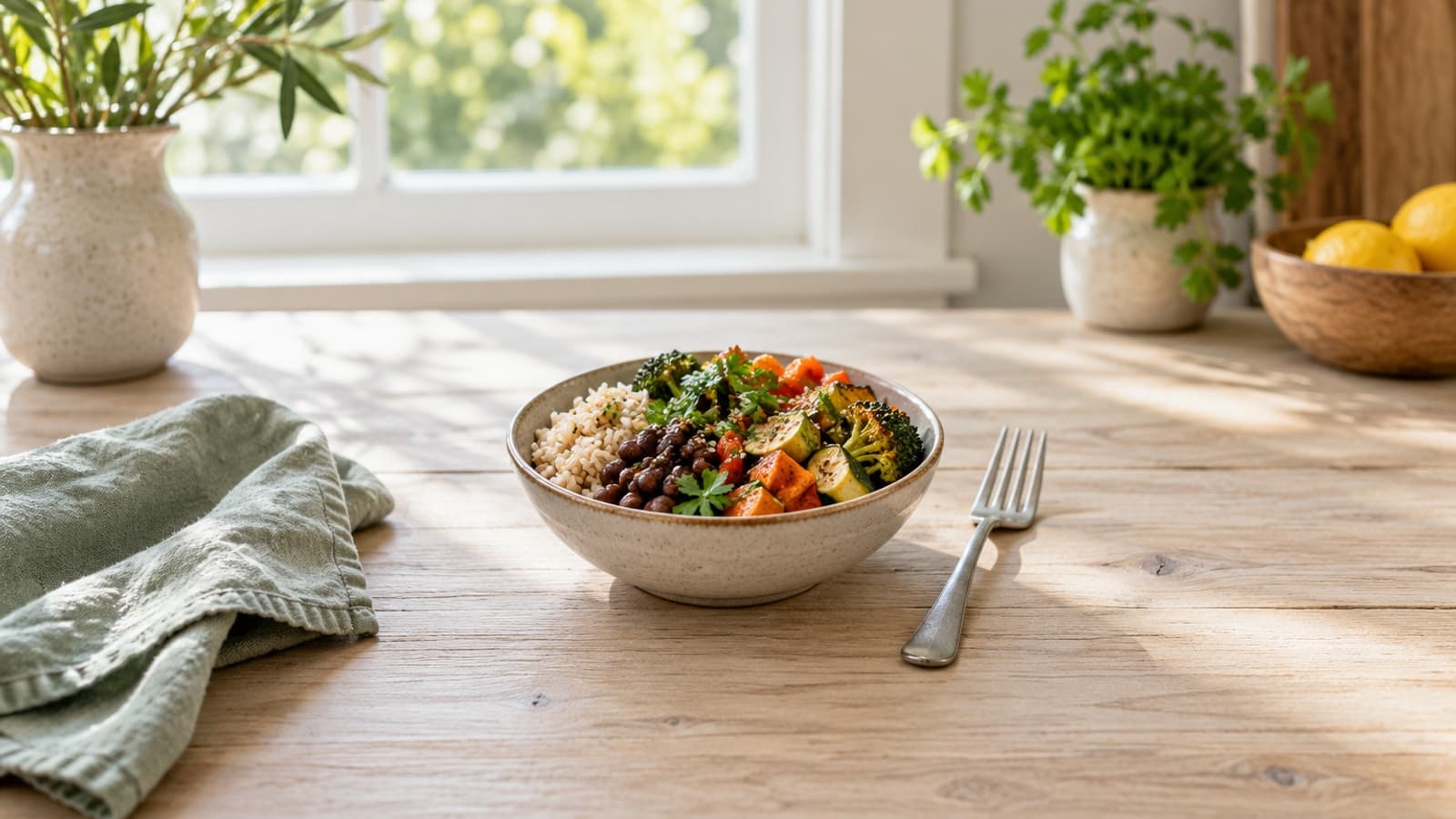
Imagine sitting down to rice and beans and being told the foods should be eaten hours apart. That’s the idea behind some food-combining plans, which claim that mixing certain foods interferes with digestion or makes weight loss harder.
For most people, a mixed meal is something the digestive system is equipped to handle. There is no general need to separate protein from carbohydrates. A meal can be adjusted for comfort without following a complicated set of pairing rules.
What happens to a mixed meal?
Digestion is a series of processes, not a single choice between handling protein or carbohydrate. Digestive juices include enzymes that help break down carbohydrates, fats and proteins. Foods also don’t fit neatly into just one category: beans, for example, contain both protein and carbohydrates.
That doesn’t mean everyone feels comfortable after every mixed meal. Portion size, ingredients, symptoms and individual health conditions can all matter. The point is that mixing foods is not automatically a digestive mistake.
If a particular meal repeatedly bothers you, notice what happened and discuss it with your healthcare team. You may need a specific adjustment, especially if you have a digestive condition. A broad internet rule may not explain your experience.
Did separating foods improve weight loss in a study?
In a small six-week hospital study, researchers assigned 54 participants to either a food-combining pattern or a balanced pattern. Both plans provided the same low amount of energy. The group separating foods did not lose more weight or body fat simply because the foods were arranged differently.
That study had limits: it was short, meals were provided in a hospital setting, and the plans were more restrictive than many people’s usual eating routines. It does not prescribe an amount of food for you. It does give us a reason to question claims that separation itself is a proven shortcut.
If someone feels better after changing their eating routine, several things may have changed at once: food choices, portions, timing or attention to symptoms. It’s hard to know which change mattered from a personal story alone.
What if a meal feels too heavy?
Taking a GLP-1 can change appetite and how comfortable a familiar meal feels. You might prefer a smaller portion, a different texture or a less rich preparation. Those are practical adjustments to discuss and try according to your needs, not proof that rice cannot be eaten with chicken or tofu.
For example, you could save part of a sandwich for later or make a smaller bowl of rice, protein and cooked vegetables. If one ingredient seems to cause discomfort repeatedly, note the pattern instead of removing several unrelated foods at once.
Our balanced-meal guide offers flexible ways to put familiar foods together when your appetite is smaller.
Watch the cost of too many rules
A food-combining schedule can become difficult at work, when eating with family or when relying on affordable ready-made foods. It may also make meals feel stressful if you’re trying to remember which foods are “allowed” together.
You don’t have to solve a puzzle before lunch. Choose food you enjoy and can tolerate, make room for variety over the day, and ask for help if getting enough to eat is difficult. A dietitian can work around your symptoms and preferences rather than assigning every ingredient to a separate time slot.
Persistent or severe digestive symptoms deserve medical attention. A new food rule is not a substitute for an assessment when pain, vomiting or difficulty keeping fluids down continues.
Keep the useful part
If planning meals helps you feel organized, keep planning. If a particular combination is uncomfortable for you, pay attention to it. But there’s no need to give up a favorite mixed meal solely because a trend says its ingredients should never meet.