










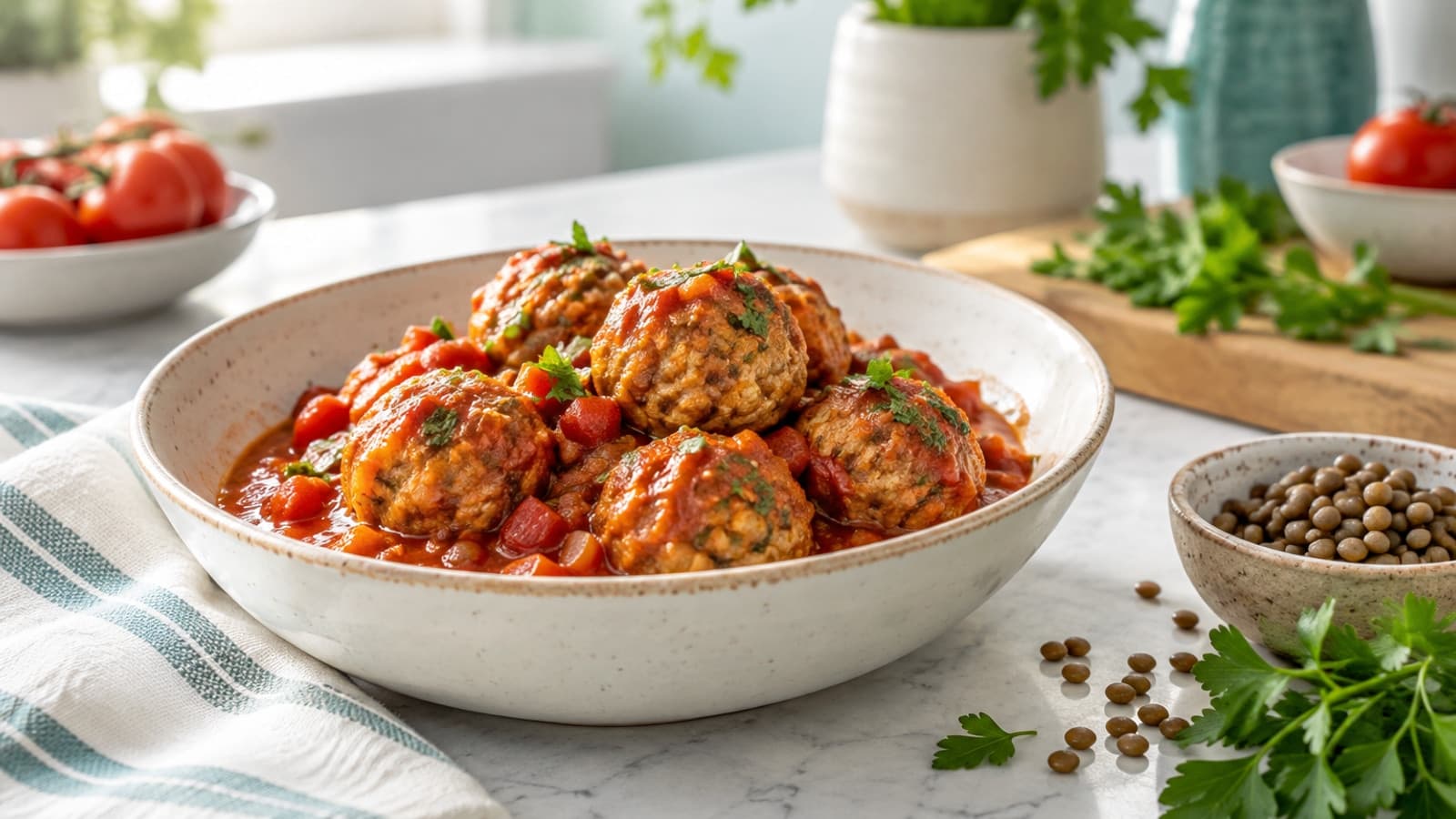
A tray of meatballs can solve more than one dinner. Have some with a tomato sauce tonight, then save the rest for a grain bowl or a sandwich another day.
Adding cooked lentils to ground turkey is one way to try a different texture. The idea below is a starting point you can adjust, rather than a promise that every mixture will behave exactly the same way. The important part is cooking the turkey safely and keeping the extras cold.
Get the ingredients ready
For a small batch, consider one pound of ground turkey, about half a cup of cooked and well-drained lentils, one egg, a few tablespoons of breadcrumbs and herbs you enjoy. A little finely chopped onion or garlic is optional. This makes more than one meal for many households, so plan for the extras before you start.
Cook the lentils before they meet the turkey. If you're using canned lentils, drain them; if you're cooking dried lentils, follow their package instructions and let them cool enough to handle. Mash a few if you want the pieces less noticeable, or leave them whole for more texture.
The mixture shouldn't be soupy. Add breadcrumbs a little at a time if it needs help holding together. If you haven't made this combination before, shape a small batch and allow for the texture to differ from a familiar all-meat meatball.
The egg and breadcrumbs contain common allergens. Choose ingredients that fit your needs, read labels and use a recipe suited to your restrictions if you need to avoid either. Don't assume a substitute will behave identically.
Shape, cook and check
Heat the oven to 375°F and arrange a clean baking sheet or shallow pan. Mix the ingredients gently, then shape similar-sized meatballs and leave a little space between them. Wash your hands and anything that touched raw turkey before handling other foods.
Bake until the meatballs reach 165°F throughout, checked with a clean food thermometer. Cooking time varies with their size, the pan and the oven, so use the temperature rather than color or a fixed number of minutes as your test. Check several pieces, especially the larger ones.
Transfer cooked meatballs to a clean plate with clean utensils. A browned outside doesn't establish that the center is done. If a piece hasn't reached the safe temperature, continue cooking and check again.
Give the batch more than one job
Try a few meatballs with warm tomato sauce and pasta, or serve them over a cooked grain with vegetables. A little sauce can add moisture; put it on the side if someone at the table prefers a different amount.
Another day, put a couple in a roll with vegetables and a sauce you like. The same batch doesn't have to turn into identical lunches. If tomato feels too acidic, choose a different sauce or broth-based accompaniment that suits you.
Lentils contribute protein, but the amount in each meatball depends on the mixture and size. They can also cause gas for some people. If lentils routinely bother you, use a familiar meatball recipe without them or choose another meal you tolerate.
Store the extras promptly
Put cooked leftovers into shallow containers and refrigerate or freeze within two hours, or within one hour when exposed to temperatures above 90°F. Keep the refrigerator at 40°F or below. A date on the container helps you keep track of the batch.
For freezer portions, separate the amount you expect to use into suitable covered containers. Freeze food while it is still within its safe refrigerated storage window. Thaw in the refrigerator, or follow another safe thawing method, and reheat leftovers to 165°F throughout.
If you take a GLP-1 and your appetite varies, meatballs make it easy to serve a few first and keep more available. Add a side when it sounds good. Our meal-prep guide has more ideas for handling the rest of the batch.