










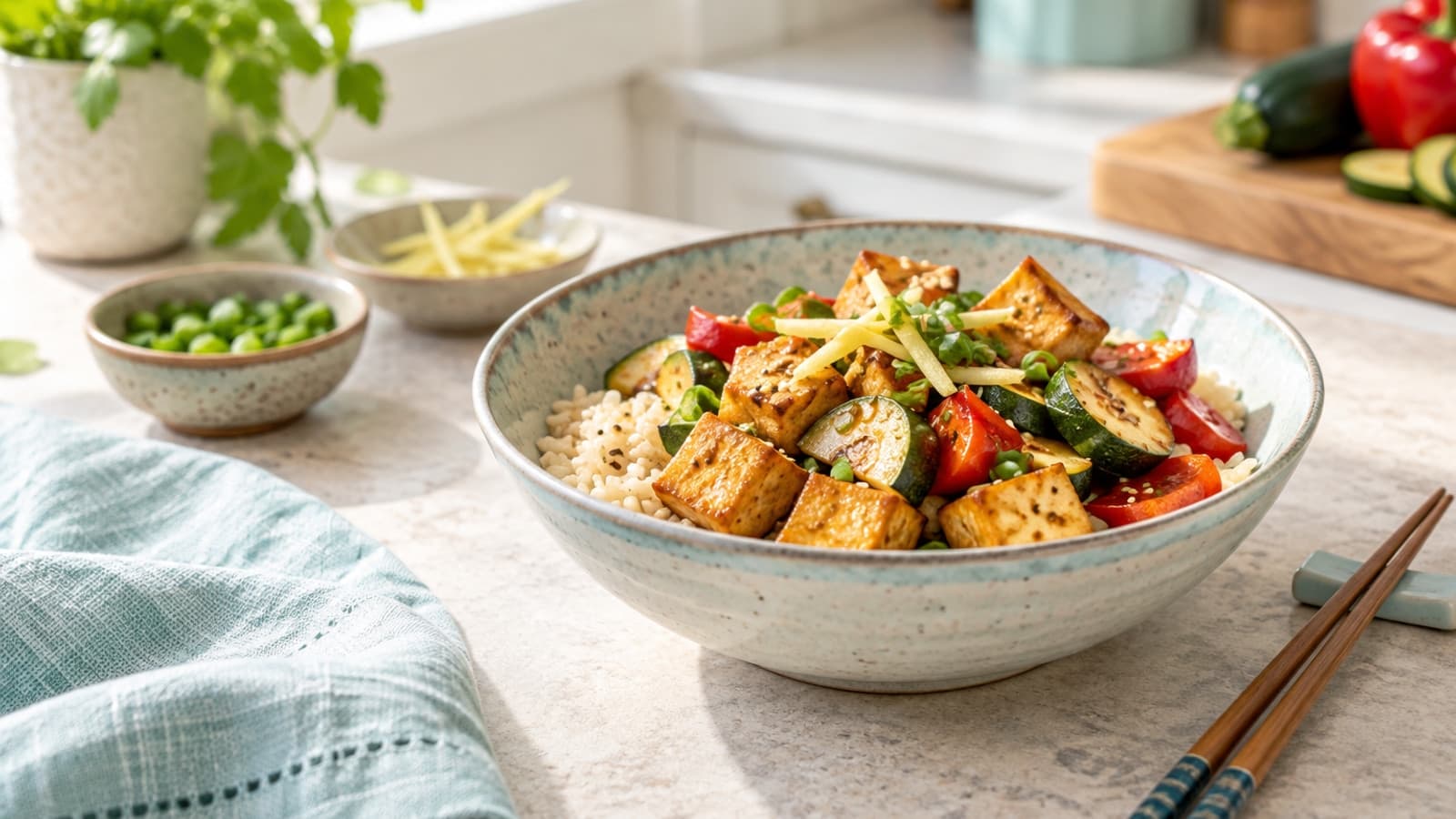
A bowl of rice, tofu and vegetables is easy to adjust at the table. One person can add plenty of sauce, another can keep the ingredients separate, and either can choose a different amount of rice.
Ginger gives this version a little warmth. It’s a flavor choice, not something you need to eat for the bowl to work. Use a familiar seasoning if ginger isn’t appealing.
Start with the parts
For a starting batch, gather about 7 ounces of firm tofu, one bell pepper, one zucchini, about 2 cups of cooked rice, and a tablespoon or two of oil. For flavor, set aside 1/4 teaspoon ground ginger—or a little freshly grated ginger—and a sauce you like. You can scale the amounts for your table.
Broccoli, carrots or another vegetable can also work. Fresh or frozen vegetables are both useful, and frozen products should be cooked according to their package directions.
If the rice isn’t cooked yet, prepare it using the directions for the type you bought. While it cooks, drain the tofu and gently press away some moisture with a clean towel or paper towel. Cut it into pieces that are similar in size so they’re easier to turn in the pan.
Firm tofu holds its shape more readily than silken tofu. If you prefer a softer texture, cook it gently and skip the quest for a crisp edge. For more on choosing a texture, our vegetarian and vegan eating guide offers other meal ideas as well.
Cook the tofu and vegetables
Add a little oil to a suitable skillet and cook the tofu, turning pieces as needed. Remove it to a clean plate, then cook the vegetables in the same pan until they reach the texture you enjoy. Follow the preparation instructions on the tofu and vegetable packages.
Cut firmer vegetables smaller or give them more time than softer ones. If the skillet is crowded, cook the components in batches instead of piling everything together. A lid can help hold heat, but lift it carefully to avoid steam.
You can cook the tofu without a marinade and add seasoning later. That leaves one portion available for someone who prefers a milder bowl.
Make the sauce your own
Make the sauce separately so you can decide how much to add. Stir the ginger into a sauce you already like, adding a little water if you want a lighter drizzle. Taste a cooled spoonful before adding it to the whole meal.
Check the actual sauce ingredients. Tofu contains soy; soy sauce may also contain wheat, and some dressings contain sesame. If you have a food allergy, choose a meal and sauce that avoid your allergens and prevent cross-contact. A sauce that works for one person may not work for everyone at the table.
If spicy or acidic flavors bother you, leave them out. Ginger isn’t a substitute for discussing persistent symptoms or trouble eating with your care team.
Build the bowl
Add rice to a bowl and arrange tofu and vegetables on top, or place them side by side. Spoon on sauce, add herbs if you want them, and serve. A cool cucumber side can provide contrast, but it isn’t necessary to complete the meal.
If you’re taking a GLP-1 and prefer a smaller first serving, make an amount that feels comfortable and keep the rest available. Someone with a larger appetite can add more rice, tofu or another side. The ingredients are flexible; they aren’t a prescribed ratio.
Take particular care with leftover rice
If you plan to save cooked rice, divide it into small portions and cool it quickly, ideally within one hour. Refrigerate it promptly, use it within 24 hours and reheat it no more than once. Rice left out too long can become unsafe even if it’s heated again.
Reheat safely stored leftovers to 165°F throughout, checking with a thermometer. If you don’t know how long the rice sat out, discard it rather than relying on smell. Save any sauce separately in a covered container and keep perishable ingredients refrigerated.
This meal can start with what you already have: one vegetable, a protein food and rice prepared safely. Add ginger only if it makes dinner sound better to you.