










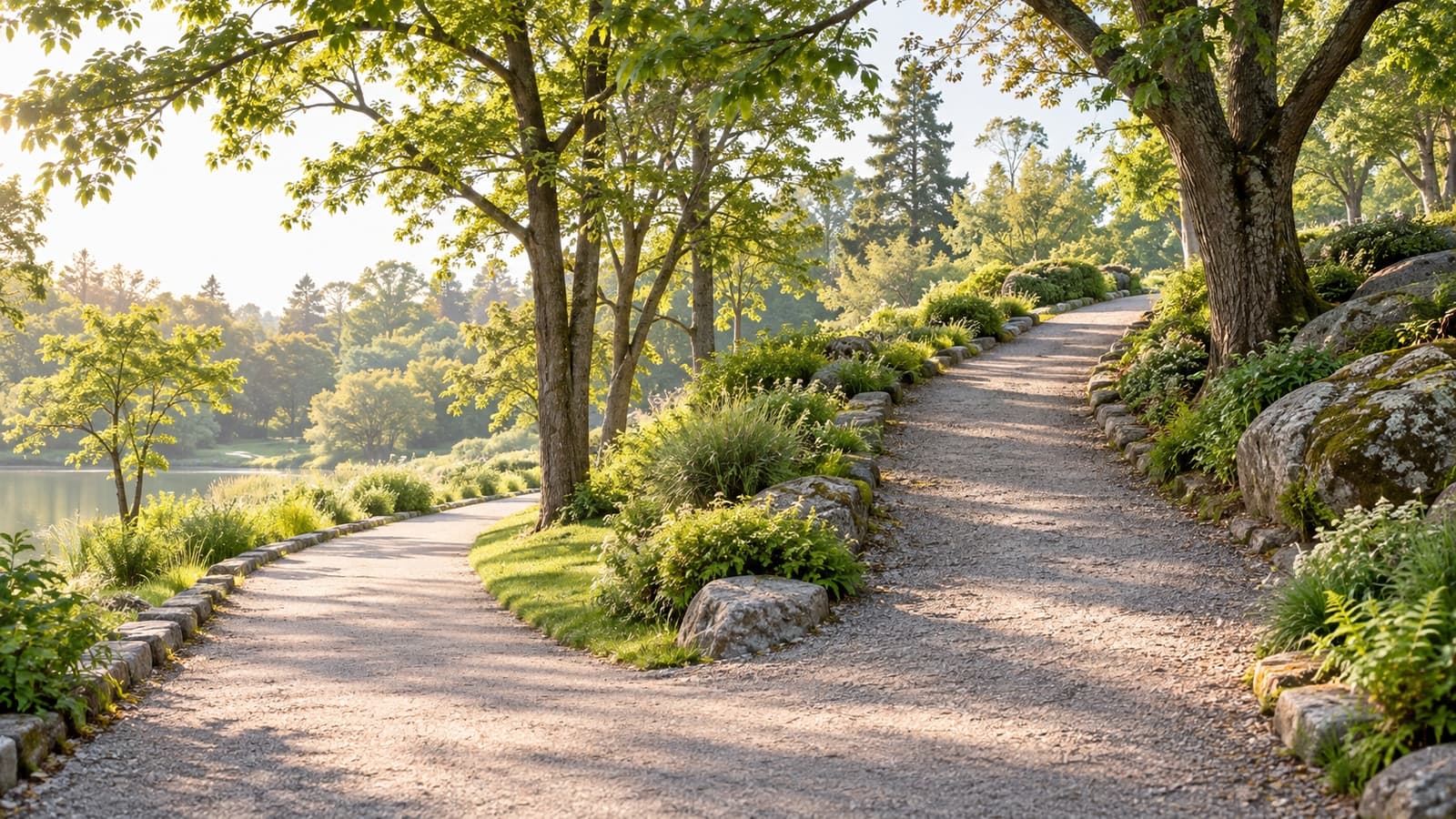
A route can look easy on a map and feel very different once the sidewalk starts climbing. Maybe the hill is short but steep, or the way down makes you pay more attention to your footing than you expected.
There’s no requirement to seek out hills during weight management. A flatter route can be a comfortable choice, and a gentle slope can add variety if you enjoy it. The better choice is the one that suits your energy, surroundings and plans for the rest of the day.
Take a look before you commit
Notice more than the steepest point. Is there a sidewalk all the way up? Is the surface smooth, wet or broken? Is there a safe place to pause away from traffic? A small incline with good footing may feel more manageable than a shorter one with loose gravel.
Consider the weather as well. Heat, rain and a heavy bag can change how a walk feels. If the conditions aren’t inviting, save the hill for another day. Taking the flatter path is a decision, not a setback.
If the only route near you includes a steep section, look for a nearby park, an indoor option or a route that approaches the slope from another direction. You can also walk only partway up and turn around at a spot you’ve chosen in advance.
Let your pace change
You may naturally slow down going uphill. That’s fine. Slope can change the effort of walking, so trying to hold the same speed as the flat section isn’t necessary. Shorten the uphill section, take a break or return to level ground if the climb feels harder than expected.
Start a new hill on a day when you aren’t rushed. Walk at a pace that lets you notice how you feel and keep enough attention for the path. If you’re with a faster friend, agree beforehand that either of you can slow down or turn back.
There’s no need to add a steeper hill every week. Repeating the same route can be enjoyable, and some days a level loop will fit your schedule or recovery better. You can choose variety without turning every walk into a challenge.
Plan the downhill before the uphill
The route home counts, too. A descent may feel different from the climb, especially if the surface is slippery or you’re already tired. Check where the path leads and whether a gentler way down is available. Take your time and use a secure handrail if one is provided and appropriate.
If downhill walking causes pain or you feel unsteady, stop and choose an accessible alternative. Don’t assume that a particular hill is right for you because someone else finds it easy. A physical therapist or clinician can help with persistent pain or questions about balance.
When scouting a new route, it may help to visit it first without trying to complete the whole thing. Find the crossings, benches, shade and safe turnaround points. A familiar exit makes it easier to adapt when the day doesn’t go as planned.
Match the walk to the day you’re having
If you take a GLP-1 and are dealing with vomiting, dizziness or difficulty drinking, talk with your care team and address the symptoms before exercising. Bring water when needed and allow time for a meal or snack that works for you.
Stop for pain, feeling faint or unusual breathlessness. If you experience new or unexplained chest pain or other signs of a heart attack, call 911. A route can wait while you take care of yourself.
After a few walks, notice which paths you actually enjoy. A flat loop near home might be the easiest one to repeat; a gentle hill might be a pleasant change on another day. Our joint-friendly cardio guide offers more ways to think about movement without making speed the goal.