










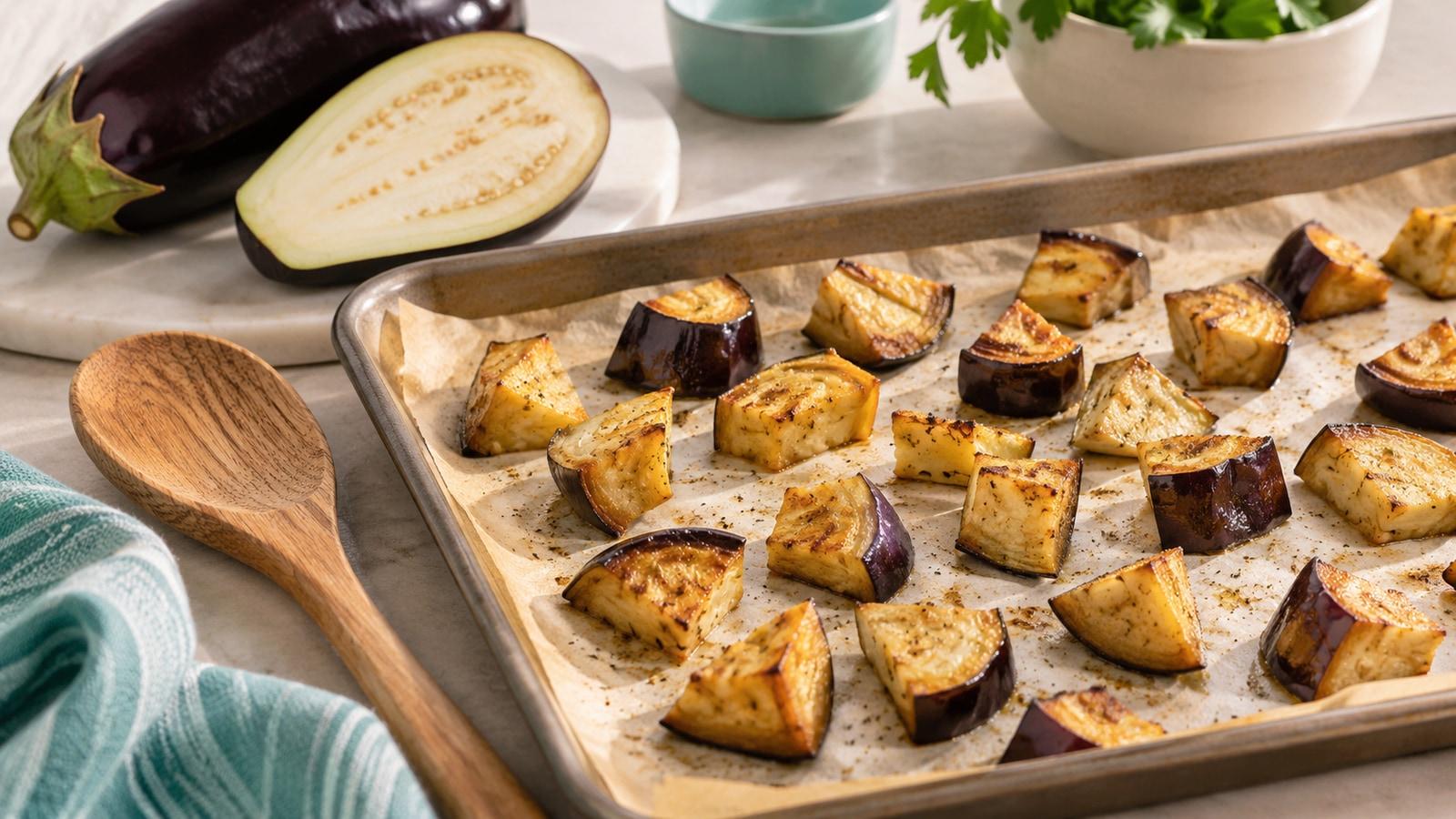
Eggplant can look beautifully browned on the outside and still feel firm in the middle. If that has happened to you, the answer may be as simple as cutting the pieces more evenly and giving them enough time to soften.
You don't need to turn an eggplant into a complicated casserole. Roast a tray for dinner, add it to a simmered dish, or mash the tender pieces into a spread. Start with the texture you enjoy and work backward from there.
Choose one you will use
Eggplants come in several shapes and colors. A large, rounded one can be cut into cubes or slices; a long, slender variety may be convenient for smaller rounds. The cooking time will depend more on the size of the pieces and the method than on a single number printed in a recipe.
Look for firm fruit without obvious mold or badly damaged areas. A fresh-looking stem is useful to notice too. If you're uncertain about a variety at the store, ask the produce team how people commonly prepare it.
Buy an amount that fits your plans. One eggplant can make a useful side or become part of several meals. If you've never cooked it before, starting with one gives you room to learn what texture and seasoning you like.
Wash and cut for the dish
Rinse the eggplant under running water and dry it before cutting. Use a clean board and knife, especially if raw meat has been prepared nearby. Remove the stem and the green cap; the flesh is the part you're preparing for the meal.
For cubes, cut the eggplant into thick slices, then into strips and pieces of roughly the same size. They don't need to be perfect, but a tray of very small pieces mixed with large ones will cook unevenly. For rounds, use slices of similar thickness.
Peeling is a matter of the dish and your preference. You may enjoy the skin left on roasted pieces, or prefer to peel some or all of it for a softer result. If you have a prescribed texture-modified diet or difficulty swallowing, ask your care team how to prepare it safely.
Give the pieces space in the oven
Heat the oven to 400°F. Toss the pieces with a modest amount of oil and any seasoning you enjoy, then spread them on a baking sheet. Leave a little space between pieces; if the tray is crowded, use two pans or cook in batches.
Turn the pieces during cooking so you can see how they are progressing. Start checking after about 25 minutes, but allow longer if the pieces are large or still firm. Some trays may need around 45 minutes at this temperature; your timing will depend on the size and contents.
That number is a guide, not a promise. Ovens vary, and a thin round won't take the same time as a large cube. Use a clean fork to check one of the larger pieces. The center should be tender enough for the fork to enter easily, not merely dark on the surface.
If it still feels firm
Return the tray to the oven for a little longer and check again. If the edges are browning much faster than the center is softening, lower the heat slightly or cover the pan loosely for part of the remaining cooking time. Watch the tray rather than leaving it unattended while you troubleshoot.
For a softer dish, let the pieces cook until they yield easily and then mash a few with a fork. If you like more definition, keep the pieces a little larger and remove them once the centers are tender. Both can be useful; choose the result you want for the meal.
If a finished batch tastes bitter, notice its condition and how it was cooked before buying the same fruit again. Eggplant varieties and maturity differ. A sauce or squeeze of lemon may appeal to you, but you don't have to keep eating a dish you dislike.
Use it in more than one meal
Serve warm eggplant beside a protein food and a grain, or fold it into a pot of beans and vegetables. A little yogurt, tahini, herbs or tomato can change the direction of a plate. Check ingredients for milk, sesame or other allergies when using a prepared topping.
The pieces can also be mashed into a dip. If you're trying that for the first time, set aside a few spoonfuls rather than blending the entire tray. You can adjust the seasoning after tasting with a clean spoon.
For a mixed tray, our roasted vegetable guide covers timing different vegetables together.
Save the rest safely
Put cooked eggplant into shallow covered containers and refrigerate promptly, within two hours or within one hour if the temperature is above 90°F. Keep the refrigerator at 40°F or colder and use refrigerated cooked leftovers within three to four days. Reheat the portion you want to eat to 165°F.
If a smaller appetite on a GLP-1 makes a whole tray more than you want today, store the extra safely and decide how to use it later. The most useful result isn't a perfectly browned photograph. It's a tender vegetable you actually want to eat.