










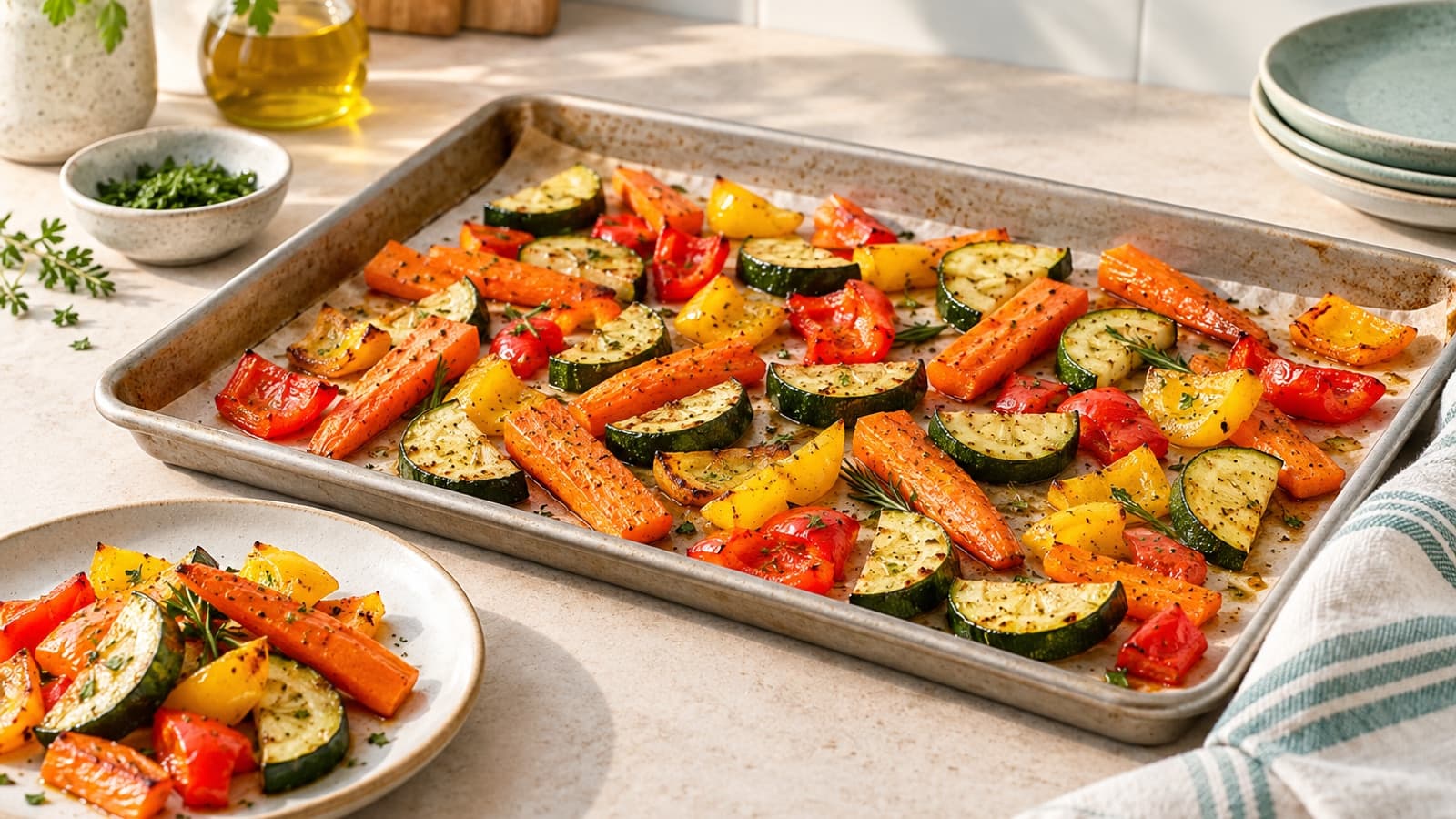
A small meal doesn't have to be a pale one. A few roasted vegetables can add color and flavor to rice, pasta, eggs or a piece of fish without requiring a separate elaborate side dish.
You can roast enough for one meal, or make a little extra for tomorrow. Start with vegetables you already like rather than filling a pan with everything left in the drawer.
Choose a combination that cooks together
Carrots, peppers and zucchini make a colorful mix, but they don't all soften at the same speed. Firmer vegetables may need smaller pieces or a head start; softer ones can be added later. If you're new to roasting, begin with just one or two types so you can see how they behave.
Wash fresh produce and trim it as needed. Cut pieces to a fairly similar size within each vegetable. They don't need to look identical, but a mix of tiny crumbs and very large chunks will be harder to cook evenly.
Frozen vegetables can save prep work too. Use a recipe or package directions for the product you have and adjust as needed. Fresh and frozen pieces can cook differently, so check them rather than relying on a single universal time.
Give the pieces enough room on the pan
Spread the vegetables in one layer rather than piling them in a deep heap. If you want more browning and the pan is crowded, use a larger pan or cook a smaller batch. A small amount of oil can help coat the pieces; use the amount in your chosen recipe or an amount you enjoy.
Season simply at first. Black pepper, garlic powder or a familiar herb blend can be enough. Add delicate fresh herbs or a squeeze of citrus after cooking if you like a brighter finish. If acidic or spicy foods bother you, leave those additions out.
For a starting point with fresh cauliflower and carrots, cut them into bite-size pieces and use a 400°F oven. Check them after about 20 minutes; they may need another 5 to 10 minutes to become fork-tender. Piece size and ovens differ, so check sooner if the pieces are small. Follow the cooking directions on a frozen product.
Use an oven-safe pan and keep a mitt nearby. Turn or rearrange the pieces if useful, and take them out when the texture suits you. Some people prefer tender vegetables; others like more browning.
Make a small serving into a meal
Roasted peppers can join eggs and toast. Carrots and zucchini might sit beside chicken or tofu and rice. Leftover vegetables can be folded into pasta or added to a grain bowl with beans and a sauce you like.
Keep a few components separate if you're unsure what you'll want tomorrow. A container of vegetables can become part of a wrap, while a portion of rice can be warmed for a different meal. That gives you options without cooking another full tray.
If you're taking a GLP-1 and a large plate doesn't appeal, serve a comfortable first amount. Keep the rest available if you want more or save it for another meal. The vegetables are one part of the plate; choose other foods that help make the meal satisfying.
If chewing, swallowing or another health concern limits the textures you can eat, follow the advice you've been given. A crisp edge isn't an achievement you need to chase if a softer preparation works better.
Store the extras while you clean up
Place cooked leftovers in a shallow container and refrigerate promptly. The general limit for perishables at room temperature is two hours, or one hour above 90°F. Keep the refrigerator at 40°F or below. When reheating leftovers, check that they reach 165°F throughout.
Plan how you'll use the extras rather than letting them disappear behind the milk. Tomorrow's lunch might be a wrap with a few vegetables or a bowl with a different seasoning.
Our balanced-meal guide has more ideas for what to serve alongside them. One pan, one or two vegetables and a flavor you like are plenty to begin with.