










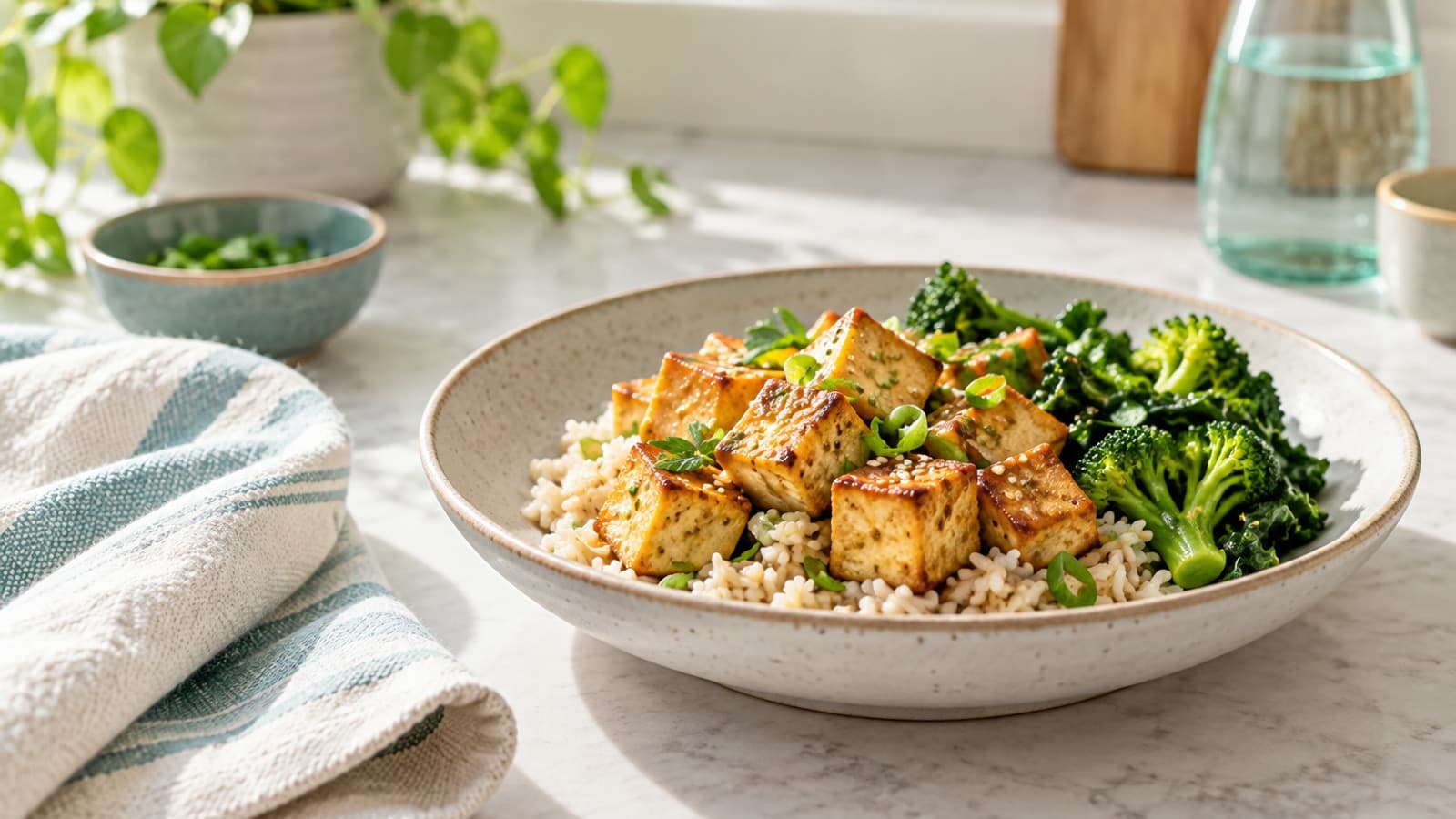
“Tofu” can mean a smooth ingredient blended into a sauce or a firm cube with browned edges. If you've only tried one version, the other may feel like a completely different food.
The type of tofu matters as much as the cooking method. Choose it for the texture and meal you want, then keep the preparation simple.
Start with the package
Regular tofu comes in several levels of firmness. Firm or extra-firm tofu is useful when you want pieces that hold together in a pan or on a baking sheet. Silken tofu is much softer and can work in a blended sauce or soup.
Check the label and follow its handling and preparation instructions. Some tofu is sold refrigerated, while certain unopened packages are shelf-stable. Once opened, keep it cold and follow the package's storage directions.
Tofu is made from soybeans. If you have a soy allergy, don't use it; choose another protein food that fits your allergy plan. Sauces used with tofu may contain other allergens, so check those ingredients as well.
For cubes, remove some moisture
Regular firm tofu is often packed in water. Drain it and use clean towels or paper towels to gently press away some moisture. You can place it between plates with a little weight, taking care not to crush it. Keep perishable food safely chilled and don't leave it out for an extended time while preparing the rest of the meal.
Cut the tofu into similar-sized cubes. You can season the pieces and bake them in a single layer, or cook them in a skillet according to a reliable recipe. Turn them as needed and stop when the texture appeals to you.
The result doesn't have to be as crisp as restaurant tofu. A lightly browned outside with a tender center may suit you better. If a crunchy texture is uncomfortable, use softer pieces or choose the silken option.
For crumbles, let the food be irregular
Firm tofu can also be broken into pieces with your fingers or a fork. Cook the crumbles with seasonings you enjoy and serve them in a wrap, alongside rice or with cooked vegetables.
The pieces won't look identical, and that's part of the point. Smaller crumbles may brown differently from larger ones. Stir them during cooking and adjust the seasoning after tasting a cooled piece.
If you like your meals less mixed together, put the crumbles beside rice and vegetables instead of stirring everything into one pan. A sauce served separately lets you decide how much moisture to add.
If your appetite is smaller on a GLP-1, start with a portion that feels comfortable. Save a suitable remainder promptly, and add another food or return for more if you want it.
For a smooth texture, try silken tofu
Silken tofu can be blended into a sauce or soup when a smooth texture is what you're after. Follow the package directions and use a recipe suited to that form; swapping it directly for firm cubes in every dish may not give the result you expect.
Choose flavors you already like. Herbs, a little ginger or a suitable sauce can change the meal without requiring a complicated marinade. If an ingredient is too spicy, acidic or rich for your comfort, leave it out.
Make the first try manageable
Buy a small package if you're experimenting and pair it with a familiar grain or vegetable. Notice whether the texture, seasoning or cooking method made the biggest difference. You can change one of those next time rather than giving up on every version at once.
For more meal combinations, see vegetarian and vegan eating while taking a GLP-1. Tofu is an option, not a requirement; plenty of other foods can provide protein if it isn't for you.