










You’ve seen someone lower into a deep squat and stand right back up. That may be their version, but it doesn’t need to be your first one.
Squatting involves bending at the hips and knees and returning to standing. A chair, a fixed support or a shorter range can make the movement easier to explore. Choose the version that lets you move steadily.
Start with a chair you trust
A sit-to-stand is a practical place to begin. Use a firm chair that won’t roll or slide; placing its back against a wall can help keep it from moving. Sit with your feet flat and in a comfortable position. Lean forward as needed, press through your feet and stand. Then lower yourself back onto the seat with control.
Use the chair’s arms or another stable support if that’s what makes standing possible. A higher seat may also be easier than a low one. You don’t need to remove assistance to make the movement count.
Notice whether the chair shifts or your feet slip. Stop and fix the setup before continuing. If standing from a chair causes significant pain, dizziness or uncertainty about balance, ask a physical therapist or other qualified professional for help choosing an alternative.
Try a supported squat
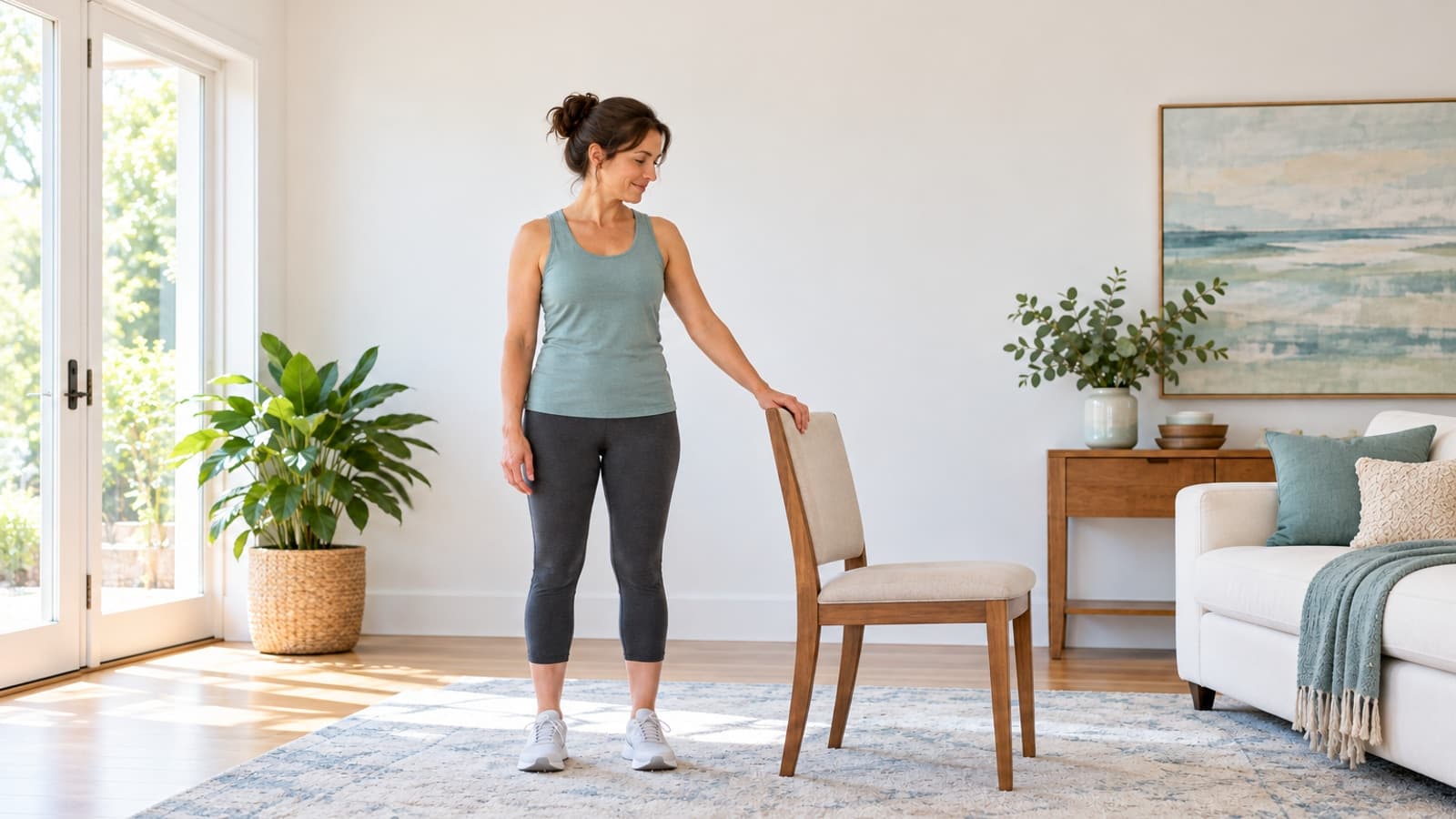
Stand near a fixed rail or another support you’ve checked for stability. Hold it as needed, bend your hips and knees a little, then return to standing. Your feet can remain in a position that feels natural and secure. Begin with a shallow movement and breathe normally.
You can gradually explore a larger range if it feels comfortable and controlled. The right depth is not a universal number. There’s no need to force your hips below your knees or keep going when your heels lift, balance changes or the movement becomes painful.
A chair can also serve as a reference behind you. Some people lower until they touch the seat and then stand; others sit fully before standing again. Check that the chair is stable and positioned where you expect it before trying either version.
What about standing without support?
If you can move comfortably without holding on, a freestanding squat may be an option. Start with feet comfortably apart, let the hips and knees bend together, and return to standing at a controlled pace. Your stance and range may differ from a workout partner’s.
If you lose balance, switch back to a support or shorten the range. More independent isn’t automatically better for every person or every day. A professional can help you adjust the movement around a joint concern or show you a different leg exercise.
Give the setup a second look
Before the next session, check whether anything around you has changed. A rug that bunches, a chair pushed away from the wall or shoes that slip can change how steady the same exercise feels. Clear enough space that you can move without bumping a table. If you share the room, let others know when you need the area free.
Keep the support within easy reach even when you try a freestanding version. It can be reassuring to know it’s there if your balance feels different today.
Pick a useful amount
Start with a few repetitions that leave you feeling able to stop with control. Take a break and notice how your body responds later and the next day. You can build from there rather than trying to match a video’s count on day one.
If you’re taking a GLP-1, strength work is one part of a broader routine that includes adequate food and recovery. A day of marked dizziness or difficulty drinking is a reason to address the issue rather than push through exercise. Stop for sharp pain or another unusual symptom and ask for advice.
Our bodyweight training guide covers other home options. Your starting point is the one you can do safely and return to—not the deepest squat someone else can do.