










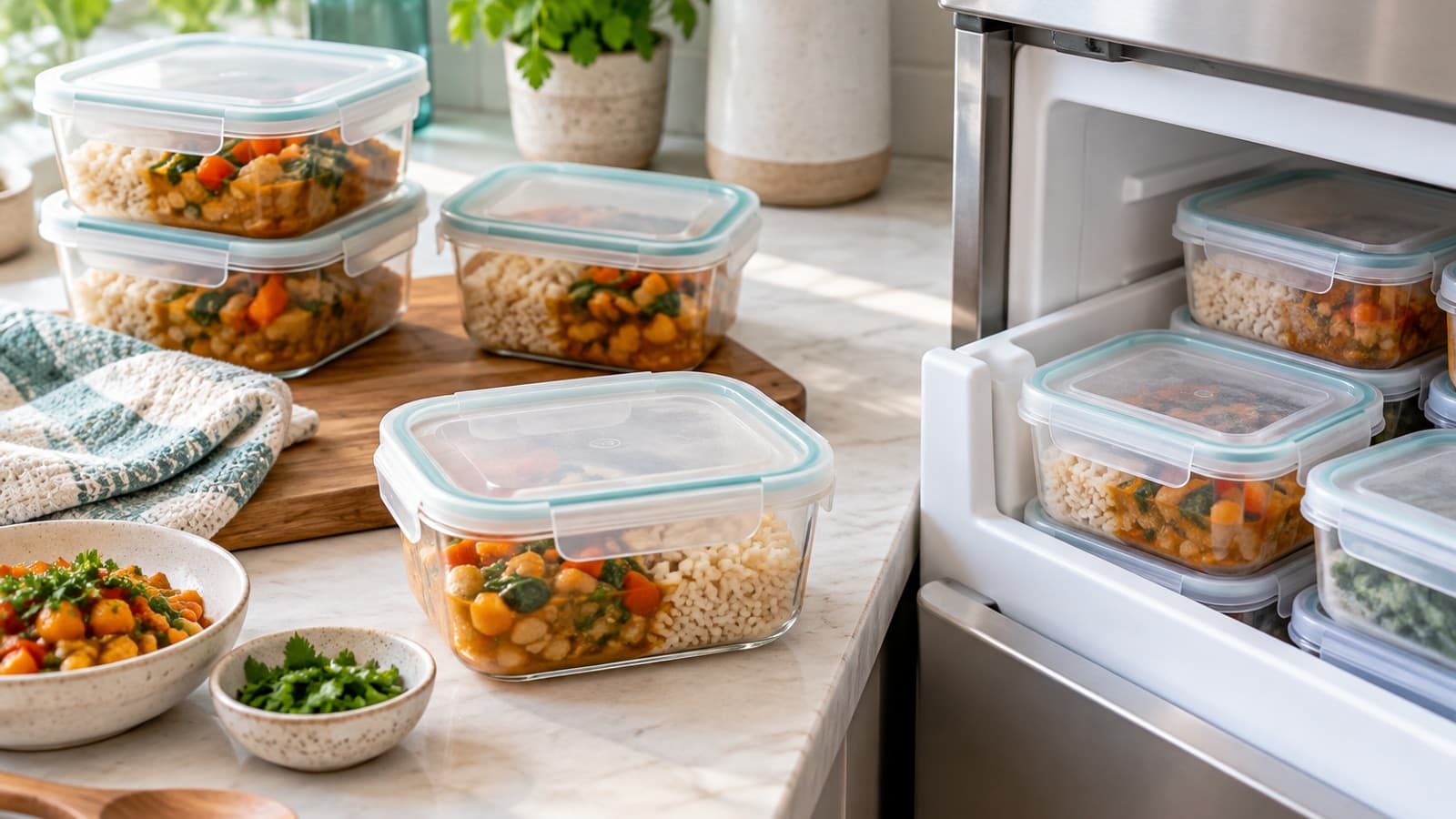
The freezer can be a useful backup on the evenings when cooking sounds like too much work. It works even better when the containers hold meals you recognize and portions you can use without defrosting a whole casserole.
If your appetite has changed on a GLP-1, start with a few foods you already enjoy. A small container is a starting point, not a rule about how much to eat. You can add a side or warm a second portion if you want more.
Choose foods that suit your week
Think about the meal that most often catches you unprepared. Is it lunch between meetings, dinner after a late shift, or the day before your next grocery trip? Make that the job for your first freezer batch.
Soup, stew, cooked beans or a favorite sauce can be useful in individual portions. You might also freeze cooked components separately: a grain in one container and a protein or vegetable dish in another. Separate containers make it easier to combine foods differently instead of eating the same meal several days in a row.
Not every food keeps its original texture after freezing. If you're unsure how a dish will turn out, freeze one small portion first. You can add a fresh topping or side after reheating when that suits the meal.
Portion before you pack
Use containers or freezer bags intended for freezer storage. A shallow container can help food chill quickly; bags can be laid flat once safely packed to save space. Leave the amount of room recommended by the container maker for liquids that expand as they freeze.
Consider making a few different sizes. A small serving of soup might be lunch alongside toast, while a larger container may suit a day when you want a full bowl. Don't seal every meal into one fixed portion if your hunger varies.
Write the food name and preparation date on each package. If a meal needs an added side or particular reheating directions, a short note can help. Put newer containers behind older ones so the first batch stays visible.
Cool and store it safely
Divide large amounts into smaller, shallow containers and refrigerate or freeze perishable food promptly. Don't leave a pot on the counter for the afternoon. The general limit is two hours at room temperature, or one hour if the food is exposed to temperatures above 90°F.
Keep your refrigerator at 40°F or below and your freezer at 0°F or below. For safely handled cooked poultry and many soups, refrigerator guidance is generally three to four days; other foods have their own storage recommendations. Freeze food you won't use in that period while it is still safe, rather than waiting until you are unsure.
Freezer storage estimates often describe quality. Food kept continuously frozen at the recommended temperature can last longer, though flavor and texture may change. The date on the container helps you choose what to use first.
Make reheating part of the plan
Thaw in the refrigerator rather than on the counter. When reheating leftovers, use a food thermometer to check that they reach 165°F throughout; bring soups and sauces to a boil. In the microwave, arrange the food evenly, cover and rotate it, allow standing time, and check in several places. Use a microwave-safe dish and add a little liquid if the food needs it.
Keep any fresh additions separate until you're ready to eat. If the portion isn't enough, add something simple instead of treating the container size as a target.
Our weekend meal-prep guide can help you decide what to cook. Start with two or three containers, then keep the ideas that made a busy day easier.