










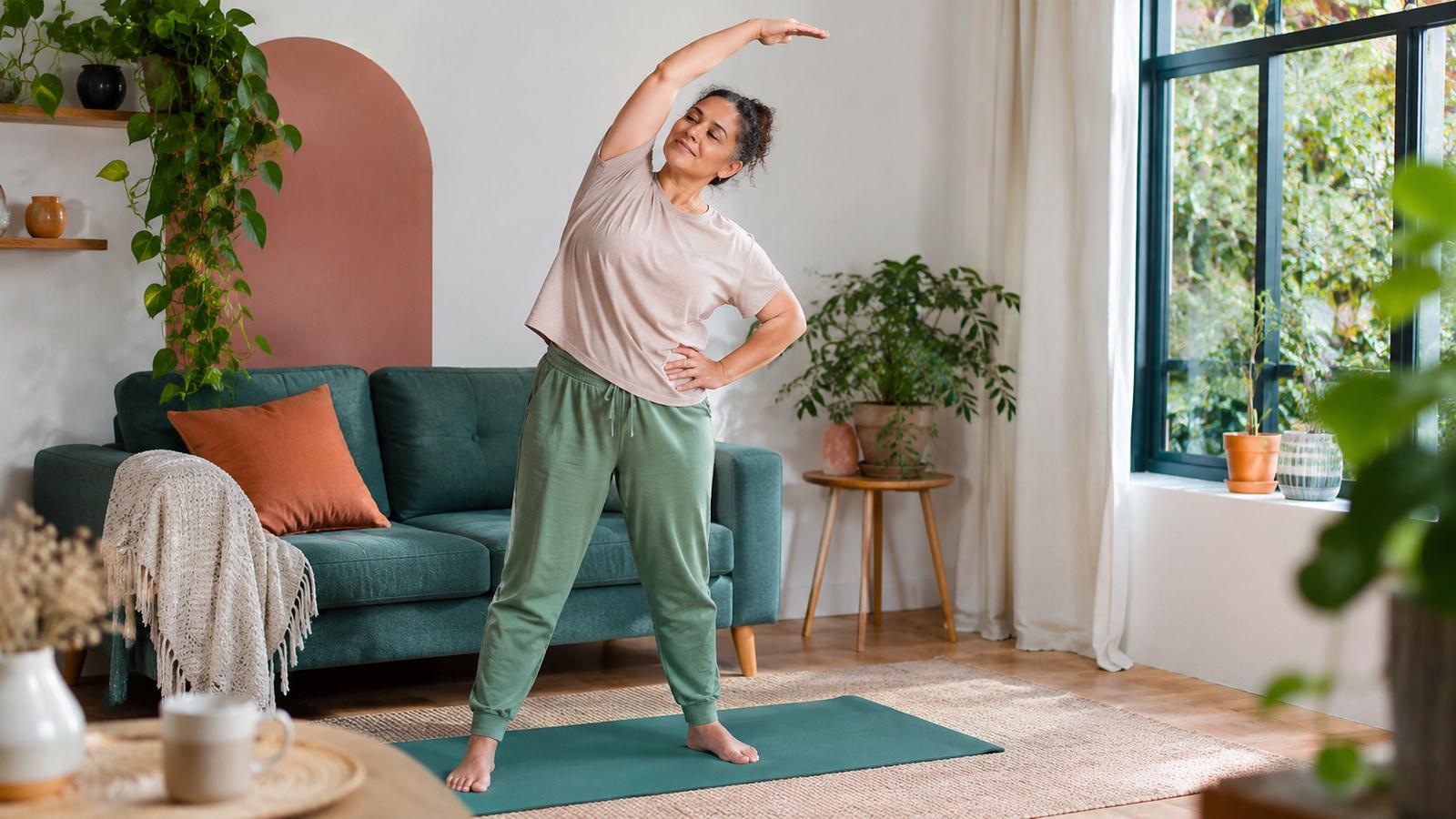
Your downstairs neighbor may not appreciate a set of jumping exercises at 6 a.m. That doesn't mean your living room is off-limits for movement. A quieter session can use controlled steps, a stable chair or exercises that don't involve landing heavily on the floor.
The goal is to find something that fits your space and your body. You don't need to copy a high-impact video exactly, and you don't have to make every session exhausting for it to count as activity.
Find out what carries through the building
Pick a spot with enough clear floor to move safely. If it's comfortable to do so, try a few gentle steps at a time agreed with a neighbor and ask whether they can hear them. The answer may depend on the building as well as how you move; what sounds quiet inside your room may sound different downstairs.
A mat may make floor movements more comfortable, but it isn't a guarantee that impact noise won't travel through the building. If the mat bunches or slips, change the arrangement rather than trying to balance on it. For chairs, cords and supports, use our small-space strength setup guide. A quiet movement still needs a secure surface and room to move.
Keep your path clear to the support you plan to use. If you have balance concerns or a health condition that affects activity, ask a clinician or physical therapist which movements and setup are appropriate for you.
Swap impact for control
Instead of jumping, try a comfortable step to the side and back, or march gently in place if that works for you. Keep the movement small enough that you can place your foot down quietly. A seated version—lifting one foot at a time while seated securely—is another option.
For strength work, you might practice standing up from and sitting down on a stable chair, if that movement is appropriate for you. Move slowly, use the chair or another sturdy support as needed and stop if you feel pain or unsteady. A physical therapist can help you find a variation that fits your ability.
Controlled movements can still feel like work. You can adjust the pace, range and length of a session without adding jumping or dropping equipment.
A simple quiet session
Choose two or three movements you already know are comfortable. For example, begin with easy seated or standing marches, then try a few supported chair rises and a gentle step to each side. Rest between movements and repeat only if you feel comfortable.
This is a menu, not a prescription. You might replace chair rises with an upper-body movement you learned from a professional, or choose seated movement throughout. Start with a short period and add time gradually if it suits you. If you're returning after illness or injury, ask your care team how to resume.
Finish with slower movement and a pause to notice how you feel. You should be able to change the plan on a tired day. Recovery is part of a routine, not something you have to earn.
Be considerate with equipment
If you use dumbbells, set them down deliberately instead of dropping them. A folded towel can protect a surface, though it won't necessarily prevent noise reaching another unit. Resistance bands can be quiet, but inspect them for damage and use only an anchor that is secure and designed for that purpose.
Avoid improvising with an unstable door, rolling chair or heavy household object that could tip. If you're unsure about a movement or setup, choose a simpler option or ask a qualified instructor for guidance.
Headphones can keep a video or music private, but leave yourself aware of your surroundings. You can also use captions or a written plan if listening and moving at the same time is distracting.
Work with your building and schedule
If your building has quiet hours, choose a time that fits them. You might ask a neighbor whether a particular spot or time is disruptive, without feeling that you need to explain your health goals. A community room or outdoor path may be another option if it's accessible to you.
Short sessions can be easier to fit between work calls, caregiving or shared use of a room. You don't need to rearrange the entire apartment. Put equipment away after the session so the area is clear for everyone else.
Listen to what your body says
Stop and seek medical advice if a movement causes concerning pain, dizziness or symptoms that don't settle. Severe chest pain, significant trouble breathing or fainting can require emergency care. If you're unsure whether a new activity is appropriate, discuss it with your clinician, especially if you have an existing condition or activity restrictions.
Quiet doesn't mean rigid. A routine that lets you move, rest and keep the peace with your neighbors is often easier to return to than one that demands perfect conditions.