










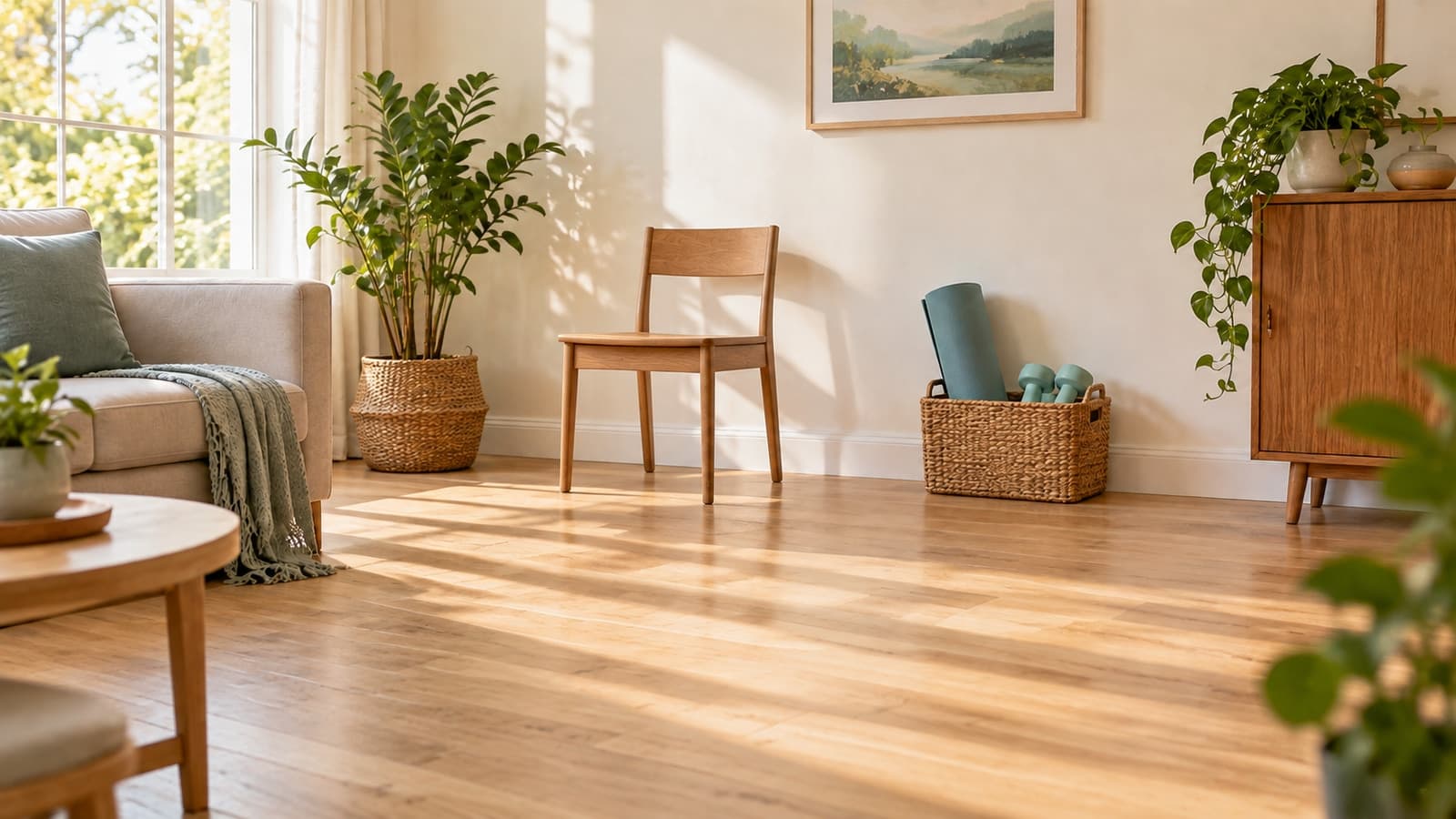
You don’t need a spare room to do strength work at home. You do need a place where you can move without dodging a coffee table, stepping over a cord or wondering whether the chair will slide.
Clear the space before you choose the exercise. A few minutes of setup can make the session feel more comfortable, especially when the room has to serve another purpose afterward.
Check the floor and your route
Walk through the area you plan to use. Move loose rugs, bags, cords, toys and shoes out of your path. Check that the floor is dry and that you can see the edges of furniture. Good lighting matters when you’re moving between a chair, a wall and stored equipment.
Leave enough room for the movement you’ve chosen, not just enough room to stand still. Try the motion without a weight first: can you extend your arms without hitting a shelf or doorway? Can you turn and set something down without stepping around an obstacle?
If you share the space, let others know when you’re exercising and keep pets out of the immediate area. A door opening unexpectedly or a pet crossing underfoot can turn a clear route into a crowded one.
Choose support deliberately
If your plan uses a chair, pick one that is stable, doesn’t roll and lets you place your feet comfortably. Position it so it cannot slide backward; a solid wall may help depending on the setup. Avoid standing on a chair or using furniture that tips when you touch it.
For a wall-based movement, check that the surface is solid and clear. A countertop can be useful support for some exercises if it is fixed and easy to reach. If you need support for balance, keep it available throughout the movement rather than trying to let go before you feel ready.
A trainer or physical therapist can help adapt a seated or standing exercise to your space. If getting down to the floor is difficult, you can choose movements that don’t require it. You’re not missing a mandatory part of the workout by staying upright.
Give equipment a home
A small basket or low shelf can keep light equipment out of the walking area between sessions. Store weights where they won’t roll and where you can retrieve them without an awkward reach. If you use a band, inspect it for wear and follow the attachment instructions. Don’t improvise an anchor that might slip.
Think about who else uses the room. If children or pets can reach your equipment, choose storage that keeps it secure and out of their way. Make sure a shared doorway remains clear even when the equipment is put away.
You might not need much equipment at all. Decide what you’ll actually use before buying a collection that takes over the room. A water glass, a stable chair and enough space for a movement can be a starting point for some people.
Test the setup at an easy level
Once the area is ready, try one familiar movement slowly. Notice whether you can breathe, reach and return comfortably. If the floor is slippery or the chair shifts, stop and fix the setup before continuing. Ask for a demonstration if a movement is new or confusing.
If you feel dizzy, ill or unusually weak, postpone the workout and address how you feel. During GLP-1 treatment, contact your care team when nausea or other symptoms make it hard to eat or drink. Stop for pain or other concerning symptoms.
Our home bodyweight strength guide offers movement ideas once you’ve made room. Afterward, put the equipment away and leave the route clear for the rest of the day.