










The best kitchen setup is the one that makes the meals you want to prepare easier to manage. That might mean making coffee independently, assembling lunch between meetings, or cooking a family dinner. It doesn't have to look like anyone else's kitchen to work well for you.
Before buying equipment or planning a renovation, take a look at the tasks you do most often. Where do you have to reach farther than you'd like? Which door gets in the way? What happens when a pot is hot or a grocery bag is heavy? Those answers can guide changes that fit your chair, your home, and your routine.
Follow the path of one meal
Pick a familiar meal and think through it from start to finish. You might begin at the refrigerator, move to a counter, use the sink and cooktop, then carry the plate to a table. Notice where you pause or need assistance.
Check the floor along that route. A storage box, trash can, loose mat, or open dishwasher door may reduce your turning space. Moving one item could make a common task less frustrating. Leave enough room for your own chair and the way you approach each surface, rather than relying on a generic measurement from a catalog.
Next, look at the counter where you want to work. Can you get close enough without stretching or leaning uncomfortably? Is there clear space underneath for your knees and feet if you need it? If exposed pipes are within reach of your legs, ask a qualified professional about protecting against hot surfaces.
Put frequent items where you can reach them
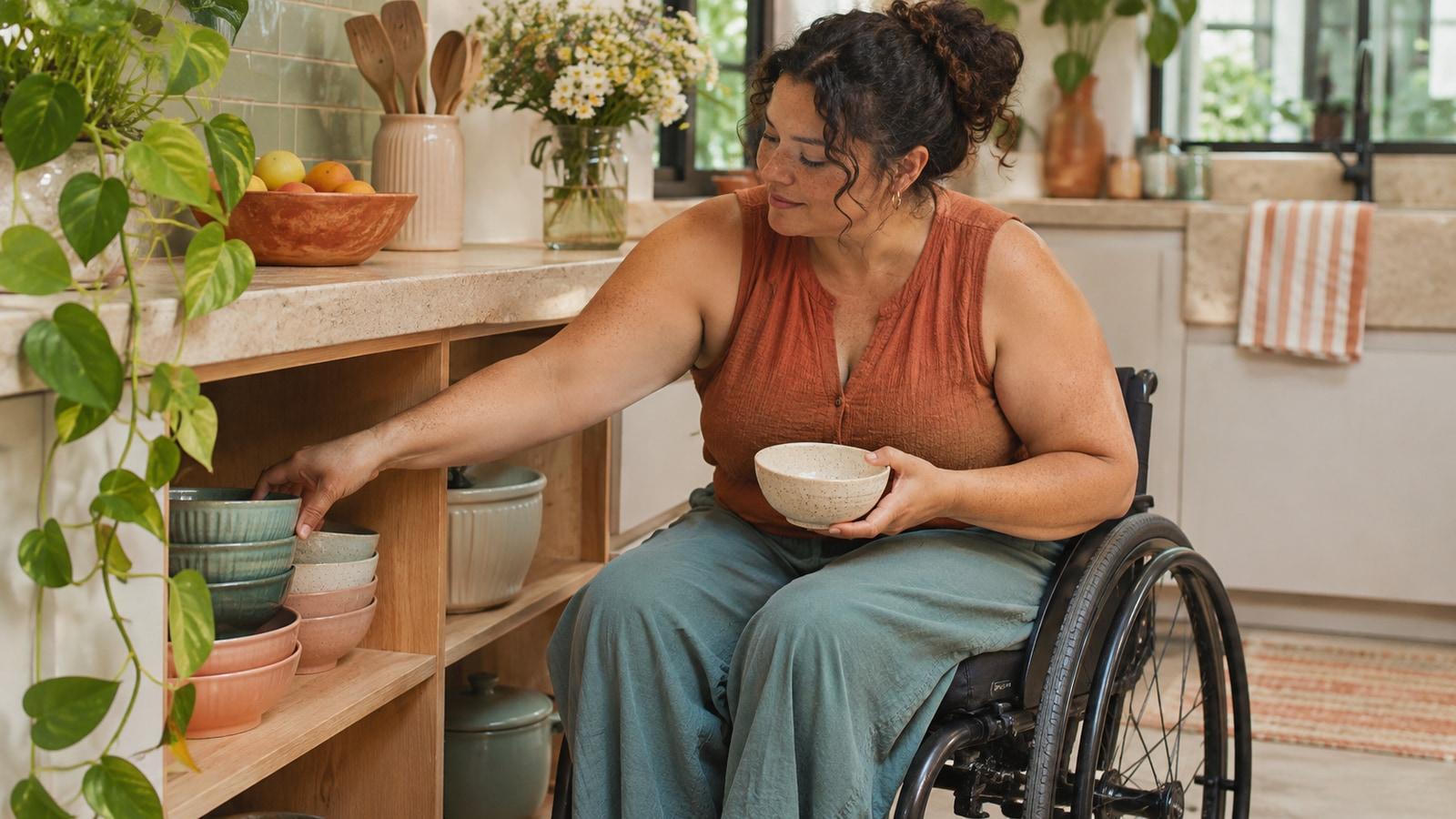
You don't need to rearrange every cabinet at once. Start with the things you use for breakfast or lunch: a plate, bowl, cup, utensils, and a few shelf-stable ingredients. Keep them in a spot you can access comfortably without reaching over a hot appliance or pulling a heavy object down from above.
Consider the weight of the container as well as its height. Transferring dry oats from a large bag to a smaller, easy-to-open container might help, provided you label it and keep the original ingredient information if you need it. A basket can bring several lightweight items together, but it should not block a route or make a shelf too heavy to use.
If you share the kitchen, show others where everyday items belong. A simple agreement to return the cutting board to the same place can be more useful than a complicated storage system.
Plan where hot things will go
Before turning on an oven or cooktop, identify a stable, heat-safe place to set down a hot pan. Consider the route from the appliance to that surface, the direction doors open, and whether you can see and reach the handles comfortably. Avoid carrying hot liquids on your lap.
The safest approach depends on the person and equipment. Some cooks may find a suitable pull-out work surface or a countertop appliance helpful; others may prefer assistance with a particular step. If you have reduced sensation or difficulty gauging heat, mention that when discussing your kitchen setup with an occupational therapist.
Try the movement with an empty, cool pan first. If the route requires an uncomfortable reach or a risky transfer, change the plan before cooking. A recipe that uses a smaller pan or fewer hot transfers can be just as satisfying.
Make the prep surface work for you
A stable table or accessible counter may be more useful than the largest surface in the room. Gather ingredients before you start, and keep a clear area for the task at hand. If opening jars or steadying a cutting board takes extra effort, an adaptive opener or board with a non-slip base may be worth trying.
Try opening the refrigerator and cabinets from the position you normally use. Does the door leave room to turn, and can you reach the shelf without leaning farther than feels stable? Moving frequently used ingredients to a different shelf may help. Ask for assistance with a heavy item if getting it down would put you off balance.
A handle or tool that works for one person may be awkward for another. If possible, try equipment through an occupational therapist or local equipment program before spending money. Our guide to preparing meals while seated has more ideas for breaking the work into manageable steps.
For food safety, keep raw meat separate from ready-to-eat ingredients and wash surfaces and utensils between tasks. Set up the work area so you can do that without having to balance items in your lap or stretch across a crowded counter.
Think about storage and cleanup together
The meal isn't finished when the timer goes off. Consider where leftovers will cool and how you'll reach containers, open the refrigerator, and put dishes away. If a container is hard to lift or seal, a smaller one may be easier to manage.
Refrigerate perishable food promptly. Food safety guidance recommends doing so within two hours, or one hour when the surrounding temperature is above 90°F. If someone helps you pack meals, agree on a location and label system so you can find what you want later.
Ask for a kitchen assessment when useful
An occupational therapist can look at the tasks you choose, your movement and reach, and the particular layout of your home. You might ask about safe access to the sink, opening the oven, carrying a plate, or setting up a work surface. Bring up any changes in strength, sensation, balance, or fatigue that affect those tasks.
Some changes are as simple as relocating cups. Others may involve a landlord, an equipment program, or a larger renovation. Either way, your priorities should guide the plan. A kitchen that makes one more everyday meal possible on your terms is a meaningful place to start.