










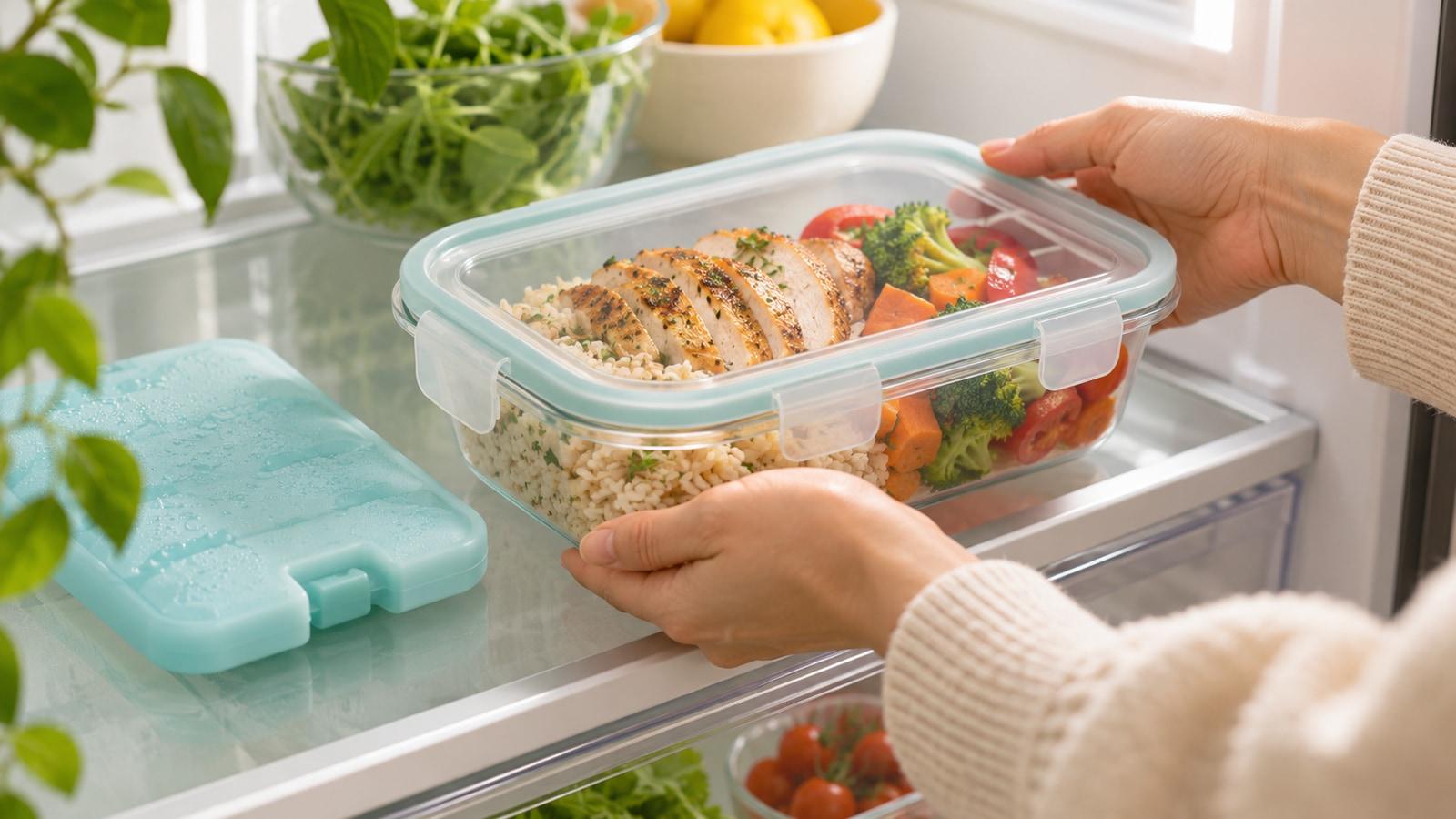
Chicken and rice can make a useful lunch, but the planning starts before you reach for a container. When was the rice cooked? Did the chicken cool in the fridge, or sit on the counter while you finished dinner? Will you have a place to keep the box cold and heat it at work?
Those details are easy to forget on a busy morning. A simple routine makes the meal easier to pack and helps you avoid guessing at lunchtime.
Decide when you'll eat it before cooking
If you're making rice for dinner and want some for tomorrow, set aside the lunch portion as soon as it's cooked. Divide it into a shallow container so it can cool quickly, and get it into the refrigerator within one hour of cooking. Keep the fridge at 40°F or colder.
Plan to eat refrigerated rice within 24 hours, and reheat it only once. Label the container with the cooking time if you won't remember it. For example, rice cooked at 6 p.m. can be packed for lunch the next day if it was cooled and kept cold properly; it isn't a good candidate for a lunch two days later under that guidance.
Rice deserves this extra attention because some germs can survive cooking and grow if it sits out too long. Heating it again doesn't necessarily undo the problem. If you don't know how long it was left out, discard it rather than tasting it to decide.
Give the chicken its own container
If you're cooking chicken from raw, use a food thermometer and cook the thickest part to 165°F. Keep raw poultry and its juices away from the rice, washed vegetables and ready-to-eat sauce. Wash your hands, boards, knives and counters after handling it.
Put the cooked chicken in a clean shallow container and refrigerate it promptly. Cooked chicken generally keeps for three to four days in a refrigerator at 40°F or below, provided it was handled safely. If chicken and rice are packed together, use the shorter rice window rather than assuming the chicken's longer storage time applies to the whole box.
Write down when the chicken was first cooked, too. Turning leftovers into a new bowl doesn't give older chicken a fresh storage clock. If you bought prepared chicken, follow its label and take account of how long it has already been open.
Keep cucumber, herbs or a yogurt sauce in separate cold containers. That makes reheating simpler and keeps a cool topping from getting mixed into the hot food. If you use dairy or a prepared sauce, check its ingredients for any allergies that matter to you.
Pack for the trip, not just the fridge
Take the food from the refrigerator shortly before leaving. Use an insulated lunch bag with at least two cold sources, such as frozen gel packs, around the perishable containers. If you have access to a refrigerator at work, put the meal there when you arrive.
An ice pack is useful only if the food stays cold. Think about the length of the trip, a hot car and the delay before you can refrigerate the bag. If you don't have a reliable way to keep perishable food cold, choose a shelf-stable lunch for that day instead of hoping the box stays cool enough.
If your schedule changes and the food has been left out too long, let the meal go. Perishable foods shouldn't sit at room temperature for more than two hours, or more than one hour when the surrounding temperature is above 90°F. For rice, follow the more cautious one-hour cooling guidance from the start.
Reheat the portion you plan to eat
At lunch, transfer the rice and chicken to a microwave-safe dish if needed. Spread them in an even layer, cover appropriately and heat. Stir or rearrange the food and follow the microwave's standing-time instructions so the heat has a chance to distribute.
Check the food with a thermometer in several places. Reheated leftovers should reach 165°F throughout; a hot edge doesn't tell you the center is ready. If a spot is cooler, heat the food longer and check again. Add the chilled vegetables or sauce afterward.
Because rice should be reheated only once, warm the portion you'll eat and keep any other safely stored portion cold. If your appetite varies, pack a smaller main container and a separate side. You can decide at lunch what you want without repeatedly warming the same rice.
For more on texture, our guide to keeping cooked chicken moist when you reheat it covers adding a little liquid and heating pieces evenly. Moist chicken still needs the same thermometer check.
Make the lunch worth packing
Once the storage is sorted, the flavors can stay simple. Try herbs and a mild sauce one day, or add cooked vegetables you enjoy. A separate piece of fruit, yogurt or another side gives you an option if the main container doesn't feel like enough.
If a GLP-1 medicine has changed your appetite, pack an amount that sounds manageable and make another food available for later. You don't need to force yourself to finish a box because that was the plan. If nausea or early fullness regularly makes it hard to eat or drink enough, bring it up with your care team.
The goal is a lunch you can actually use: rice with a known cooking time, chicken handled safely, a cold trip and a single thorough reheat. After that, choose the flavors that make you look forward to opening the container.