










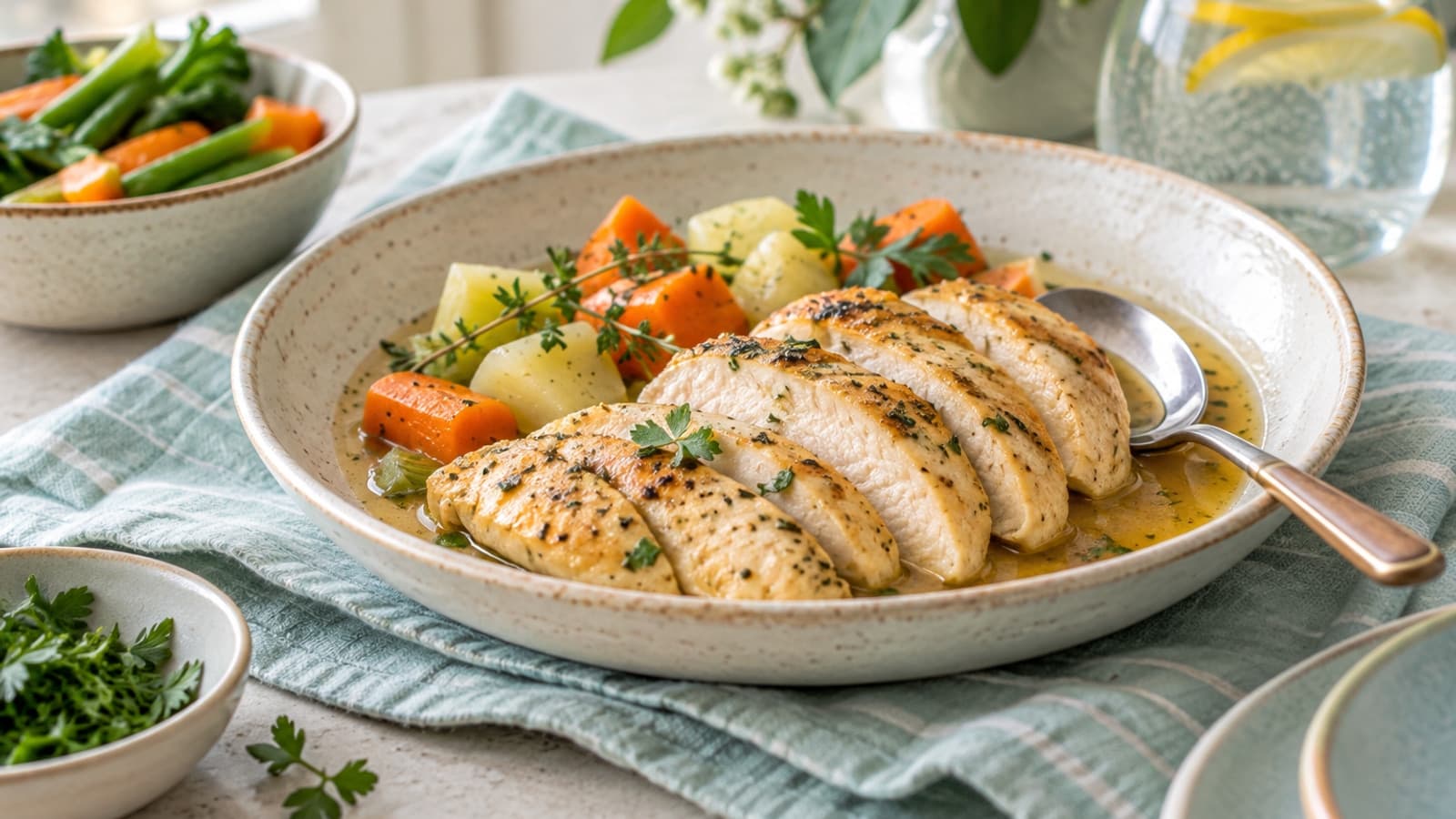
Yesterday's chicken was good. Today's version may feel dry before you've even finished heating it. A small change in how you store and warm it can make leftovers more inviting.
Tender chicken still needs to reach a safe temperature. The goal is even heating with a little moisture, followed by a thermometer check rather than guessing from how the outside looks.
Start before the chicken goes in the fridge
If you know you'll have leftovers, separate the portion you plan to save and put it in a clean, shallow container. A little cooking liquid or a sauce you enjoy can be kept with it, provided the whole dish is handled and stored safely.
Refrigerate or freeze perishable food promptly, within two hours of preparation, or within one hour if it has been exposed to temperatures above 90°F. Set the refrigerator to 40°F or below. Safely handled cooked chicken generally keeps there for three to four days; freeze it within that period if you won't use it in time.
Label the container with the date. Freezing doesn't make food that was already unsafe safe again, and a normal smell isn't proof that a leftover has been stored correctly.
If you're using the microwave
Place the chicken in a microwave-safe dish with a little broth, water or sauce. Arrange pieces in an even layer instead of piling them into a mound, and cover the dish appropriately for the microwave.
Heat, rotate or stir as appropriate, and allow standing time so heat can spread. Then check the chicken in several places with a food thermometer. Reheated leftovers should reach 165°F throughout. If part is still below that temperature, continue heating and check again.
Different microwaves and piece sizes behave differently, so a fixed number of seconds isn't reliable. Use the thermometer to know when the food is ready; don't deliberately leave the center cooler to preserve texture.
If pieces vary in thickness, check the thickest ones as well as the center of the dish. Insert the thermometer into the food rather than relying on the temperature of the surrounding liquid. Clean the thermometer between uses, and follow its instructions for getting an accurate reading.
On the stove or in the oven
For a skillet, you might add a little broth or water and cover the pan while the chicken heats. In the oven, use an appropriate covered dish with a little liquid and set the oven to at least 325°F. Either way, check the internal temperature reaches 165°F throughout before serving.
Cutting a larger piece into smaller, similar-sized pieces may help it heat more evenly. Take care with steam when lifting a lid or cover, and use clean utensils for food that is ready to eat.
If the chicken was frozen, thaw it in the refrigerator rather than leaving it on the counter. Plan ahead so a frozen block doesn't become a reason to rush the safe heating step.
Turn it into a meal you want
Chicken with a little broth can go over rice or into a soup. A suitable sauce added after reheating can provide a different flavor, and a vegetable or piece of bread can make the portion feel like a complete meal. Check ingredients if you have food allergies or follow a particular diet.
If your appetite is smaller on a GLP-1, heat the amount you expect to eat and keep the rest stored safely. You can have another component or more food if you're hungry; a small container isn't a limit.
Our weekend meal-prep guide has more ideas for planning ahead. A bit of liquid, an even layer and a thermometer can make tomorrow's lunch both more pleasant and easier to manage.