










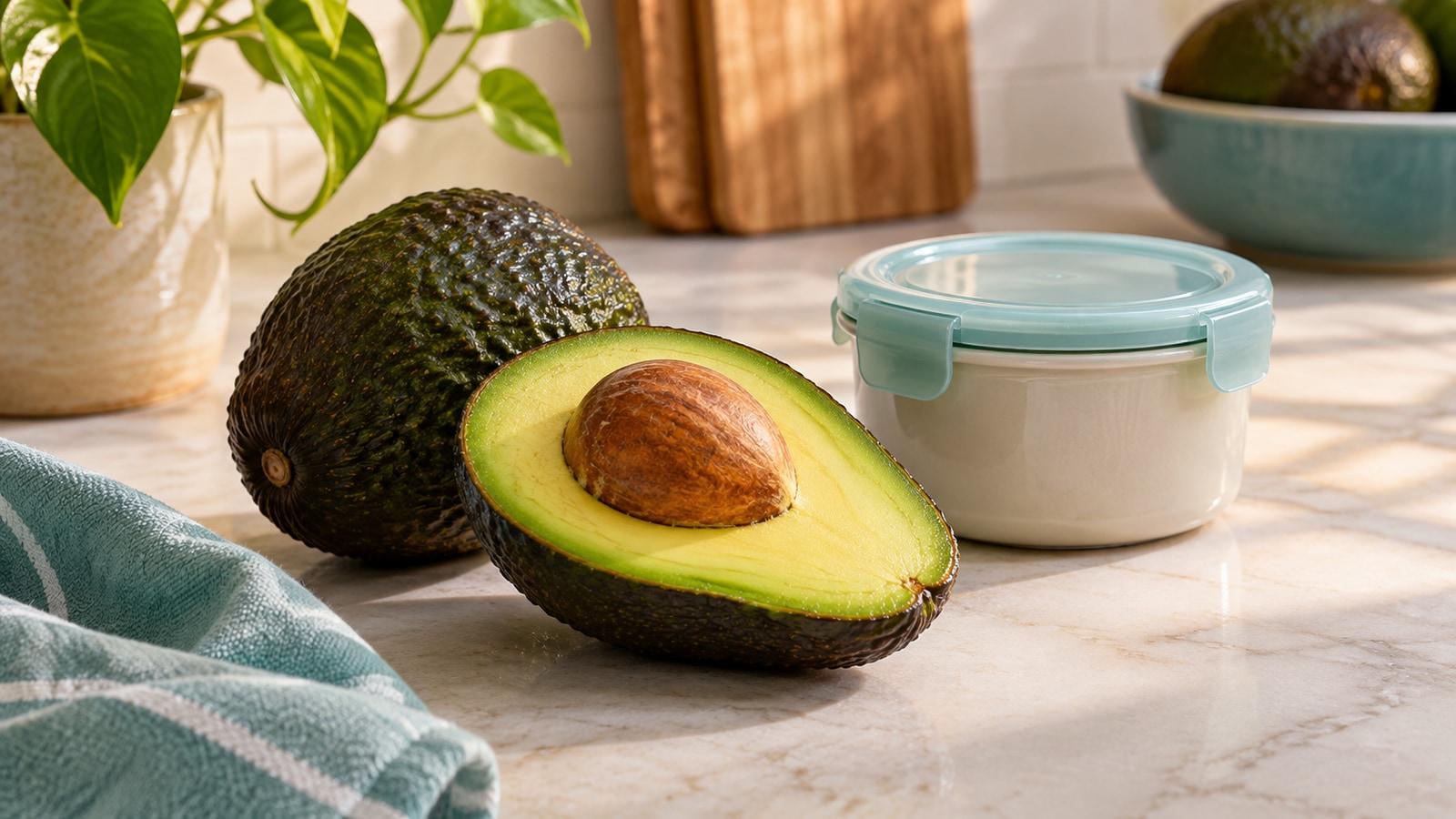
An avocado can go from hard as a rock to ready for lunch while you're busy doing something else. Then you cut it open, use half, and wonder what to do with the rest.
The good news is that you don't need to get the timing perfect. A little planning at the store and a few straightforward storage habits can make avocados easier to use in meals you already like.
Pick for when you plan to eat
If dinner is tonight, look for an avocado that yields slightly to gentle pressure in the palm of your hand. It should feel soft enough to give a little, without deep mushy spots. Try not to press with your fingertips; concentrated pressure can bruise the fruit.
Shopping for later in the week? Choose a firmer one and let it soften at room temperature. Check it daily rather than counting on a precise number of days. Variety, maturity, and temperature all affect the timing.
Color can be a clue, but it isn't the whole answer. Some varieties darken as they soften, while others stay green. Look at the fruit's condition and feel as well as its color. Leave behind avocados with broken skin or obvious damage.
If you're buying several, pick a mix of firmer and softer fruit. That gives you a better chance of using them on different days instead of finding the whole bag ready at once.
Give a firm avocado time
Set a firm avocado on the counter, out of direct heat, and check it each day. Once it has softened, moving the whole fruit to the refrigerator can give you a little more flexibility. Don't expect refrigeration to rescue one that is already spoiled.
You may hear about putting an avocado in a paper bag with an apple or banana to encourage ripening. That can speed things along, so check often. It won't turn an immature or damaged fruit into a good one, and timing still varies.
There is no need to buy the largest bag just because the price per piece looks appealing. If you usually eat one avocado over several meals, buying fewer can mean less waste.
Wash before you cut
Even though you won't eat the peel, rinse the avocado under running water and scrub the firm skin with a clean produce brush before cutting. A knife can carry material from the outside into the flesh. Dry it with a clean towel or paper towel, and use a clean board and knife.
Set the avocado on a stable cutting board. Cut lengthwise around the pit, keeping your hand clear of the blade, then gently twist the halves apart. For the half holding the pit, place it cut-side down and cut around the pit into quarters. The pit can then be lifted away. A spoon can help with stubborn pieces.
There's no need to strike the pit with a knife while holding the fruit. That move can slip. If cutting is difficult, take your time or ask for help.
Save the other half
Refrigerate cut avocado promptly in a covered container. The surface may turn brown after exposure to air. A little lemon or lime juice and a snug covering can help with appearance, but neither replaces refrigeration.
For a packed lunch, keep the cut avocado cold with the rest of your perishable food. Use an insulated bag and cold pack if you won't have a refrigerator. Don't leave cut fruit at room temperature for more than two hours, or one hour if the temperature is above 90°F.
A brown surface alone doesn't tell you everything about safety. If the avocado is moldy, smells spoiled, or you're unsure how long it has been sitting out, throw it away. Harmful germs aren't always visible or detectable by smell.
Use it without building a whole meal around it
Avocado brings a creamy texture and contains unsaturated fat. It can be part of a balanced meal, but it doesn't need to be on every plate. The amount that suits you will depend on the rest of the meal and what you enjoy.
Try a few slices with eggs and toast, or add them to a bowl of beans, vegetables, and rice. Mash a little with lime for a sandwich spread. A spoonful can also finish soup or tacos just before eating. Keep toppings separate if everyone at the table likes a different amount.
If you're curious about the broader role of fats, our guide to saturated and unsaturated fats covers practical swaps.
For someone taking a GLP-1 medicine, appetite and food preferences can change. If a rich food doesn't appeal on a particular day, there's no reason to force it. Persistent nausea, vomiting, or difficulty eating and drinking is a good reason to contact your care team.
When the timing isn't ideal
An avocado that is still firm may be better saved for another day. If one is ripe sooner than expected, use a portion at your next meal and refrigerate the rest. For a softer fruit that is otherwise in good condition, mashing can be easier than trying to cut neat slices.
The goal is simply to have an ingredient you enjoy ready when you want it. Buy for your actual plans, check it as it softens, and keep the cut portion cold.