










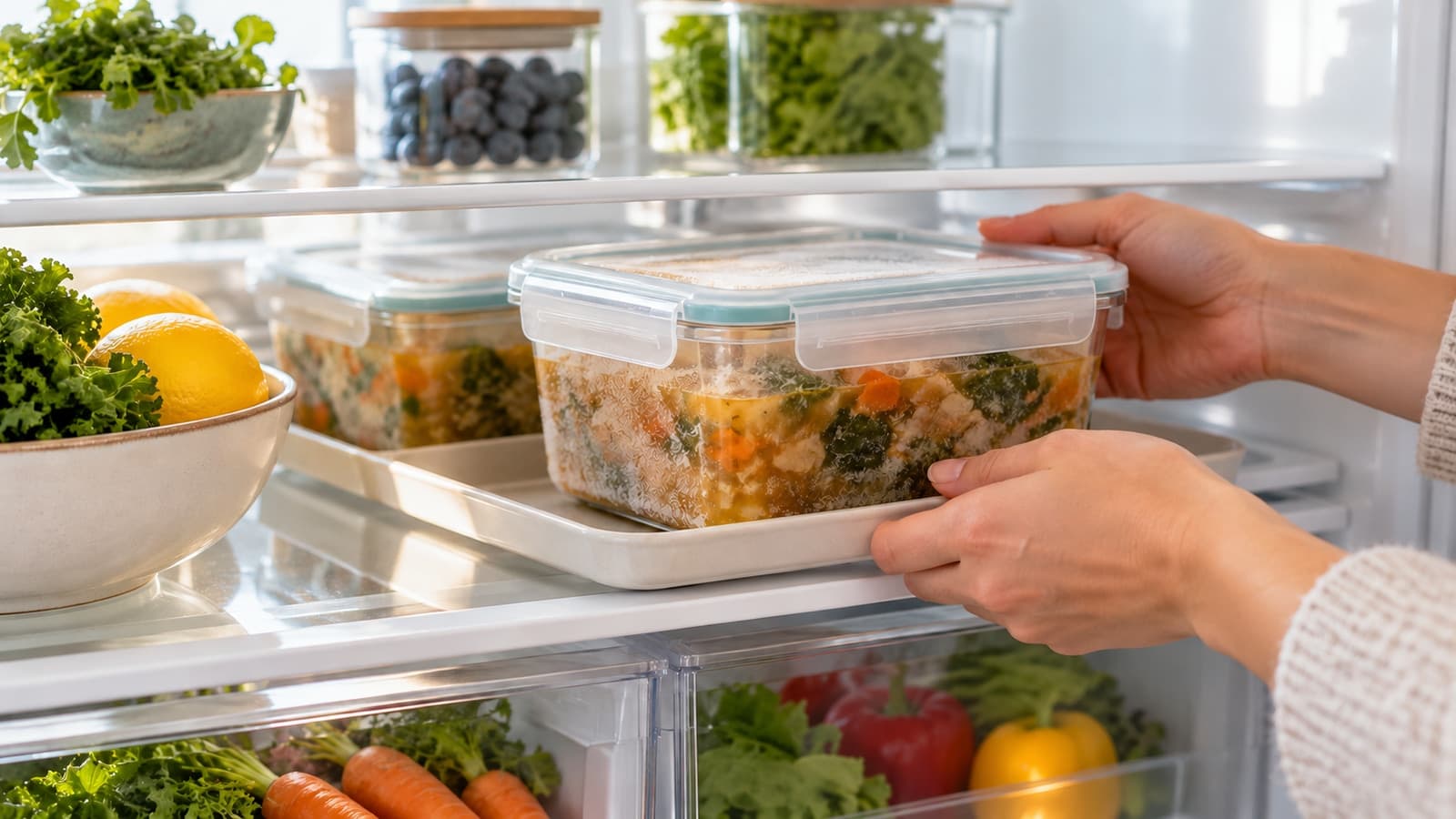
You tucked a container of soup in the freezer for a busy day. Now that day has arrived, and the soup is still a solid block. What is the best way to get it onto the table?
You have a few choices. The right one depends on what you froze, the container and how soon you plan to eat. Leaving perishable food on the counter all afternoon isn't one of them: the outside can warm while the middle is still frozen.
Give yourself time when you can
The refrigerator is the easiest place to start. Move the frozen portion from the freezer to the fridge before you need it, leaving it in a suitable covered container. A shallow tray underneath can catch drips.
Keep the refrigerator at 40°F or below and use an appliance thermometer to check it. If you're thawing raw meat, poultry or seafood, seal it securely and place it where juices cannot drip onto food that's ready to eat. A tray on a lower shelf helps keep things separate.
How long will it take? That depends on the food, its shape and the refrigerator. A thin individual portion generally needs less planning than a large frozen block, but don't assume it will be thawed by a particular hour. Look ahead at tomorrow's meal and move it early enough to give it time.
If your plans change, check the storage guidance for that specific food rather than treating every thawed item alike. Raw poultry and a previously cooked soup, for example, have different histories. A date on the package helps you remember when you moved it into the refrigerator.
Need it sooner? Use cold water
For food in a leakproof bag, a cold-water bath is another option. Submerge the sealed package in cold water and change the water every 30 minutes so it stays cold. Cook the food immediately after it thaws.
Make sure the packaging is actually watertight. If the meal is frozen in a container that can't be sealed for immersion, choose another method. Keep the sink and surrounding area clean, especially if the package contains raw meat or poultry.
Hot water may seem faster, but it can warm the outside of the food too much. Cold water takes a little attention, so choose it when you'll be nearby rather than starting a bath and leaving home.
The microwave is useful when you're ready to eat
Use a microwave-safe dish and the defrost setting or instructions for your appliance. Turn or separate the food as directed so it thaws more evenly. Some areas can begin cooking while others are still frozen, so cook the food immediately after microwave thawing.
For a cooked meal, move straight from thawing to reheating. Stir when practical, cover as directed and allow the recommended standing time. Check that leftovers reach 165°F throughout with a food thermometer. Bring leftover soup, sauce or gravy to a boil.
Check several places in a thicker dish; a hot edge doesn't guarantee a hot center. Take care when lifting a cover because trapped steam can burn.
Make the next portion easier
Some packaged frozen meals are designed to go directly from freezer to oven or microwave. Follow the package directions, including any standing time. For homemade meals, use a freezer-safe container that suits how you expect to reheat the food, and label it with the contents and date.
If you're cooking for one or have a smaller appetite on a GLP-1, separate a batch into amounts that are convenient to handle. That way you can heat one container and keep another safely frozen. You can always add a side or have more if you're hungry.
Our weekend meal-prep guide has more ideas for planning ahead. The next time you freeze a meal, think about the trip back out of the freezer too.