










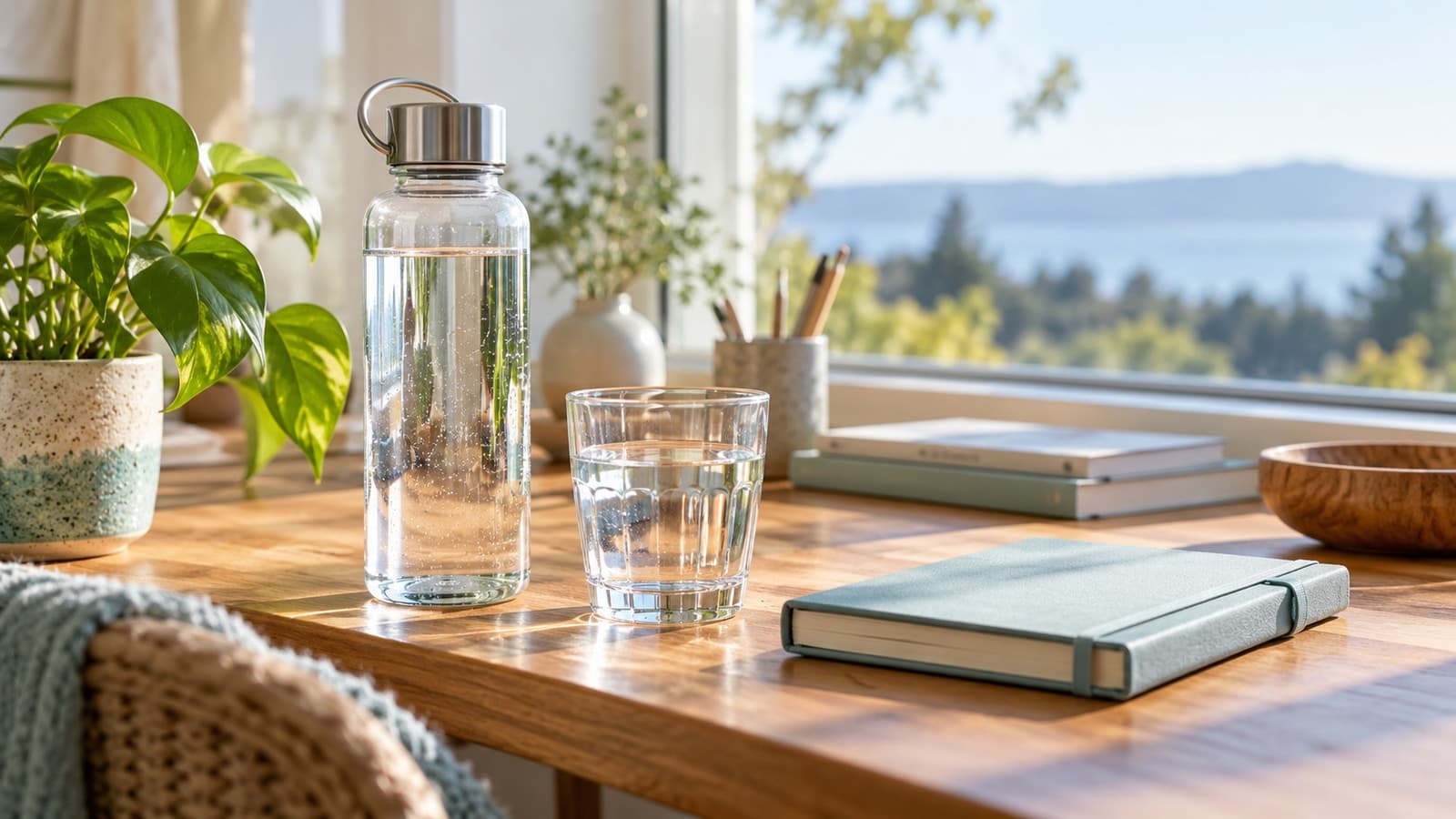
A quieter appetite can change more than your plate. If you used to drink mainly with meals, smaller or less frequent meals may also mean fewer chances to remember a drink. Start by noticing that pattern rather than buying an enormous bottle and hoping it fixes everything.
Put a drink where the day happens
Think about the places you already pause: breakfast, your desk, the kitchen after a walk, or the chair where you read. Keeping a drink nearby can make it easier to take regular sips. Choose a cup or bottle you like using and can clean easily.
A simple experiment is to connect a drink with two familiar moments in your day. See whether that helps before adding several reminders. If you work away from home, check where you can refill and whether you have reliable bathroom access.
Choose an amount that fits you
There isn’t one bottle size that meets everyone’s needs. Weather, activity, illness, and health conditions can change the picture. If you have kidney or heart disease, take a medicine that affects fluids, or have been given a fluid limit, follow your clinician’s plan.
You don’t need to force large amounts at once. A comfortable pace is often easier to maintain. Water is a straightforward choice, and other drinks and water-containing foods can contribute too. Consider any caffeine, sugar, or other ingredients that matter to your personal plan.
Make a backup for awkward days
Keep a clean bottle in your work bag, plan a refill during errands, or set one reminder during a busy afternoon. These are practical options, not rules you need to follow perfectly. If cold water feels unpleasant, try another comfortable temperature.
Don’t automatically add electrolyte powders or supplements every day. Ask whether they’re useful for your situation, especially if you have a health condition or take other medicines.
Notice when reminders aren’t the answer
Vomiting or diarrhea can lead to dehydration. Difficulty keeping fluids down, marked dizziness, fainting, or very little urination needs prompt medical advice; severe symptoms need urgent care. A new symptom deserves attention even when you’ve been taking your medication for a while.
For a routine check-in, bring an ordinary day’s example of what you drank and any problems you noticed. That gives your care team a useful starting point.