










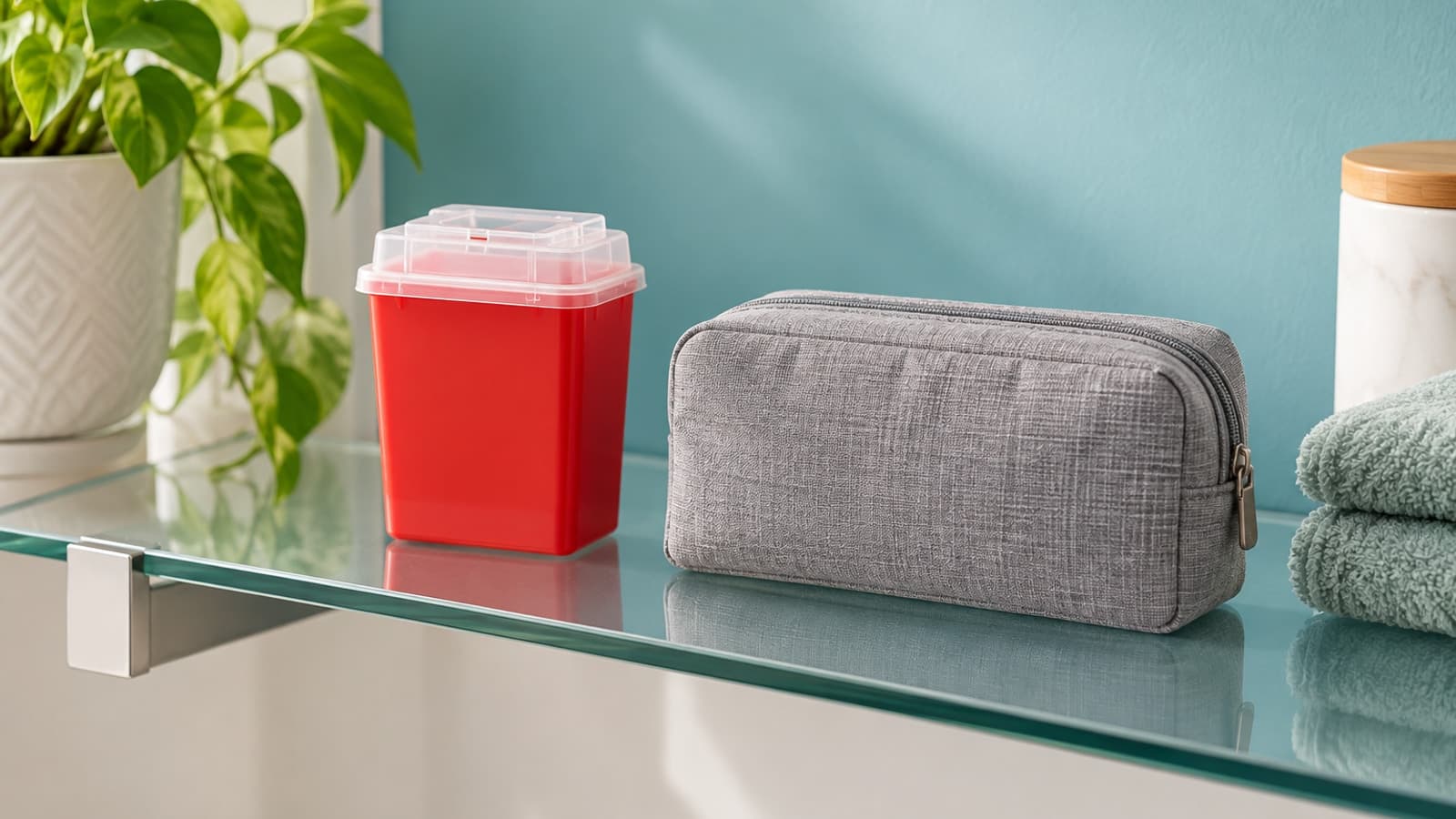
Injection supplies are easier to manage when you decide where everything goes before the first dose. That includes the used needle or injection device. Leaving it on a counter “just for a minute” creates an avoidable risk for you and anyone sharing the space.
Set up disposal before the injection
Ask the pharmacy which supplies your exact product requires and how its used parts should be handled. Pens and vials can have different instructions, so follow the directions for the device you actually received.
Have a suitable sharps container ready nearby. Keep it stable and out of reach of children and pets. Use the container according to its instructions, including the fill limit and closure method.
Put used sharps away immediately
Place used needles and other sharps directly into the appropriate container after use. Don’t leave them loose in household trash, flush them, or put them in recycling. A needle hidden in a tissue or ordinary bag can still injure someone.
Follow the device instructions for removing any detachable needle. Don’t improvise by bending, breaking, or handling an exposed needle. If a step is unclear, ask the pharmacist to demonstrate it with the correct supplies.
Know where the full container will go
Disposal options vary by location. Ask your pharmacist or local public-health or waste service about accepted drop-off or collection arrangements. Don’t assume every pharmacy accepts filled containers or that a method used in another town applies where you live.
If you can’t obtain a purpose-made container immediately, ask what suitable alternative your local guidance permits. Thin drink bottles, glass containers, and open bins are not a safe substitute for a puncture-resistant setup.
Make travel part of the plan
Bring a suitable portable container and check what you’ll do with it at your destination. Keep unused supplies protected and separate from used items. Don’t rely on finding an appropriate bin wherever you happen to inject.
If a needle injury occurs, get prompt medical advice, especially if it involves someone else’s used needle. For routine care, a simple setup is usually enough: the right supplies, clear instructions, a nearby container, and a known disposal route.