










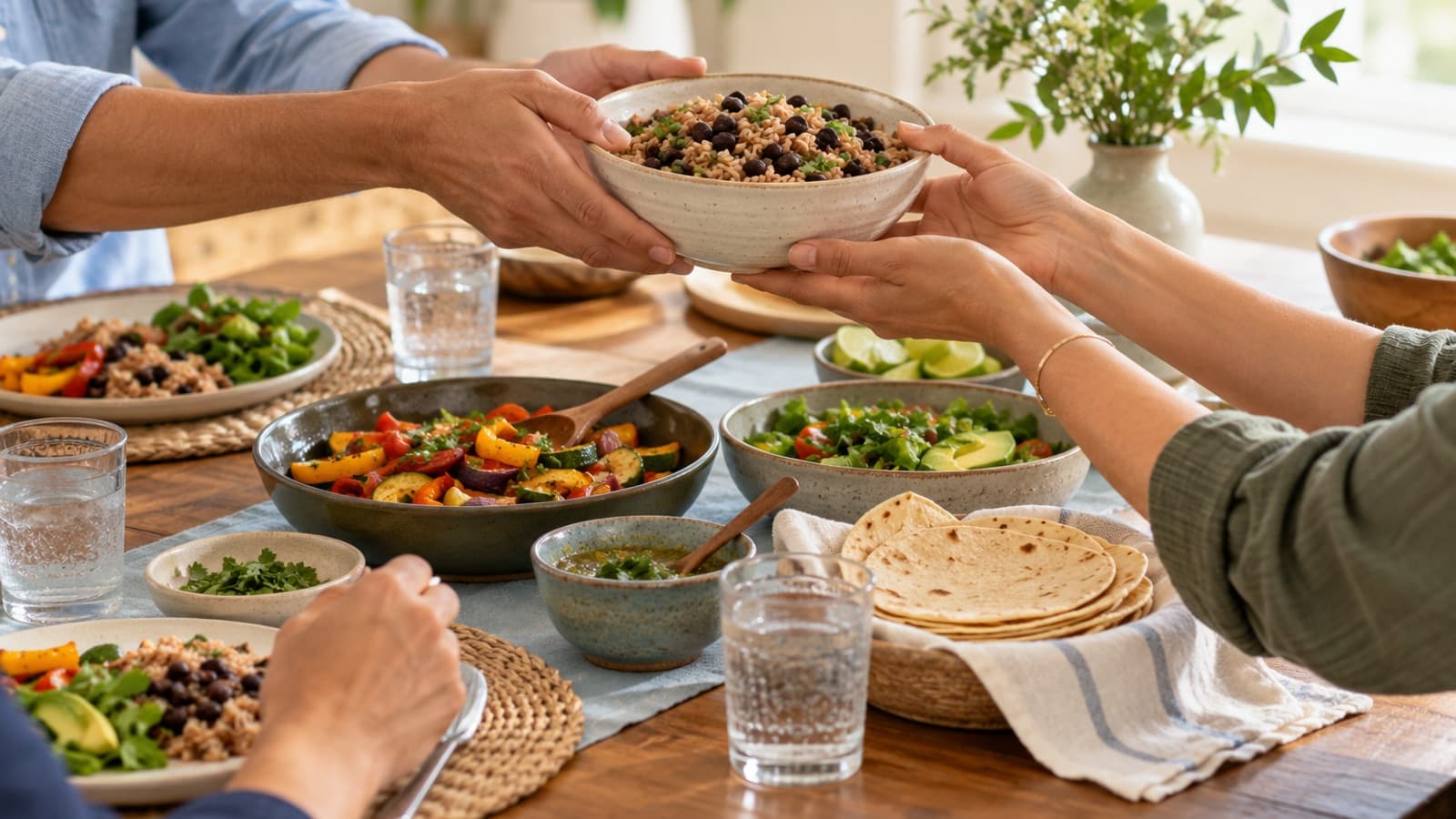
The pot of rice is on the table, the tortillas are warm, and someone has made the noodles the way your family likes them. Then your appetite changes, and you wonder whether you need a separate dinner to make your weight-management plan work.
You probably have more room to adapt than that. Start with the staple you already enjoy. The part that needs attention may be when you eat, how the meal is served, or what you can comfortably add alongside it.
When everyone eats from the same dishes
A shared meal doesn't have to become two separate menus. If your usual bowl feels too large, take a smaller first serving and keep the rest available. That leaves you free to have more if you want it without feeling obliged to finish a portion chosen before you sat down.
You might serve some rice with the beans, fish or vegetables already on the table. If a noodle soup is the familiar meal, a smaller bowl with some of its chicken, tofu or vegetables may be easier to manage. Choose what suits your appetite; these are examples, not rules for how a particular cuisine should look.
Some days the food you want most is the staple itself. That's fine. You can have something else later if that helps you eat enough across the day. A smaller serving doesn't need to contain a perfect selection of ingredients.
Talk about the change without criticizing the food
It can be awkward when someone has cooked for you and notices food left on your plate. A simple explanation may help: “This smells great. My appetite is different right now, so I'm starting with a little and saving room for later.”
If you want to take leftovers home or put some in the refrigerator, ask for a container before the meal starts. That gives you a practical way to enjoy a dish again without making the cook wonder whether you disliked it.
You don't owe everyone a discussion about your medication or your weight. Share the amount you're comfortable sharing. If another person serves the food, you might simply ask for a small portion and say you'll come back if you want more.
Keep the flavors that matter
Food is more than a list of nutrients. A particular spice blend, sauce or preparation can be the part that makes a dish feel familiar. You can keep those details while deciding what amount and texture feel comfortable to you.
For example, if a rich sauce doesn't sit well one evening, try serving a little on the side rather than asking everyone else to change the recipe. If a spicy topping bothers you, add it to individual portions so each person can choose. You can return to your usual version whenever it feels right.
Your needs may be different from someone else's. Follow advice you've received for an allergy, diabetes or another condition, and don't treat another person's preferred portion as a target for your own plate.
Plan for a second eating opportunity
At a family gathering, a long interval can pass between the main meal and the trip home. If you know a large portion won't appeal, think ahead about what might work later. It could be a saved portion of the meal, yogurt, fruit, or another food you enjoy and can store safely.
When packing leftovers, use a clean container and refrigerate perishable food promptly. If you won't have access to a refrigerator, choose an option that can be carried safely for your plans. The person hosting may be glad to help you set a portion aside.
This isn't a requirement to snack at a particular time. It's a way to keep an option available when a quieter appetite doesn't line up neatly with everyone else's schedule.
If eating has become difficult
If nausea, vomiting or an unusually small appetite keeps you from eating enough, tell your care team. They can help you address the symptoms and find a routine that respects the foods you want to keep. A dietitian can also help adapt a familiar meal around individual needs.
For more ideas on putting foods together, see our balanced-meal guide. You can keep the dishes that belong at your table and make the serving work for you.