










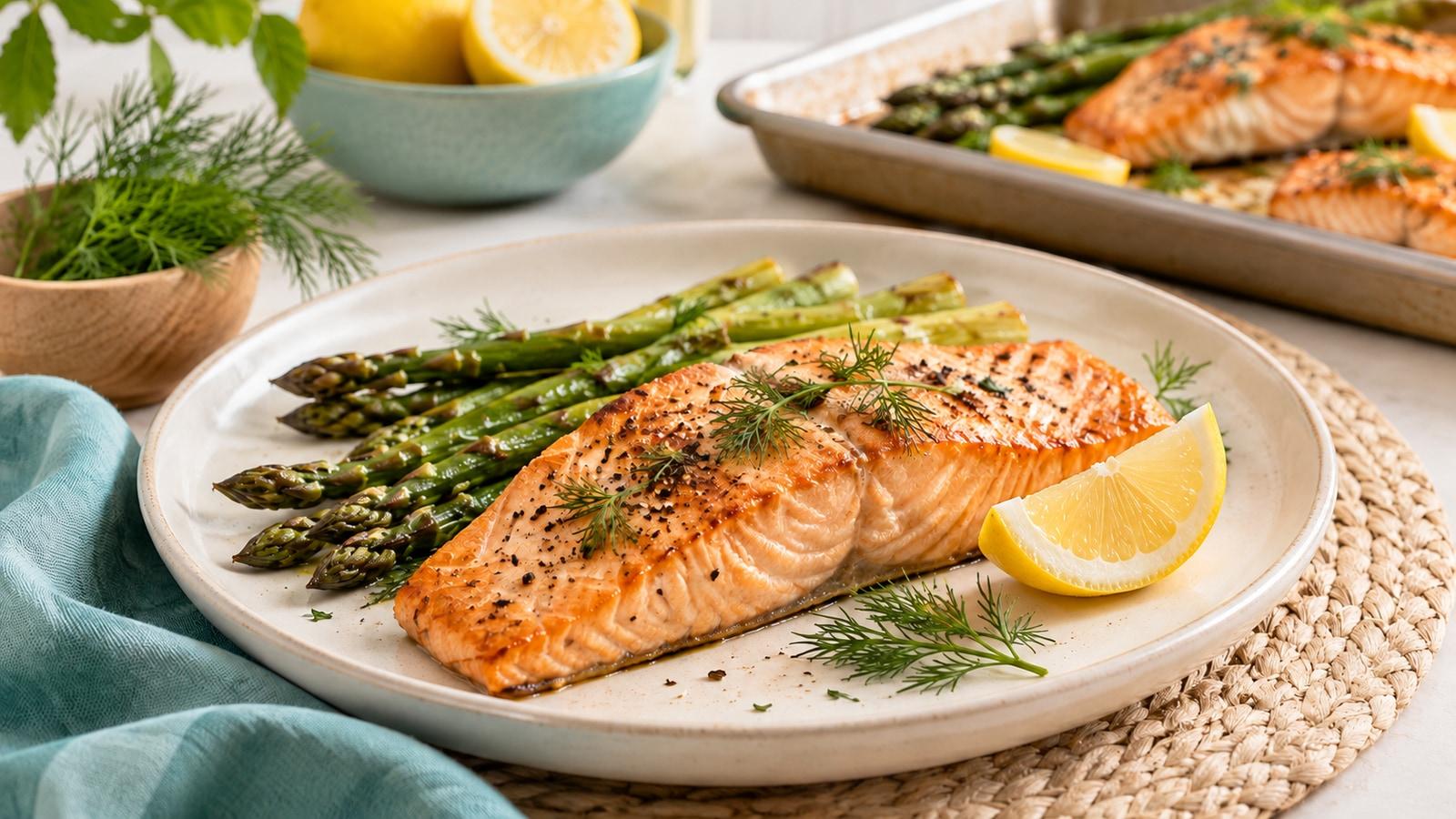
Salmon and asparagus make a simple sheet-pan dinner: the fish roasts while the asparagus softens and picks up a little color. Lemon and dill go on at the end, keeping the flavors fresh without requiring a separate sauce.
The timing depends on the thickness of both the salmon and asparagus. Treat the clock as a starting point and use a food thermometer for the fish. If the vegetables finish first, take them off the pan while the salmon continues cooking.
Ingredients
Makes: about 4 servings
Prep: about 10–15 minutes
Cook: about 15–20 minutes
- 4 salmon portions, about 4–6 ounces each
- 1 bunch asparagus, trimmed
- 1 tablespoon olive oil
- 1 lemon, cut into wedges
- 2 tablespoons chopped fresh dill, or 1–2 teaspoons dried dill
- Black pepper to taste
- Cooked potatoes, rice, or another side, optional
Choose portions of similar thickness if possible. Very thin and very thick pieces will finish at different times. If the salmon is frozen, thaw it safely in the refrigerator and follow any package instructions.
Make the meal
- Heat the oven to 400°F. Wash your hands. Rinse the asparagus, lemon, and fresh dill under running water; trim the tough ends of the asparagus.
- Place the asparagus on a rimmed baking sheet and toss with some of the oil. Arrange it in a single layer, leaving space for the fish.
- Place the salmon on the sheet and brush with the remaining oil. Add pepper and a little dill. Wash your hands and any surfaces or utensils that touched raw fish.
- Roast for about 12–18 minutes, checking the asparagus and fish separately. The salmon is done when its thickest part reaches 145°F on a food thermometer. Remove the asparagus when it is tender to your liking; thicker spears may need more time.
- Serve with lemon wedges and the remaining dill. Add cooked potatoes or rice if you want a larger meal.
Get the timing right
Thickness is a better guide than the number of portions on the pan. A thin salmon tail can cook more quickly than a thick center cut. Check the thickest piece, and remove smaller pieces earlier if they’ve reached temperature.
Asparagus also varies. Thin spears can soften quickly; thick ones may need a few extra minutes. If you have very thick spears, start them in the oven a few minutes before adding the fish. Keep a clean plate nearby for anything that finishes early.
Avoid crowding the baking sheet. Space lets hot air circulate and helps the vegetables roast. If the pan is packed, use two sheets and check each one, since oven positions can cook a little differently.
Lemon and dill, your way
Fresh dill has a delicate flavor, so adding some after cooking keeps it noticeable. Dried dill is convenient and more concentrated; start with a smaller amount. Lemon wedges let each person add as much acidity as they like.
If lemon feels too sharp, use less or leave it off. A spoonful of plain yogurt mixed with dill and a little water makes a cool sauce, though it adds milk to the meal. Serve it separately so the salmon stays moist and everyone can choose.
Fish is a common allergen. Don’t substitute one fish for another for someone with a fish allergy without appropriate guidance. If dairy is also a concern, skip the yogurt or choose a suitable alternative. Check any packaged seasoning for ingredients that matter to your household.
Build the rest of the plate
Salmon provides protein, while asparagus adds a vegetable. Potatoes or rice make an easy side if you want one. You could roast potato wedges on a second pan, but start them earlier because they generally need longer than the fish.
For a lighter meal, serve a smaller portion with asparagus and keep the rest for later. For a larger appetite, add a side or an extra vegetable. There’s no need for every plate to look identical.
If you don’t like asparagus, broccoli or thinly sliced zucchini can replace it. Cut the vegetables into manageable pieces and adjust the cooking time. Frozen vegetables can be convenient; follow the package directions. For a different approach, our salmon, potato and green bean packets cook the meal together in foil.
A note on handling and leftovers
Keep raw fish separate from ready-to-eat foods. Use clean utensils for the cooked salmon and a separate board for vegetables if you’re preparing them after handling the fish. Wash hands, boards, and counters with soap and water after contact with raw seafood.
Refrigerate the fish and vegetables in shallow containers within two hours, or within one hour above 90°F. Keep them at 40°F or below and use within three to four days. Cool any cooked rice and refrigerate within one hour; use it within 24 hours and reheat only once. Reheat them to 165°F, checking the center. Salmon can dry out when reheated, so add a spoonful of water and cover the dish while warming. Add fresh dill and lemon afterward.
Leftover salmon can go over rice with the asparagus or be flaked into a salad after it has been stored safely. Keep it refrigerated until serving if you prefer it cold. The simple seasoning makes it easy to use again without feeling like exactly the same plate.