










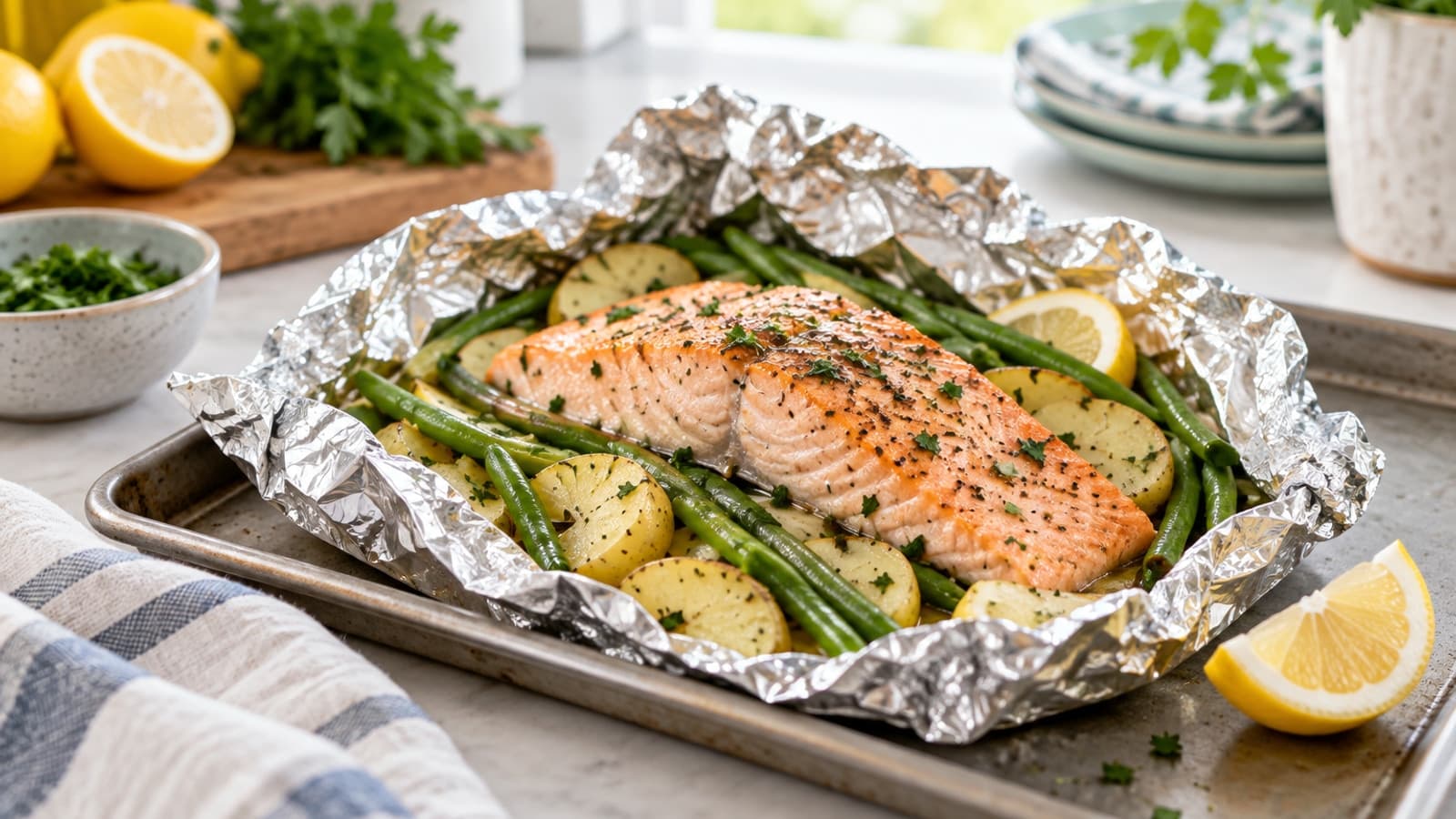
Opening a warm foil packet at dinner can feel a little like unwrapping a present. Inside are salmon, potatoes and green beans, ready to serve together or arrange separately on a plate.
The part worth planning is the potato. It usually needs a head start, especially when the fish is a relatively thin fillet. Here’s a flexible way to think through the meal rather than a fixed cooking-time promise.
Gather what you need
Choose a salmon fillet, a small potato, a handful of green beans, a little oil and any seasonings you enjoy. Lemon and herbs work well for many people, but both can be left on the side. You’ll also need foil, a baking sheet, an oven mitt and a food thermometer.
Use fresh fish that has been kept cold, or thaw frozen fish safely in the refrigerator. Keep raw seafood and its juices away from foods that are ready to eat. Wash the potato and beans under running water before cutting them; trim the beans if needed.
For more than one person, make separate packets or follow a recipe designed for the number of fillets you have. Different thicknesses may finish at different times, so plan to check each one. A packet can hold the components together without making everyone take the same amount.
Give the potatoes a head start
Cut the potato into thin, reasonably even slices. One established approach is to partially cook the slices in a covered microwave-safe dish before adding them to the foil. The time depends on the amount, thickness and microwave, so check them rather than assuming a single setting works for every kitchen.
Handle the hot dish carefully. The slices should have started to soften; they’ll cook further in the oven. If you prefer, use safely prepared cooked potato from another meal and keep it chilled until you’re ready to assemble the packet.
The goal is to avoid waiting for thick potato pieces while a thin piece of fish keeps cooking. Green beans can be trimmed and cut into shorter lengths if that makes them easier to arrange.
Assemble and check the packet
Heat the oven to 400°F. Put the vegetables on a generous piece of foil, add the salmon and season as you like. Fold the foil into a sealed packet with a little space inside, then set it on a baking sheet. Wash hands and surfaces after they touch raw fish.
Bake until the salmon reaches 145°F in its thickest part, measured with a clean food thermometer. Check that the vegetables are cooked to the texture you want. Fillet thickness, potato slices and the oven can all change the timing; if anything needs longer, close the packet carefully and continue cooking before checking again.
Steam collects inside. Use a utensil and open the foil away from your face and hands. A browned surface or a recipe timer alone can’t tell you the temperature in the middle of the fish.
Make it fit your table
You can bring the opened packet to the table on a heat-safe plate or transfer the food with clean utensils. Serve lemon, herbs or a sauce separately so each person can decide what they want. If acidic flavors are uncomfortable, the meal can be good without the lemon.
For a smaller appetite on a GLP-1, serve a comfortable first amount and keep more available if you want it. A different vegetable can work, too, though it may cook at a different rate. Choose a recipe suited to the ingredients and equipment you use.
Fish is an allergen. Someone avoiding fish should choose a separate meal and avoid cross-contact with the packet and utensils.
Keep the leftovers useful
Refrigerate suitable leftovers in shallow covered containers within two hours, or one hour if exposed to temperatures above 90°F. Keep the refrigerator at 40°F or below. Reheat leftovers to 165°F throughout and use a thermometer to check.
Our guide to balanced meals on a GLP-1 has more ways to combine foods you enjoy. For this dinner, the potato head start and a careful temperature check do much of the work.