










The road sign promises food at the next exit, but when you pull off, the only open option is a gas station. That may be fine—or it may not have what sounds comfortable after several hours in the car.
Give the next stop a backup. A few familiar foods, water and a safe place to pull over can make a long drive less dependent on perfect timing.
Pack for an extra stretch
Before leaving, choose a couple of shelf-stable options you like: crackers, a suitable nut or seed snack, whole fruit or a sealed bean pouch that is ready to eat. Check ingredients for allergies and choose packaging you can open without making a mess.
Put the food where a passenger can reach it or where you can retrieve it after parking. Don’t rummage through bags while driving. If you’re traveling alone, decide on a safe stop before you get too hungry or tired.
A snack can bridge a delay; it doesn’t need to stand in for every meal. Look at the route and identify a few towns or rest areas where a longer break might be possible. Opening hours change, so having an alternative helps.
If you bring a cooler, check the temperature
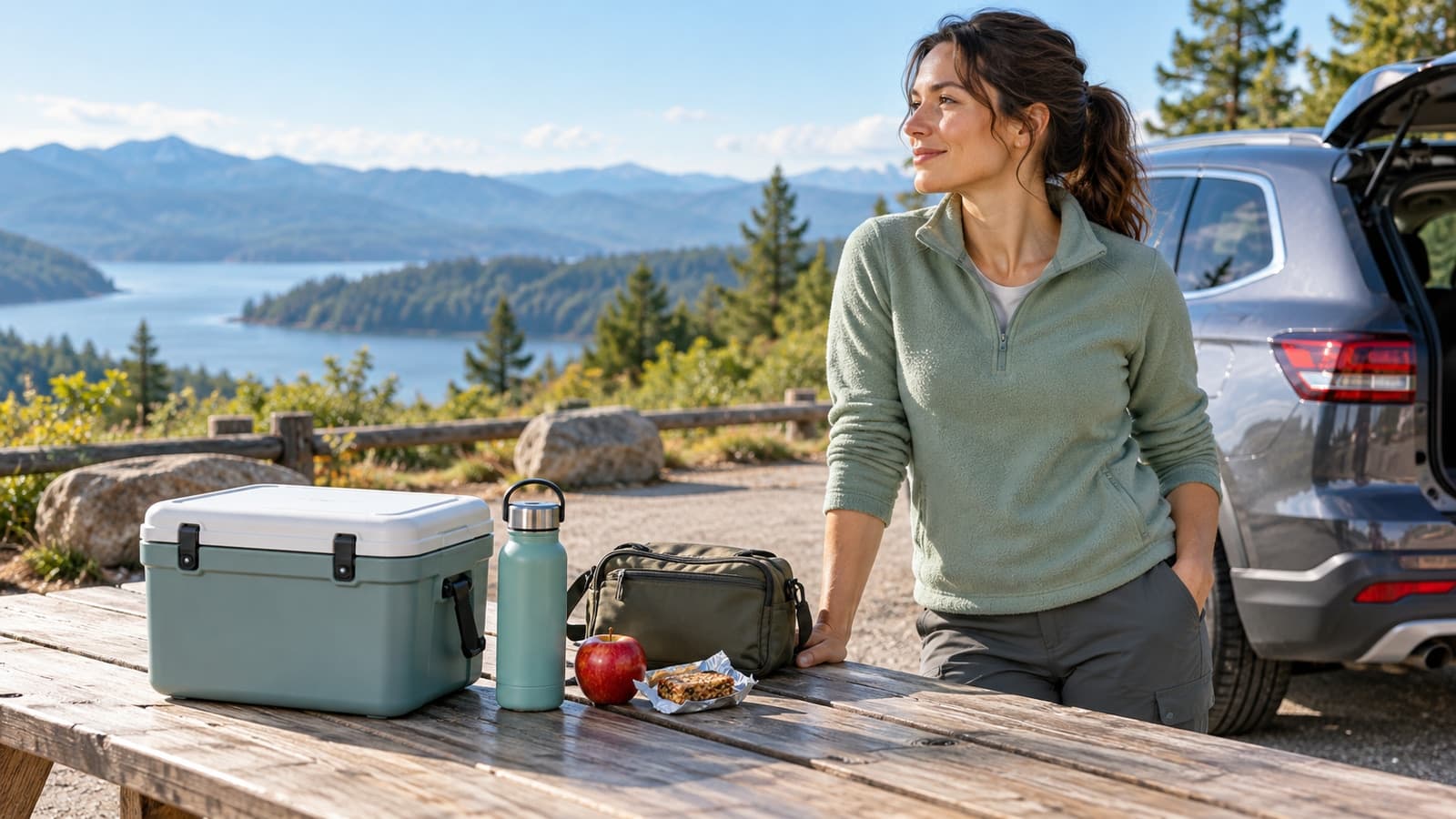
Perishable food such as yogurt, cut fruit, sandwiches with meat or cheese, and prepared meals needs dependable cold storage. Pack a cooler with enough ice or frozen packs and use a thermometer to check it stays at 40°F or below. Separate raw meat and its juices from ready-to-eat food.
An insulated bag without enough cold sources may not stay safely chilled for the whole trip. Add or replace ice as needed and keep the cooler closed when possible. If you can’t maintain a safe temperature, choose shelf-stable foods or purchase perishables close to when you’ll eat them.
Before packing, chill the foods you intend to keep cold. Place them in sealed containers so melting ice doesn’t soak them, and check the thermometer at stops. A cooler works best as part of a plan for the whole journey, including an unexpected traffic delay.
Perishables left at room temperature for more than two hours should be discarded; above 90°F, the limit is one hour. A parked car can get hot quickly. Smell or appearance can’t establish that food left warm is safe.
Work with the stop you find
At a convenience store, look beyond the first display. You may find fruit, a suitable packaged sandwich, crackers, yogurt or another option that fits your needs. Check that refrigerated items are cold and packaging is intact. Ask about ingredients when you need to avoid an allergen.
If a restaurant is the only option, consider a meal you recognize and an amount that sounds manageable. A side or a smaller portion may fit the moment; add food later if you’re still hungry. If richer foods bother you personally during GLP-1 treatment, a different preparation may feel more comfortable, but people’s tolerance varies.
Keep water accessible and plan breaks to drink, eat and stretch. Follow any individual fluid guidance from your care team. The schedule can be flexible; a delay is a reason to reassess your plan, not to skip food for the rest of the day.
Decide what happens after you arrive
If you plan to save leftovers, make sure you can refrigerate them promptly at the destination. Otherwise order an amount you expect to eat at the stop. Discard food when its safe handling is uncertain, even if it feels wasteful.
For a broader look at meals during the journey, see travel-day eating on a GLP-1. A workable road plan leaves room for the route to change.