










The supplement aisle has a magnesium product for almost everything: sleep, stress, cramps and more. Before deciding that a new bottle belongs on your counter, take a look at the foods you already eat.
Magnesium is found in a range of ordinary foods. If a GLP-1 has made meals smaller, a few ingredients you enjoy may be easier to work into the day than an entirely new routine.
Start with what sounds good
Nuts, seeds, beans, whole grains and leafy greens can all contribute magnesium. Milk and yogurt contain it too. No single food has to carry the whole job, and the amount you get depends on the food and portion.
Here are a few places to start:
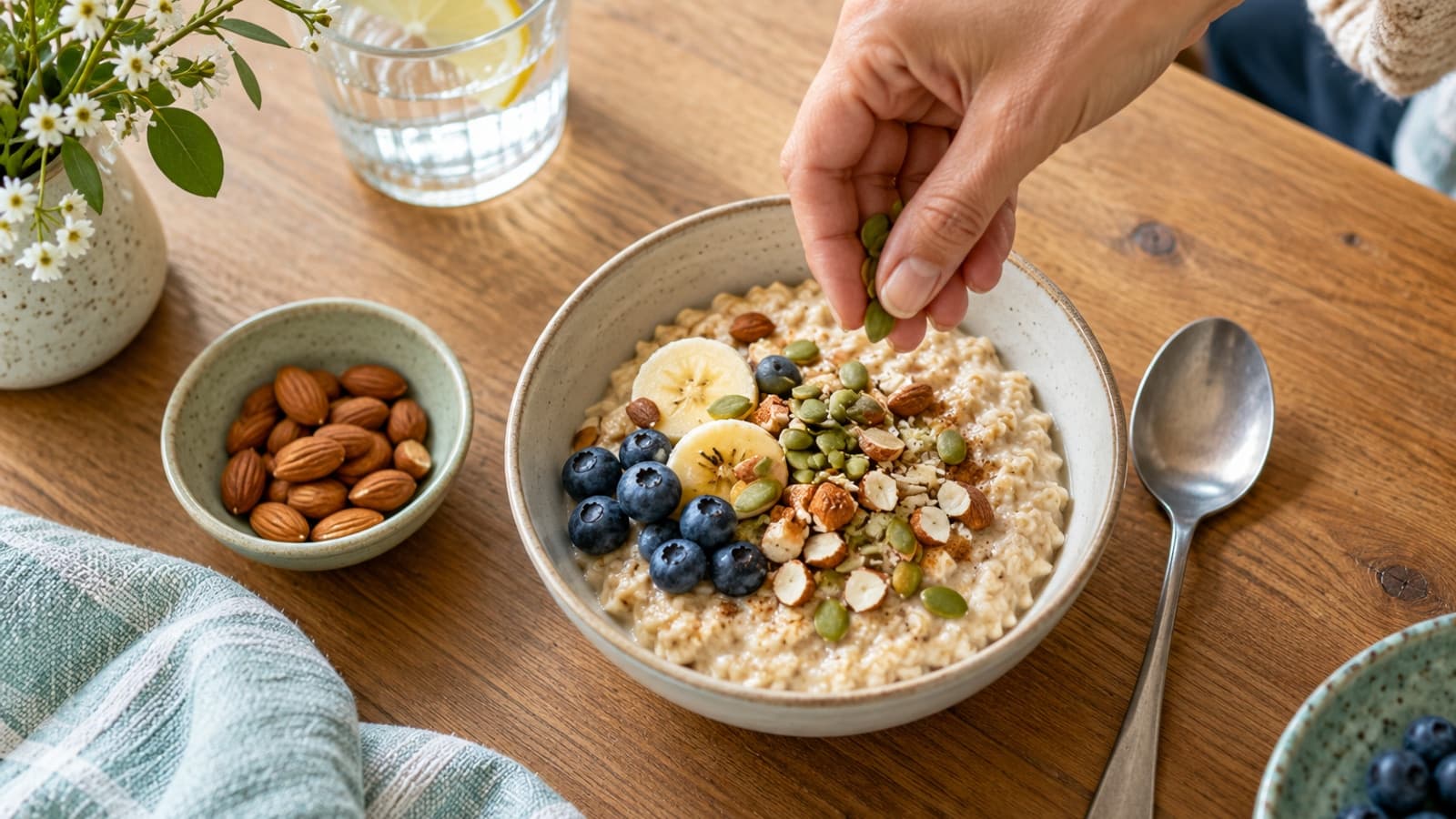
- Sprinkle pumpkin seeds or chopped nuts on oatmeal or yogurt.
- Add beans to soup, rice or a small quesadilla.
- Keep a portion of nuts handy for a snack if they're safe for your allergies.
- Use whole-grain bread or a grain you enjoy with a familiar meal.
These are ideas to adapt, not a checklist. If seeds bother your digestion or you don't like beans, skip them and choose another food. If you have a health condition or an individual eating plan, make changes that fit the advice you've been given.
Small additions can be convenient
Suppose breakfast is now half the size it used to be. Rather than making a second breakfast, you could add a spoonful of seeds to the oatmeal you already enjoy. Another day, a small serving of beans might fit better at lunch.
Convenience counts. Frozen greens, canned beans and shelf-stable nuts can make an option available without a complicated recipe. Check labels when comparing fortified cereals; not every product has the same nutrients or serving size.
If a large bowl feels daunting, put a smaller serving in a separate dish and save the remainder. You can always return to it later if you're hungry.
If a food causes ongoing nausea, pain or other symptoms, talk with your care team. Food experiments should make eating easier, not turn into a test you have to pass.
Can magnesium explain cramps or poor sleep?
Magnesium has important roles in the body, including muscle and nerve function. But a symptom alone cannot tell you whether you need magnesium. Cramps, fatigue and sleep problems have more than one possible cause.
Tell a health professional what you've noticed, when it happens and what medicines or supplements you take. They can help decide whether an evaluation is useful. Avoid using an online symptom list to diagnose a deficiency or replace care for a persistent problem.
If you're considering a supplement
Some people do need magnesium supplements for a specific reason. That decision depends on their health history and the products they already take. Magnesium from supplements or medicines can cause diarrhea and may interact with certain medicines; very high amounts can be harmful.
Ask a pharmacist or health professional to look at the product and your medicine list before starting one. This is particularly useful if you already have digestive side effects or have been given advice about kidney function.
An eye-catching label doesn't have to be your first step. A look at your regular meals, followed by a conversation when you need one, may give you a clearer answer.
Keep the meal bigger than the mineral
Magnesium is one part of nourishment. Protein foods, fruits, vegetables, grains and enjoyable meals matter too. Our guide to building balanced meals on a GLP-1 offers a wider view.
Choose one addition that fits your appetite and your routine. If eating enough remains difficult, tell your care team; they can help you work out what support would be useful.