










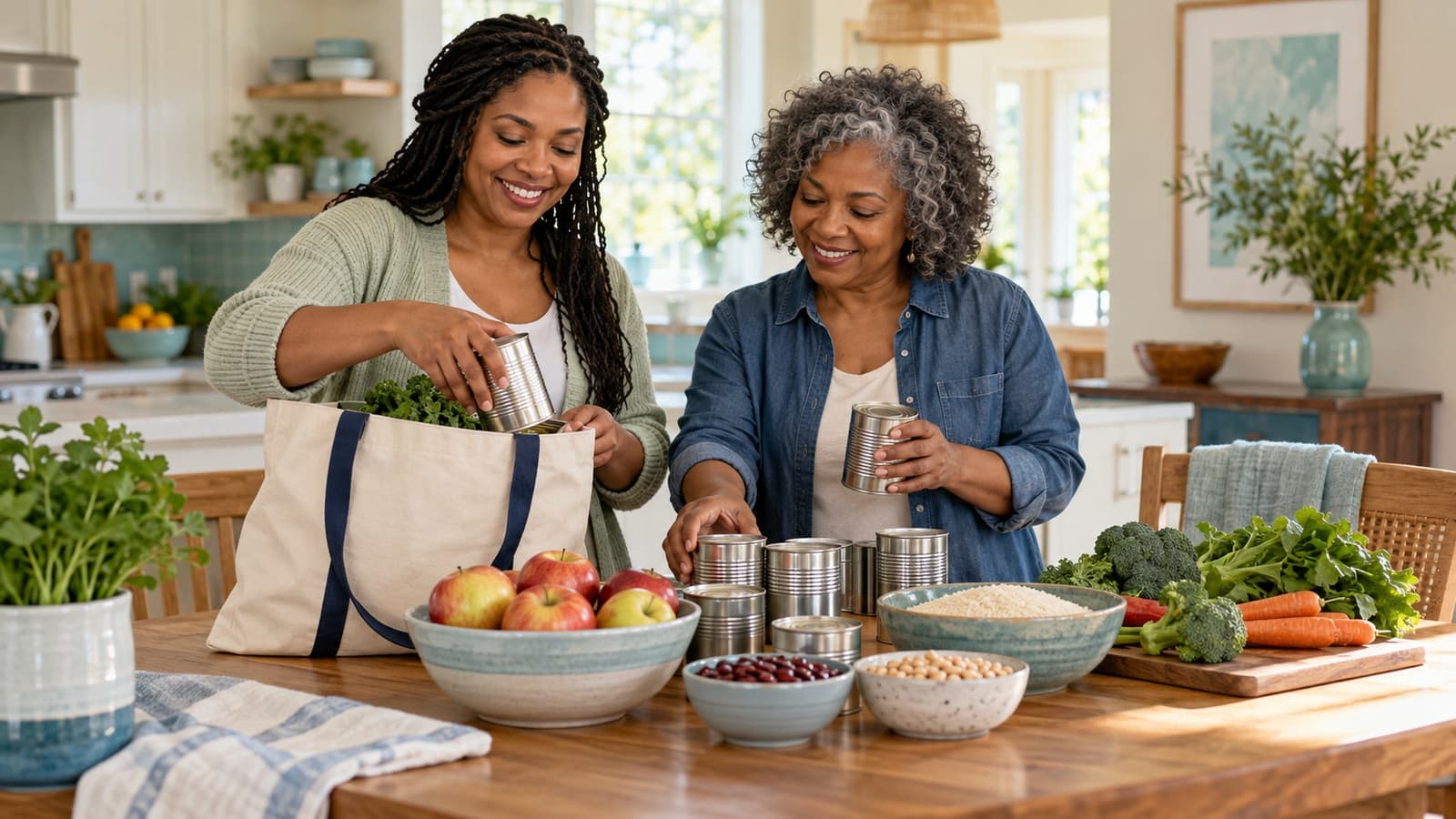
A food pantry bag rarely arrives with a complete menu attached. This week it might include rice, canned beans and apples; next week the selection could be different. If your appetite is smaller on a GLP-1, you may also be figuring out how much food is comfortable at one time.
The best starting point is the food you actually have access to. A few flexible combinations can help you use what's available without buying a list of specialty products.
Put the food into loose groups
Lay out what you received or make a quick mental inventory. You might have a grain or starch, a protein food, some fruit or vegetables, and a few ingredients that add flavor. Not every bag will contain each group, and that's okay.
Think in combinations rather than recipes that require a perfect set of ingredients. Beans and rice can become a bowl, soup or filling for a tortilla. Canned fish can go with crackers or a cooked grain if you eat fish. Oats can be served with fruit, milk or another drink that fits your needs.
Use foods that work for your household, culture, allergies and health conditions. If an item isn't familiar, pantry staff may have ideas for preparing it. You're allowed to decline something you can't use when the pantry's process offers that choice.
Build a manageable portion
Start with an amount that feels comfortable, then add more if you want it. A small serving of rice and beans with vegetables can be followed by fruit later. Leftover soup can become another meal when stored safely.
If you have access to a refrigerator or freezer, divide suitable leftovers into portions you can use. If you don't, ask what shelf-stable options are available and choose food you can prepare and store safely with the equipment you have.
Smaller portions are useful only if the day's overall intake still meets your needs. If eating enough is difficult or your list of tolerable foods is shrinking, let your care team know. A dietitian can help you make a plan around the food you can obtain.
Check the practical details
Shelf-stable foods are designed to be kept without refrigeration before opening, but not every canned item qualifies. Read the actual label where available; some products need refrigeration, and many need different handling after opening.
Don't use food from a leaking, bulging or badly dented can. If you're unsure about another package, ask pantry staff before using it. If opening a large container would leave more food than you can safely store, consider sharing the prepared food with your household or choosing a smaller package when that's an option.
Water and cooking facilities matter as much as the food itself. A manual can opener, a microwave-safe container or a simple pot may make a big difference. Pantry availability varies, so ask what equipment or preparation is assumed before choosing an unfamiliar item.
Ask for what will help
If a pantry offers a choice, mention an allergy, a dietary restriction or the type of food storage you have. You might ask for lower-sodium options, softer foods or items that don't need cooking. A particular item may not be available, but the question gives staff useful context.
You can also ask your care team about food resources nearby. If paying for food competes with medication or other essentials, say that plainly. It is a practical care concern, not a personal failure.
Keep a short list for next time
After a few meals, jot down combinations you liked and ingredients you used easily. That list can guide choices at the pantry or grocery store without requiring a detailed budget or meal plan.
Our article on eating well on a budget during GLP-1 treatment has more ideas for stretching groceries. Start with one meal that fits the food and equipment in front of you; the rest can be worked out a little at a time.