










Search for plant-based protein ideas and tofu often appears near the top. That's not helpful when you're allergic to soy.
The good news is that a soy allergy does not mean you have to rely on one protein food. Your choices depend on your other allergies, preferences and the products you can confirm are safe.
Know where soy can appear
Some sources are easy to spot: tofu, edamame, tempeh, soy milk and soy sauce all contain soy. It can also appear in packaged foods such as protein bars, sauces, broths and meat alternatives.
Read the ingredient list and allergen information every time you buy a product. Formulations can change, and two versions of a similar food may have different ingredients. If something is unclear, contact the manufacturer or choose a product you can verify.
Highly refined soy oil and soy lecithin may be tolerated by many people with soy allergy, but ask your allergist what you personally need to avoid. Cold-pressed, expeller-pressed and extruded soy oils are not highly refined and should be avoided with a soy allergy. Don't assume a product is safe because someone else with a soy allergy eats it.
Build a list around your own safe foods
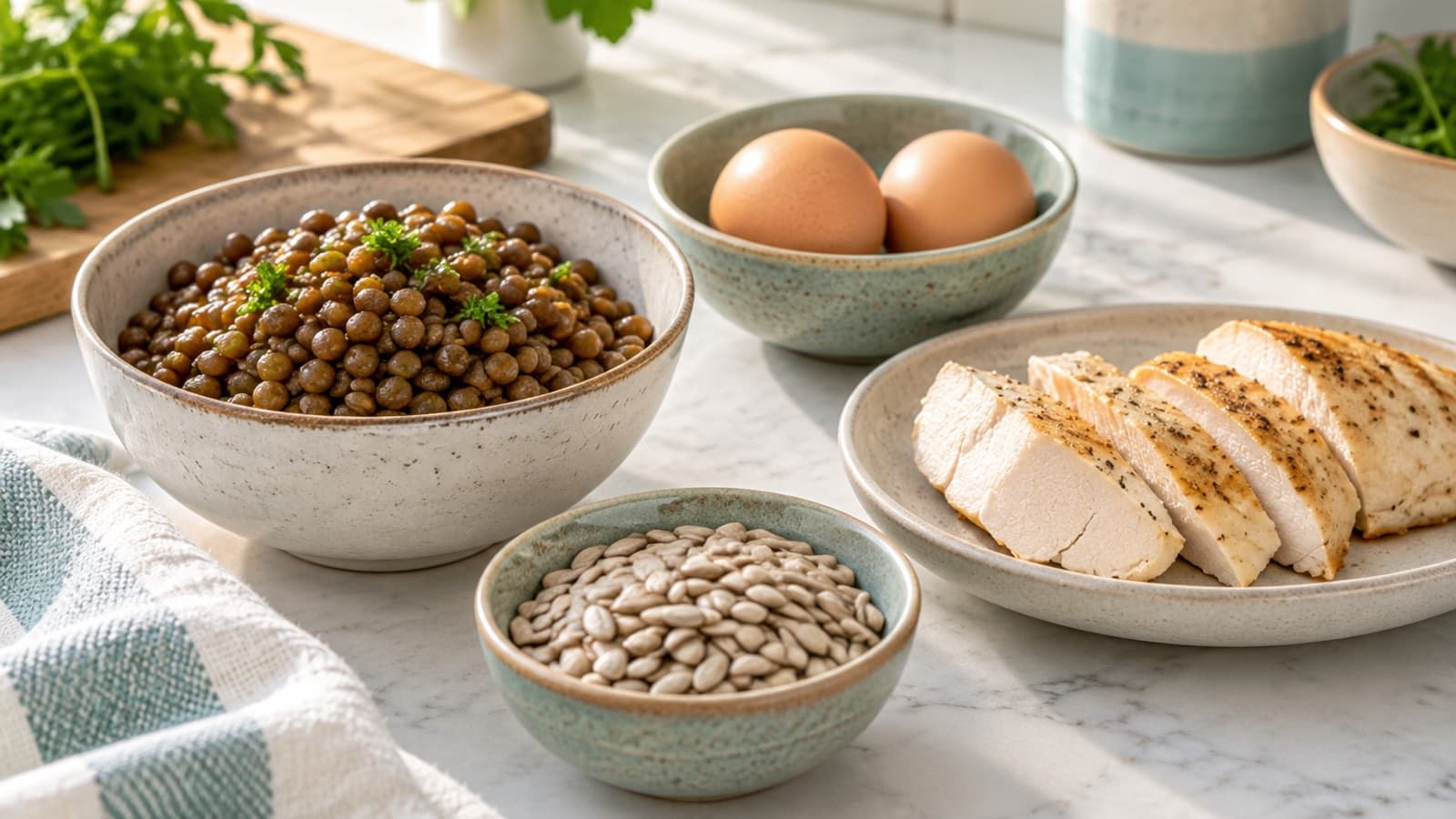
Depending on your other allergies and eating pattern, options to discuss might include eggs, dairy, fish, poultry, meat, beans, lentils, nuts or seeds. None of these is safe for everyone. Use only foods you know fit your individual plan and check packaged versions for ingredients and cross-contact.
If you eat animal foods, a small serving of chicken with rice or eggs with toast may be familiar choices. If you prefer plant foods and tolerate the ingredients, lentil soup or beans in a tortilla could be useful. A seed butter may fit some people's snacks but not someone with the relevant seed allergy.
Soy is a legume, but that doesn't automatically tell you whether every other legume is safe or unsafe for you. Ask your allergist about any uncertainty instead of trying an unfamiliar food to test yourself.
Look closely at powders and sauces
A powder advertised as plant-based can contain soy protein or a blend of several proteins. Check the entire label and any preparation instructions. The same goes for ready-to-drink shakes, meal bars and meat alternatives.
Sauces are another place to slow down. Soy sauce is an obvious source, while a marinade, dressing or broth may need a closer look. At a restaurant, tell the staff about your allergy and ask how the meal is prepared, including shared equipment and utensils.
If you can't get a clear answer, use an alternative you've confirmed is safe. A squeeze of lemon, herbs or a checked dressing may give a meal flavor without requiring a complicated replacement.
A smaller appetite can change the plan
On a GLP-1, you might be comfortable with less food at one sitting. Think about spreading confirmed-safe protein foods across meals or snacks instead of trying to fit a large serving into one plate.
For instance, someone who safely eats eggs and dairy might choose an egg at breakfast and yogurt later. Someone who safely eats beans and seeds might use them in separate meals. These are examples to adapt, not suggestions to introduce a food you're allergic to.
If your list is narrow, a dietitian can help you consider protein and other nutrients without adding unnecessary restrictions. Bring a few product labels and a description of a typical day. Our guide to discussing protein needs has questions you can take along.
Keep your allergy plan with you
Carry prescribed epinephrine as directed and make sure you know your emergency plan. If you suspect anaphylaxis, use epinephrine according to that plan and call emergency services; an antihistamine is not a replacement.
The goal is a rotation of foods you can enjoy and safely prepare. Start with your known options, then work with your care team on any gaps or questions.