










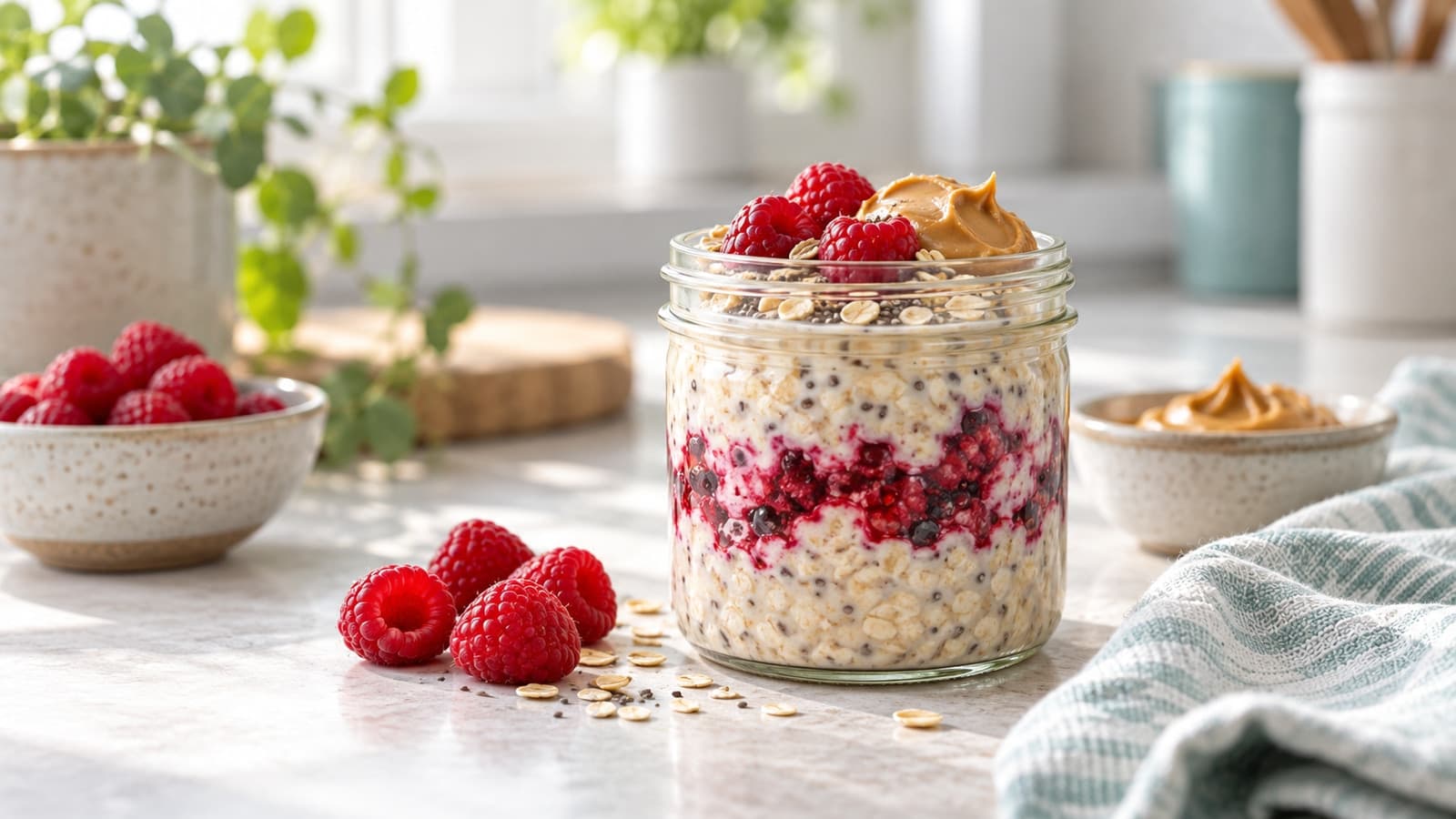
Some mornings the thought of cooking breakfast is enough to send you straight out the door. A jar of overnight oats takes care of the mixing the evening before, so all that’s left is finding a spoon.
This version pairs rolled oats with peanut butter and fruit. Make one jar first and adjust the texture to your taste before preparing several.
What goes in the jar?
Start with old-fashioned rolled oats, milk, plain yogurt and peanut butter. You’ll also want fruit: berries, sliced banana or a spoonful of fruit purée all work. A little cinnamon or vanilla is optional.
For a starting point, combine about a quarter cup of rolled oats, two tablespoons of milk, a quarter cup of plain Greek yogurt and a tablespoon of peanut butter. Stir well in a clean covered container. That’s a flexible starting amount rather than a serving target; you can make more or less depending on your appetite.
Wash fresh fruit under running water. Mash a few berries with a fork and swirl them through the oat mixture, or wait and add sliced fruit in the morning. Frozen berries can be useful too; follow the package instructions and keep the mixture refrigerated.
Close the container and refrigerate for at least six hours or overnight. The jar belongs in the refrigerator, not on the counter. The oats soften as they sit, and the mixture becomes thicker.
Fix the texture in the morning
Stir the jar and take a look before adding anything else. If it’s thicker than you like, mix in a splash of milk. If you prefer a thicker breakfast, use a little less milk next time. Different oats and yogurts make a difference, so the same proportions won’t look identical in every kitchen.
Fruit can go on top if you like distinct layers. Stirring it through makes each bite more consistent. A sprinkle of cinnamon is another option, while chopped toppings can be added just before eating if you want crunch.
If a cold breakfast isn’t appealing, transfer the oats to a microwave-safe bowl and warm gently, stirring to avoid hot spots. Use care with the container and check the temperature before eating. Or choose a different breakfast altogether; meal planning should make your morning easier, not give you another rule.
Switch it up safely
Peanut butter isn’t the only option. Sunflower seed butter may be an alternative for someone avoiding peanuts, but it isn’t automatically safe for every allergy. Check the ingredient label and cross-contact information, and use clean utensils and equipment that fit your household’s needs.
Milk and yogurt contain milk proteins. Lactose-free dairy can be useful for some people with lactose intolerance but is not suitable for a milk allergy. A suitable plant-based drink or yogurt can change the flavor and nutrition, so compare labels if protein is a priority. Some alternatives contain soy or tree nuts.
If you prefer certified gluten-free oats because of a medical need, look for that information on the package rather than assuming every product is appropriate.
Plan around your morning
Make the amount you expect to eat, and keep a second small jar chilled if you like having another option later. On a GLP-1, a smaller breakfast may feel more comfortable on some days. If you’re hungry afterward, add another food or save the rest for a later meal.
Keep the jar refrigerated at 40°F or below. If breakfast travels with you, use an insulated bag with a cold source. Refrigerate perishable leftovers within two hours, or within one hour when the temperature is above 90°F. Don’t leave a dairy-based jar in a warm car.
For more ways to make meals flexible, see building balanced meals. Your first jar doesn’t have to be perfect; it just needs to be a breakfast you’ll enjoy.