










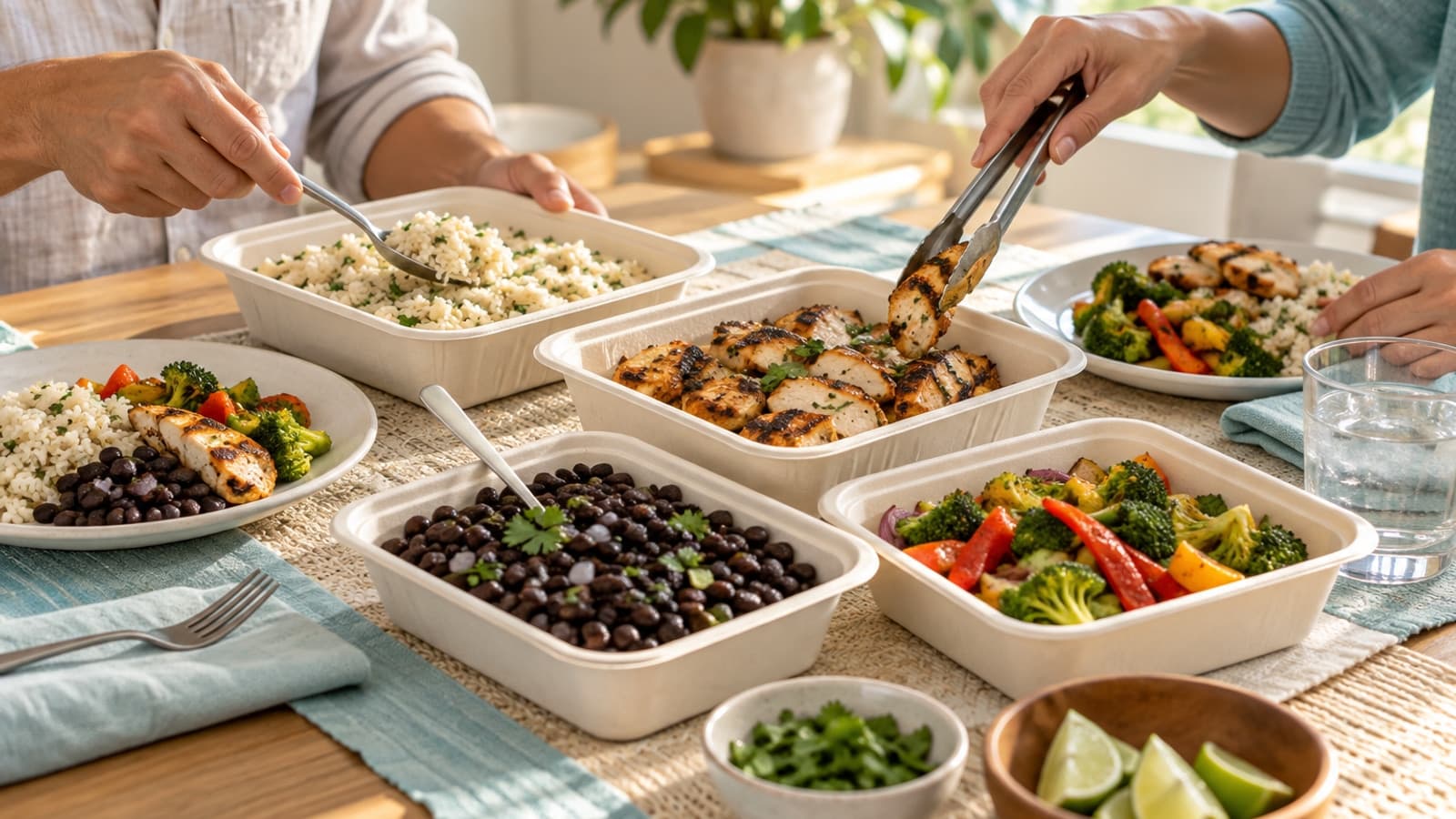
It’s takeout night. One person is hungry after a long day, another wants something mild, and you’re not sure how much you’ll feel like eating once the food arrives.
Instead of trying to predict everyone’s exact portion, start by ordering pieces people can share. A little flexibility at the table can save you from placing three completely separate orders.
Look for components, not perfect portions
Depending on the restaurant, an order might include rice, beans or another protein, vegetables and sauces on the side. A family-style meal, a selection of individual sides or a couple of entrées split at home could all work. Choose food your household actually likes; there is no required takeout formula.
Before ordering, ask each person what sounds good and whether there’s anything they can’t eat. A child may prefer a familiar side. Someone else may want a larger portion. If your appetite has changed on a GLP-1, you might serve yourself a modest amount first and decide later whether you want more.
Check the total price and serving descriptions. Family meals aren’t always the best value for a small household, and a collection of sides can add up quickly. Compare what you expect to use rather than assuming one format is cheaper.
Put the choice on the table
When the food arrives, place shared dishes where everyone can reach them and let people assemble their own plates. Keep sauces separate if the restaurant offers that option. One person can add more; another can leave it off without asking the kitchen to make a different dinner.
You can begin with a small plate and return to the food if you are still hungry. A person who wants a larger serving can take one. Neither choice needs a running commentary. If someone asks why you’re eating a different amount, “This is what I feel like tonight” may be all you want to say.
If someone has a food allergy, contact the restaurant about ingredients and cross-contact before ordering. A sauce on the side does not necessarily mean the rest of a dish is free from an allergen. Use separate serving utensils where needed and follow the advice specific to that person’s allergy.
Make a leftovers decision early
Before everyone starts serving, decide whether some food should be set aside for tomorrow. Use a clean container and refrigerate perishables promptly—within two hours, or within one hour if the surrounding temperature is above 90°F. That clock includes time the food spends waiting after pickup or delivery.
Safely refrigerated leftovers are generally best used within three to four days, or frozen for longer storage. When reheating, bring leftovers to 165°F throughout and check with a food thermometer. Stir or rotate food in the microwave, allow the recommended standing time and check more than one spot.
Don’t save food that has been left out too long just because the container is still full. If you won’t have access to refrigeration after the meal, order an amount you can use safely or choose foods that can remain unopened at room temperature.
Adapt the order next time
After dinner, notice which parts got eaten and which stayed in the box. Perhaps the household wanted more vegetables and less rice, or the sauce was too spicy for one person. Change the next order based on that information rather than making tonight’s portions a measure of success.
If nausea or other ongoing symptoms make meals difficult, discuss them with your care team. A different restaurant order may make dinner more comfortable, but persistent symptoms deserve attention.
Our guide to one family dinner with flexible portions covers cooking at home. Takeout can follow the same principle: share the food and let each person choose a plate.