










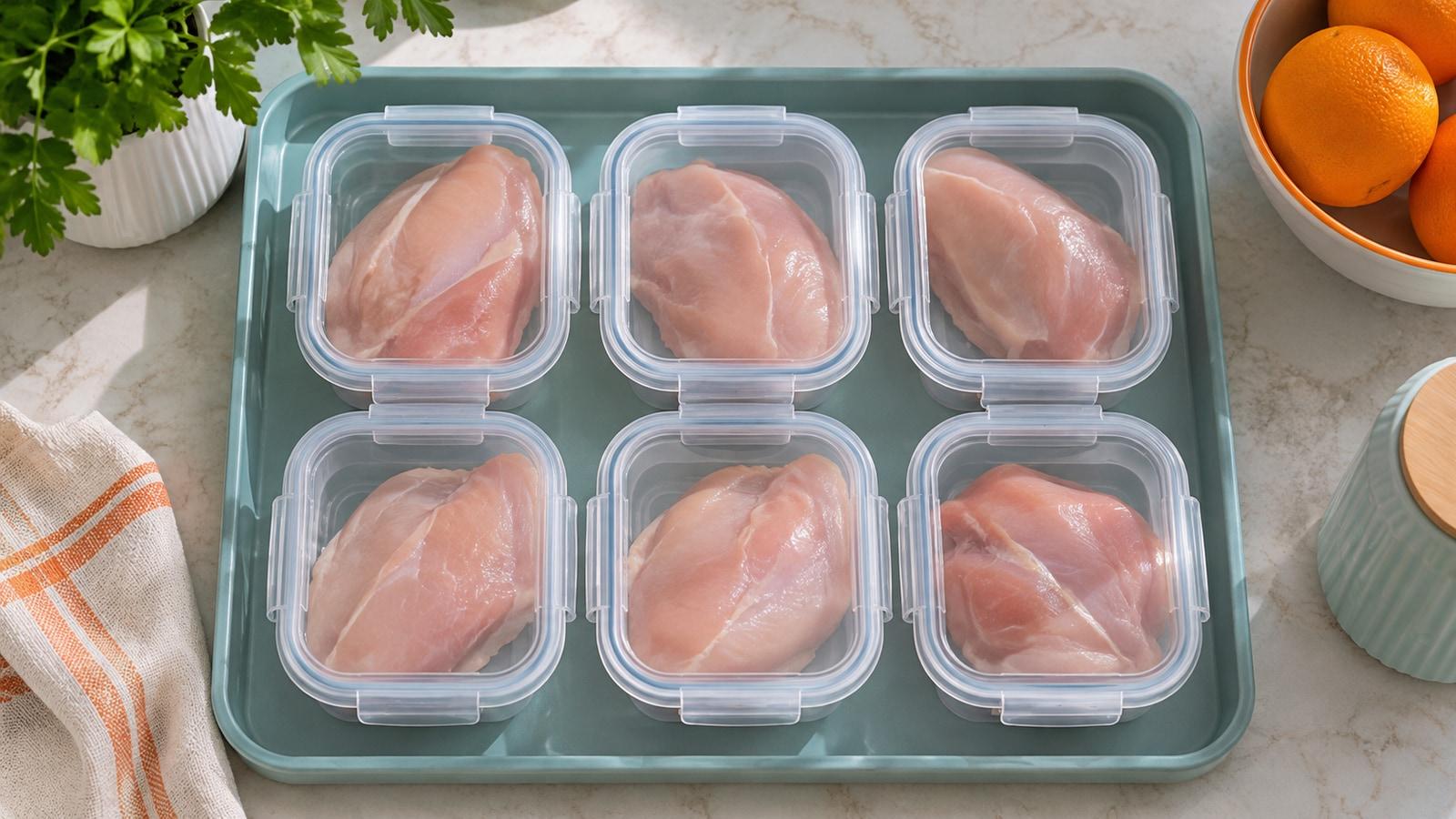
The bigger package of meat may be the better price, until you get home and realize you'll only cook part of it tonight. Freezing smaller portions can make the rest easier to use: you can thaw what you need instead of wrestling with one solid block on a busy evening.
The process doesn't require special equipment. A clean work area, freezer-safe wrapping, a marker and a few minutes are enough. The key is to keep the meat cold and prevent its juices from reaching foods you won't be cooking.
Decide what a useful portion looks like
Think about the meals you actually make. You might divide ground meat into amounts for a skillet dinner and a pot of sauce, or separate chicken pieces into portions for one or two meals. There is no universal portion size: consider how many people you're feeding and whether you like leftovers.
If the package is already made up of individual pieces, you can separate them into smaller freezer bags. For ground meat, a flatter package generally takes up less space and can be easier to arrange in the freezer. Don't compress a bag so tightly that it leaks or tears.
Write a short plan before opening the package. Having bags or wrapping ready means you can finish quickly and return the food to the freezer. If you're not ready to portion it, refrigerate it promptly and come back when you have a clean workspace.
Set up a clean area
Wash your hands with soap and water before and after handling raw meat. Use a clean cutting board and utensils, and keep raw meat and its juices away from produce, cooked food and other ready-to-eat items. Don't rinse raw poultry; splashing water can spread bacteria around the sink and surrounding area.
Open the package on a surface you can clean afterward. Transfer each portion into a freezer-safe bag or wrap it securely in material intended for freezing. Close the package carefully, keeping raw juices off the outside. If the outside becomes contaminated, clean it or place the portion in a clean outer bag before it goes into the freezer.
You can freeze meat in its original packaging, but for longer storage an extra layer of freezer wrapping helps protect quality. Packaging helps prevent freezer burn; it doesn't replace safe temperature control.
Label for your future self
Use a marker to write the type of meat, the approximate amount or number of pieces, and the date. “Chicken—two pieces—November 5” is more useful than a mystery bag of pale food. If you added a marinade before freezing, note that too.
Arrange the packages so cold air can circulate and they can freeze promptly. Keep the freezer at 0°F or colder. Food kept continuously frozen remains safe from bacterial growth, though quality can decline over time; use a reliable storage chart for the type of meat if you want guidance on best quality.
Freezing doesn't make an unsafe or spoiled product safe. Start with meat that has been handled and refrigerated properly, and follow any applicable package instructions. If you're uncertain about a product's history, ask the retailer or discard it rather than relying on smell alone.
Clean up before moving on
Wash the cutting board, utensils and work surface with hot, soapy water after they touch raw meat. Wash your hands again before opening the refrigerator, handling a phone or preparing a salad. Put used packaging directly in the trash and keep any drips contained.
If you're portioning more than one kind of raw food, work with a clean setup for each and avoid spreading juices between them. Separate bags also make it easier to follow the right cooking instructions later.
Thaw what you need safely
The refrigerator is a convenient place to thaw a portion when you can plan ahead. Put the wrapped package on a plate or in a container that catches leaks, below ready-to-eat foods. Thawing time depends on the size and shape of the package.
Cold-water and microwave thawing are other options when done correctly; food thawed by those methods should be cooked immediately. For cold water, keep the package leakproof and change the water every 30 minutes. Don't thaw meat on the counter. Ask a food-safety resource or check the package for advice specific to the cut.
Cook meat and poultry to the safe internal temperature for that product, checking with a food thermometer. Poultry, including ground poultry, needs 165°F; other meats have different safe temperatures. Color alone isn't a reliable check.
Keep a short inventory
A note on the freezer door or your phone can help you remember what you have. Cross out a package when you use it and put newer portions behind older ones where practical. It's a small step that makes the larger purchase more useful.
For meals that are already cooked, our guide to freezing meal portions covers cooling and reheating.
On the next grocery trip, you'll know whether you need more or already have dinner waiting. Portioning is less about a perfect system than making good food easy to find and handle safely.