










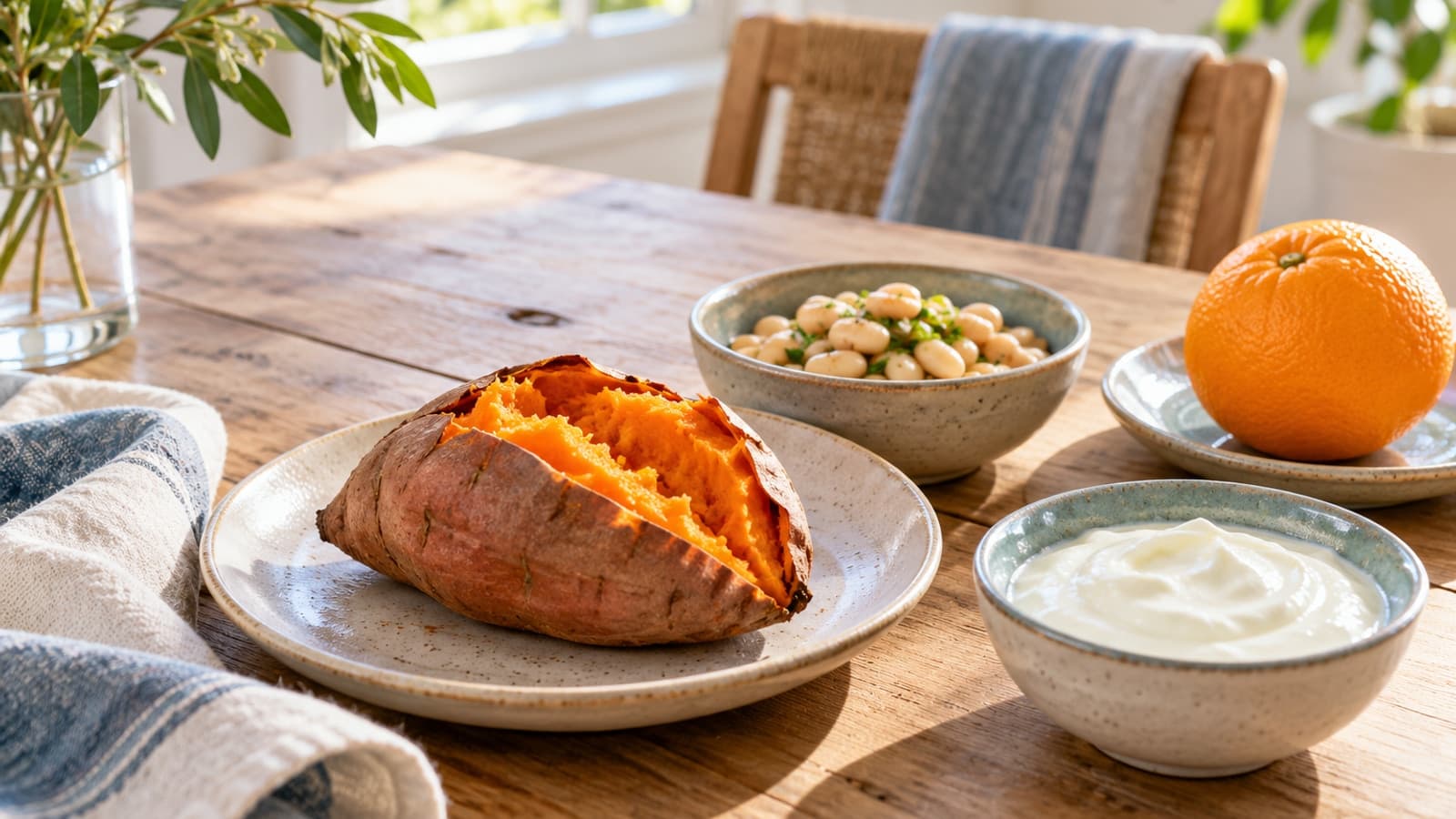
Say “potassium” and a banana usually comes to mind. That's a useful option, but it isn't the only one. Lentils, potatoes, yogurt and plenty of other everyday foods contain potassium too.
Before making a big change, there's an important exception: if you've been told to limit potassium, have kidney disease, or take medicine that affects your potassium level, follow your individual care plan. The right amount of potassium is individual.
A few foods to compare
Potassium helps the body carry out normal functions, including nerve signaling and muscle activity. Food tables can give you a sense of where it appears. Here are a few examples, with amounts that vary by preparation and serving:
- One cup of cooked lentils: about 730 milligrams.
- One medium baked potato, flesh only: about 610 milligrams.
- One medium banana: about 420 milligrams.
- One cup of low-fat milk: about 370 milligrams.
These aren't personal targets or instructions to eat those portions. If half a cup of lentils is what fits in a meal, it still contributes. Packaged foods may list potassium on their labels, so compare the serving size with the amount you actually plan to eat.
Make the options fit your day
Not in the mood for a banana? Add a little tomato to a sandwich, have yogurt with breakfast, or include lentils in a soup. A potato can be split across meals, and beans can be stirred into a small bowl of rice or a favorite dish.
You can choose based on taste and convenience. Canned or frozen ingredients may be easier to keep around than produce that needs to be used immediately. If you have a kidney-related food plan, ask how preparation and portions fit your specific advice; the answer can differ from one person to another.
For a quick lunch, a few spoonfuls of lentils can go into leftover soup, while yogurt can be served on its own or with fruit. Pick the version that works with your appetite and any food restrictions.
If a GLP-1 has made your portions smaller, notice whether you have stopped eating a food you previously relied on. You might prefer a smaller serving at a different time or another option entirely. There's no need to squeeze several unfamiliar foods into one meal.
A word about kidney conditions and medicines
Your kidneys help manage potassium levels. When kidney function is impaired, or when certain medicines affect how your body handles potassium, blood levels can become too high. A health professional can review your test results, medicines and food choices together.
That doesn't mean everyone with kidney disease should follow the same food restrictions. Ask whether you have a potassium goal, what foods and portions fit it, and when your levels should be checked. A kidney dietitian can help make the advice practical.
Salt substitutes deserve a separate look because some contain potassium chloride. If you've been told to watch potassium or take a medicine that affects it, check with your care team before switching. Don't assume a product is right for you just because it is described as a salt alternative.
What about supplements or drinks?
Potassium supplements and electrolyte products can add potassium, sometimes alongside other ingredients. They aren't automatically necessary because you're exercising or taking a GLP-1. Discuss them with a health professional or pharmacist before adding one, especially if you have kidney or heart conditions or take regular medicines.
If vomiting or difficulty drinking is ongoing, contact your care team rather than trying to correct the situation with a supplement on your own. Our guide to hydration on a GLP-1 offers ideas for building an everyday routine.
For most everyday meal planning, variety gives you more options than one famous fruit. Choose foods that suit your needs and keep your individual medical guidance in view.