










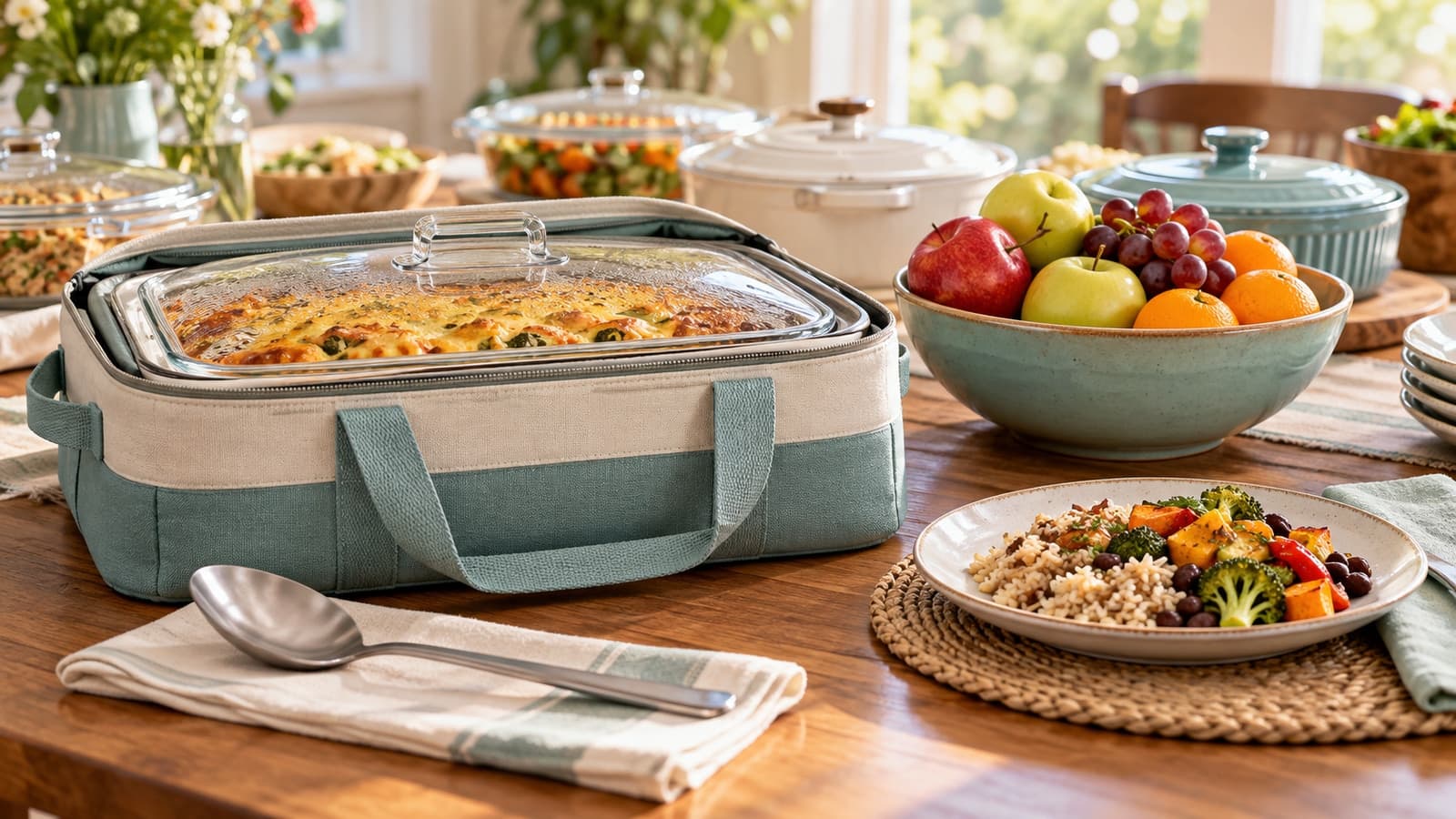
The invitation says to bring a dish to share. You don’t know what anyone else is making, how long the food will sit out or whether there will be something that works for you.
Bring a dish you know you can enjoy. It won’t need a special label or a separate place at the table; it can simply be your contribution to the meal.
Choose the dish for the setting
Ask the host what equipment is available and when food will be served. A chilled bean salad, a rice-and-vegetable dish or another familiar recipe may work, depending on the venue and your preferences. If the event is outdoors without electricity, a dish that requires constant heating might be difficult to manage.
Consider what you can comfortably eat, not just what photographs well. If a GLP-1 has changed your appetite, a dish that can be served in flexible amounts lets you begin with a portion that suits you and have more if you want it. Bring enough for the gathering, within the host’s plan.
If you have a food allergy, prepare your dish with ingredients and equipment appropriate to your needs. Ask the host about the shared table, serving utensils and cross-contact. Bringing your own dish may provide an option, but it does not automatically make the whole buffet safe for an allergy.
Plan the trip as part of the recipe
Keep cold perishable foods at 40°F or below in an insulated cooler with enough ice or frozen packs. For hot foods, maintain 140°F or above using suitable equipment. Check the temperature with a food thermometer; an insulated carrier alone does not guarantee that food stays hot or cold long enough.
Find out if the host has refrigerator space, a warmer or another safe holding option before you arrive. If the trip is long and you cannot maintain a safe temperature, choose a different dish or arrange a safer way to transport it. Include the travel and setup time when considering how long food has been out.
Perishable foods should not remain at room temperature for more than two hours unless held safely hot or cold. In temperatures above 90°F, the limit is one hour. If a dish has been out too long or you cannot tell whether it was handled safely, let it go rather than tasting it to check.
Take a look before filling a plate
Walk along the table and see what appeals to you. You might start with your own dish and add a small serving of another, or choose entirely different foods. There’s no requirement to sample every contribution in order to be a good guest.
If ingredients are unclear and you have an allergy, ask the person who prepared the food. Separate serving spoons help, but guests may accidentally swap them, so discuss your needs rather than assuming there has been no cross-contact. Keep a reliable alternative available if you cannot verify a dish.
Someone may offer you a larger serving than you want. “It looks great; I’ll start with this, thank you” is friendly and clear. If you want the recipe instead, asking for it is another way to show appreciation.
Think about the trip home
Ask whether leftovers are being offered and whether you have a safe way to keep perishables cold on the way home. Refrigerate suitable food promptly. Food that sat out beyond safe time limits shouldn’t become tomorrow’s lunch.
If symptoms repeatedly make it hard to eat or drink at gatherings, talk with your care team. The host can help with logistics, while your clinician can help with a symptom that keeps returning.
For another shared-meal idea, see one family dinner with flexible portions. A potluck is meant to be shared, and your own needs can have a place at that table.