










Eggs turn up in a lot of quick-meal advice. If you can't eat them, hearing “just add an egg” isn't especially helpful.
There are two separate questions: what can provide protein in your meals, and what can do an egg's job in a recipe? The answer to the first might be yogurt, beans or another food you tolerate. The answer to the second might be a baking ingredient that has a very different nutrient profile.
Start with breakfast you actually like
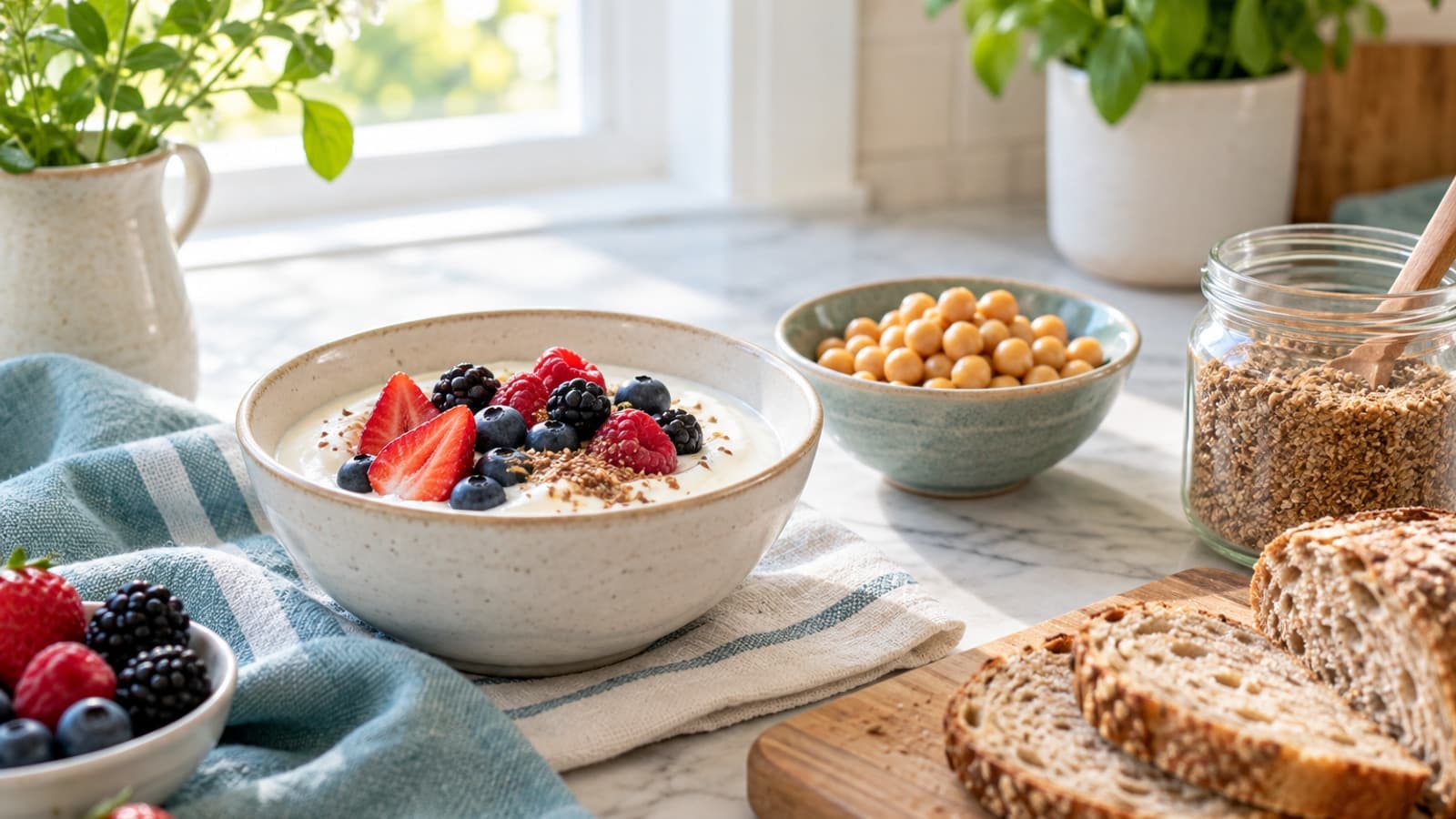
If dairy works for you, yogurt or cottage cheese can be the center of a small breakfast. Add fruit, toast or cereal you've checked for egg ingredients. Someone who eats soy might prefer a tofu scramble with vegetables; someone else might choose beans in a breakfast taco.
These aren't universally safe substitutions. Tofu contains soy, dairy is a separate allergen, and breads or tortillas vary by product. Choose foods that fit your own restrictions and check the current package.
If a large breakfast feels unappealing during GLP-1 treatment, make a smaller serving and keep another suitable food available for later. You might eat half a yogurt bowl now and a piece of toast or a snack when you're ready.
Breakfast doesn't need to look like breakfast, either. Leftover chicken and rice, a small bowl of lentil soup or a piece of fish from dinner can be a perfectly practical first meal if those foods work for you.
Replacing protein is not the same as replacing texture
Eggs can help bind ingredients or give structure to a baked food. In some cookies or bars, a mixture of ground flaxseed and water can perform a binding role. Mashed banana or applesauce may work in certain baked recipes too, though flavor and texture will change.
That doesn't mean a spoonful of flax or fruit provides the same protein as an egg. Replacing an egg in a recipe and replacing its nutrients are two different jobs. If a muffin becomes your breakfast, think about whether another protein-containing food would make the meal more useful for you.
For savory dishes, try a tested egg-free recipe rather than assuming one substitute works everywhere. A binder that holds a soft patty together may not create the same result in a cake. Make a small batch first so you can see whether you like it.
Look beyond the obvious egg
Egg can appear in some breads, pasta, dressings, sauces and packaged baked foods. Even products called “egg substitutes” aren't automatically appropriate for a person with an egg allergy. Read the ingredients and allergen information each time, and ask the manufacturer if the answer isn't clear.
If you have an egg allergy, follow the specific advice from your allergist. Some people receive individualized guidance about particular baked foods; don't try to work that out by testing yourself at home. Carry prescribed emergency medication as directed and follow your action plan for a reaction.
If you avoid eggs for a reason other than allergy, your choices and precautions may be different. You can still use the ingredient list to find products that fit your preference.
Put together a few dependable options
Make a short list using foods you already know work for you:
- A protein food, such as a suitable yogurt, tofu, fish, chicken or beans.
- A carbohydrate you enjoy, such as checked bread, rice, oats or potatoes.
- Fruit or vegetables for flavor and variety.
- A sauce, spread or seasoning that fits your restrictions.
Rotate combinations instead of trying to replace eggs in every meal. A yogurt bowl, a bean-and-rice plate and a chicken sandwich can each serve a different day.
If your appetite is consistently very small or several allergies make your list narrow, a dietitian can help you look at the bigger picture. Our guide to discussing protein needs has questions to bring to that conversation.
You don't need an egg-shaped replacement to make a satisfying meal. Start with what you can eat, then choose a recipe substitute only when the recipe needs one.