










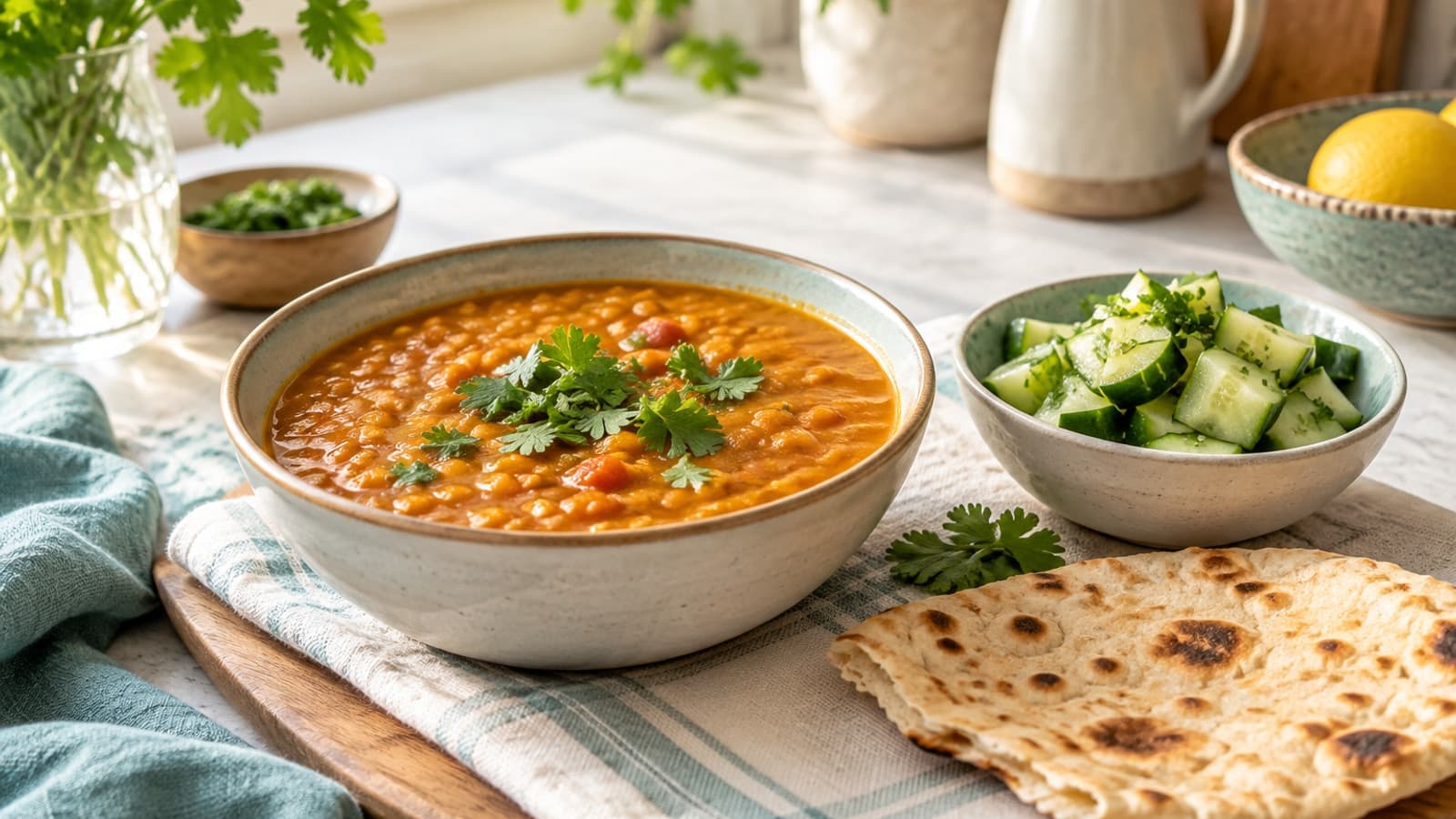
Red lentils soften into a thick, spoonable dish that can be served on its own or alongside rice or flatbread. A little cucumber on the side gives you something cool and crisp to go with it.
Dal has many versions, so start with flavors you enjoy. Families and regions prepare lentils in different ways; this is one adaptable idea for a home kitchen, not a claim about the one correct version.
Begin with red lentils
Look through the dry lentils for small stones or debris, then rinse them in a strainer under cool water. Red split lentils usually soften more quickly than whole green or brown lentils, though the package, age of the lentils and desired texture all matter.
For a modest batch, one starting point is ½ cup dry red lentils with 1½ cups water. Bring them to a boil, then reduce the heat to a simmer. Stir occasionally and add a little water if the mixture becomes too thick before the lentils are tender. Your package may call for a different ratio, so follow its directions if they differ.
They should be soft when you serve them. Some will lose their shape and make the pot creamy; that’s often welcome in dal. If you like a looser bowl, stir in water until it has the consistency you want.
Stay nearby while the pot simmers. A pan that’s too full or a vigorous boil can bubble over, and a thick mixture can stick if left unattended. Use a pot with enough room to stir.
Choose your seasonings
Onion, cumin and turmeric are familiar choices in some versions. Ginger, garlic or tomato may suit another. Cook any vegetables you add until tender, and use the amounts that taste good to you. If you are new to a spice, add a little first; you can always add more to your own bowl.
Chili can bring heat, but it’s optional. If spicy or acidic foods feel uncomfortable, leave them out or serve them separately. Spices add flavor; they don’t treat medication side effects.
Some cooks warm seasonings in oil and stir them into the lentils. Others cook the vegetables first and simmer the lentils with them. Either way, be careful with hot oil and use a recipe you feel comfortable preparing. There’s no need to buy a long list of spices for one meal.
Add a cool side
Rinse a cucumber under running water, then slice or dice it. Serve it plain, with chopped herbs or with a spoonful of a suitable yogurt if you enjoy that combination. Keep perishable toppings refrigerated until serving.
If crunch isn’t appealing, peel the cucumber or choose a softer side. Dairy yogurt contains milk, so choose another topping if you have a milk allergy. Check the ingredients of any plant-based alternative as well.
Rice, flatbread or another side can make the bowl more substantial. Use the foods you like and decide the amount at the table. The lentils contribute plant protein; the final meal depends on the ingredients and portions you choose.
Keep comfort and storage in mind
Lentils can cause gas for some people. If you’re taking a GLP-1 and trying them after a break, begin with an amount you know you tolerate or choose another meal. Don’t force a food that repeatedly makes you feel unwell.
Put leftover dal in shallow covered containers and refrigerate within two hours, or one hour if exposed to temperatures above 90°F. Reheat leftover soup or a soupy dal to a boil, then allow it to cool enough to eat. Keep the cucumber and yogurt separate and chilled.
For other plant-based meal ideas, see our guide to vegetarian and vegan eating on a GLP-1. A small pot of lentils can be seasoned differently each time you make it.