










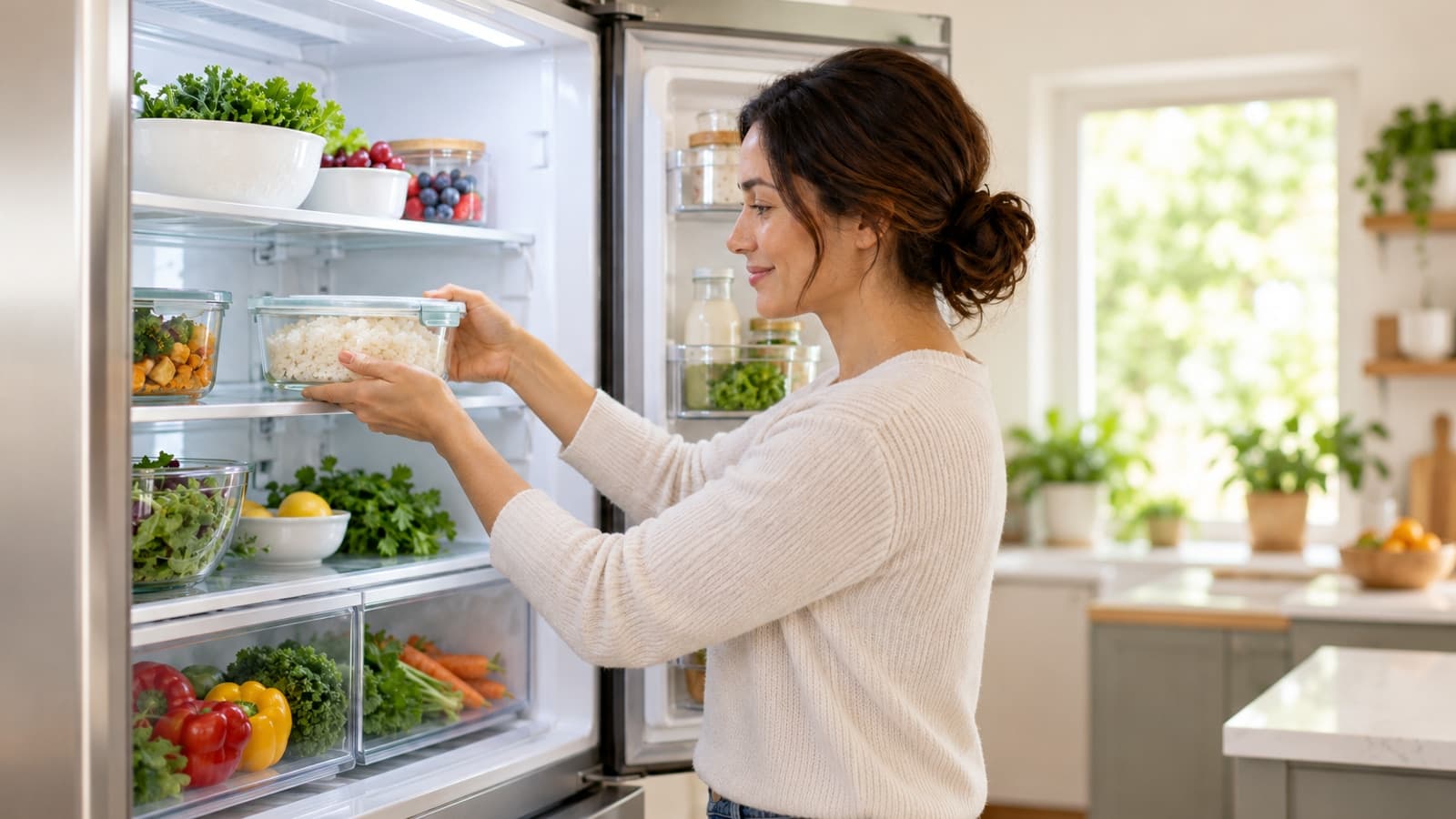
You made rice for dinner and put the extra away for tomorrow. Later, you hear that cooling rice changes its starch and wonder whether leftovers have a special weight-loss benefit.
There is real food science here. Cooling cooked starch can change part of its structure, creating some resistant starch—starch that isn't digested in the small intestine in the same way as readily digestible starch. But a bowl of chilled rice isn't a shortcut to weight loss, and the way you store it matters more than chasing a food trend.
What changes as the rice cools?
Starchy foods contain long chains of starch. Cooking changes their structure; as some cooked starches cool, portions can rearrange into a form that's more resistant to digestion. You might see this process called retrogradation.
The amount can differ with the food and how it's prepared and stored. Cooling doesn't mean every bit of starch becomes resistant, and it doesn't erase the carbohydrate in a serving. Reheating a safely stored leftover doesn't simply make the entire effect disappear either.
Rice is a common example in research, but you may also hear about cooled potatoes or pasta. These are still ordinary foods. Their texture, serving size, accompanying ingredients and how they fit into your meals are practical considerations too.
What the research does—and doesn't—say
In one small study, 32 people with type 1 diabetes ate a standardized portion of freshly cooked rice on one occasion and rice that had been cooled and reheated on another. Their average post-meal glucose response differed between the meals. More low-glucose episodes were observed after the cooled rice under the study conditions.
That is interesting, but it doesn't predict your personal response, prove an effect on long-term weight loss or tell you how to adjust medication. Food combinations, portions, medications and individual circumstances matter. If you use insulin or another medicine that can cause low blood sugar, discuss meaningful changes in your routine with the person managing your treatment.
If a social post says chilled rice has “no carbs,” treat that as a red flag. The research question is about a change in part of the starch, not the disappearance of the whole meal.
The rice safety part is worth your attention
Cooked rice needs prompt, careful storage. Rice can contain bacterial spores that survive cooking; leaving it at room temperature can allow bacteria to grow and toxins to form. Reheating does not reliably undo poor storage.
For rice you plan to save:
- Divide it into smaller portions so it cools quickly. Aim to chill it within one hour rather than leaving it in the pot for hours.
- Refrigerate it and use it within 24 hours. Keep the container covered once cooled.
- If reheating, do so only once and make sure it is steaming hot all the way through. Stir when needed so the middle heats evenly.
- If you don't know how long rice has been sitting out, or how takeaway rice was handled before you got it, don't guess your way into a second reheating.
You can also freeze promptly cooled rice for a later meal. Thaw it in the refrigerator, then heat thoroughly and eat it promptly. The point is to plan for safe leftovers, not to leave a pot on the counter to “create” resistant starch.
How to use this on a GLP-1
If rice sounds good, serve an amount that feels comfortable and add foods that make the meal satisfying, such as cooked vegetables and a protein source. A chilled rice salad can be convenient; warm rice is fine too. There is no need to force yourself to eat leftovers cold.
A smaller appetite may mean starting with a modest portion and seeing how you feel. If carbohydrates have become confusing, our guide to carbohydrates while taking a GLP-1 can help put them in context.
Enjoy leftovers because they save time or taste good. Any potential change in resistant starch is a small piece of a much bigger meal, and safe storage comes first.