










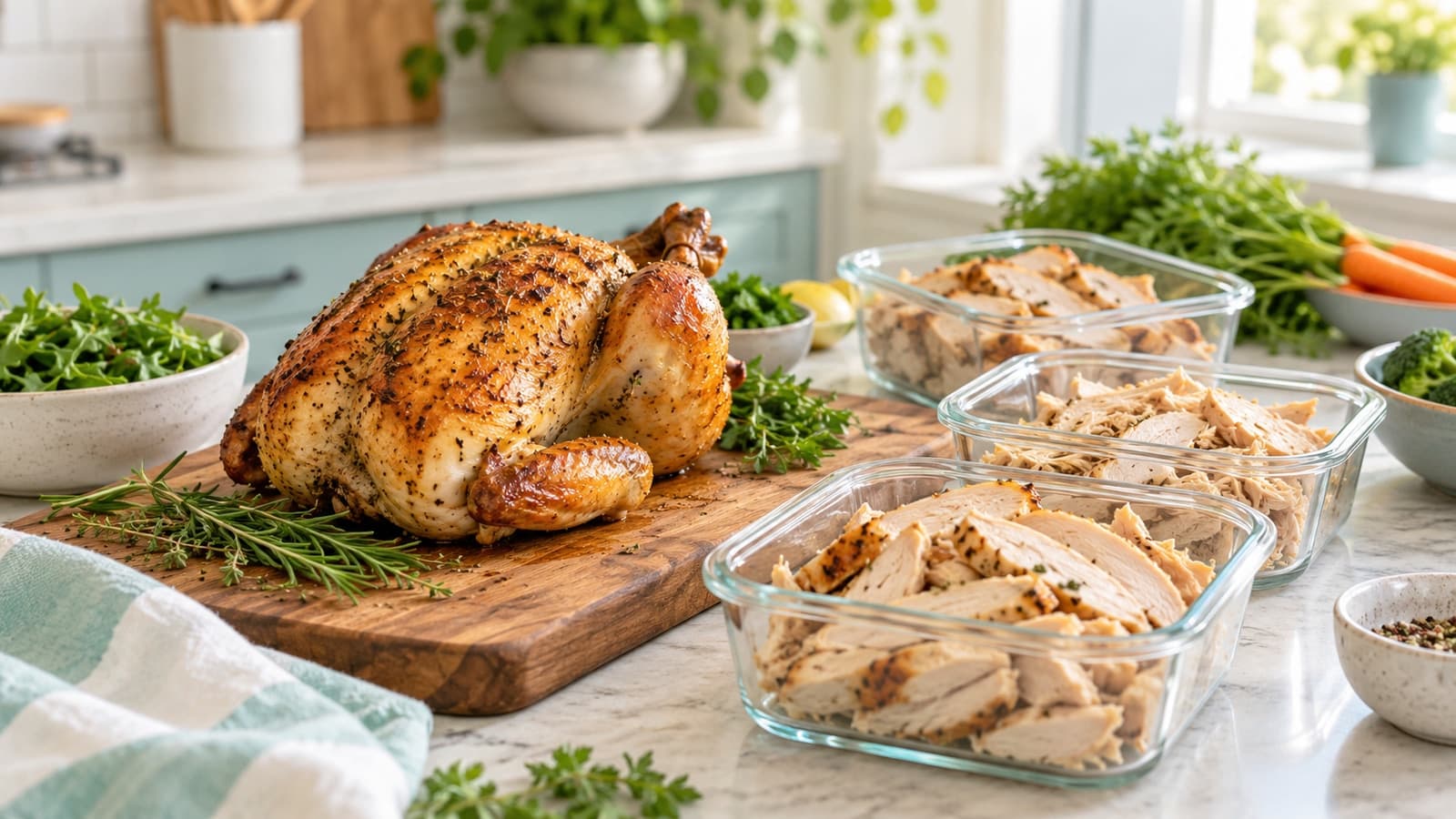
A rotisserie chicken can solve dinner tonight and leave a head start for another meal. The trick is deciding what to do with the extra before it disappears into the back of the refrigerator.
It doesn’t have to become the same chicken-and-rice plate four days in a row. Pull the meat apart, make a rough plan and save the portions you won’t use right away.
What are you actually paying for?
The weight on a whole chicken includes bones and any parts you may not eat. To compare the cost with another protein, weigh the meat you’ll actually eat, not the whole bird. Your yield depends on the chicken and what you choose to remove.
Here’s an example with imaginary numbers: if a chicken costs $8.99 and yields 18 ounces of meat you’ll use, the meat costs about 50 cents per usable ounce. A 4-ounce portion would work out to about $2.00. This is an illustration, not a claim about a particular store’s price or every chicken’s yield.
Compare that with the actual price and amount of another food you buy. A whole chicken may be convenient and economical for one household, while a smaller package could mean less waste for another. Time and convenience count too.
Divide it while it’s fresh
If you won’t eat the chicken immediately, get it refrigerated promptly. Remove meat from the bones with clean hands or utensils, then divide it into shallow covered containers. Refrigerate within two hours of purchase or cooking, or within one hour if the temperature is above 90°F. Keep the refrigerator at 40°F or below.
Cooked chicken generally keeps three to four days in the refrigerator when handled safely. Freeze a portion within that window if you won’t use it in time. Label the container with the date and an amount that makes sense for your household.
Check the package for seasonings and allergens. Sodium can vary between products and preparations. If you’ve been advised to watch sodium, compare the specific product information rather than assuming every store’s bird is the same. If there’s no nutrition label, ask the store what information is available.
Give it three different jobs
For dinner, serve warm chicken with a cooked vegetable and a potato, rice or bread. Everyone can choose their own amounts. Add a sauce at the table if you want one.
For lunch, tuck cooled, safely stored chicken into a wrap with vegetables and a dressing you like. Keep perishable fillings cold, especially if the wrap is traveling. Pack the dressing separately if you dislike soggy bread.
For another meal, stir chicken into a vegetable soup. Bring leftover soup to a rolling boil when reheating. You can add beans, noodles or a cooked grain, or leave the soup simple. A different seasoning makes the meal feel distinct without requiring a new cooking project.
Reheat only what you need
Reheat leftover chicken to 165°F throughout and check with a food thermometer. If using the microwave, stir or rotate as appropriate and check several spots; the outside can get hot while the center stays cool.
Thaw frozen portions in the refrigerator or use another safe thawing method. Don’t leave chicken on the counter to thaw. If the chicken has been left out too long or you can’t tell how it was stored, discard it rather than judging by smell.
If your appetite is smaller while taking a GLP-1, start with an amount that sounds comfortable and keep another portion available. For more ways to make groceries stretch, see eating well on a budget. One purchase can be useful without turning the rest of the week into a rigid meal plan.