










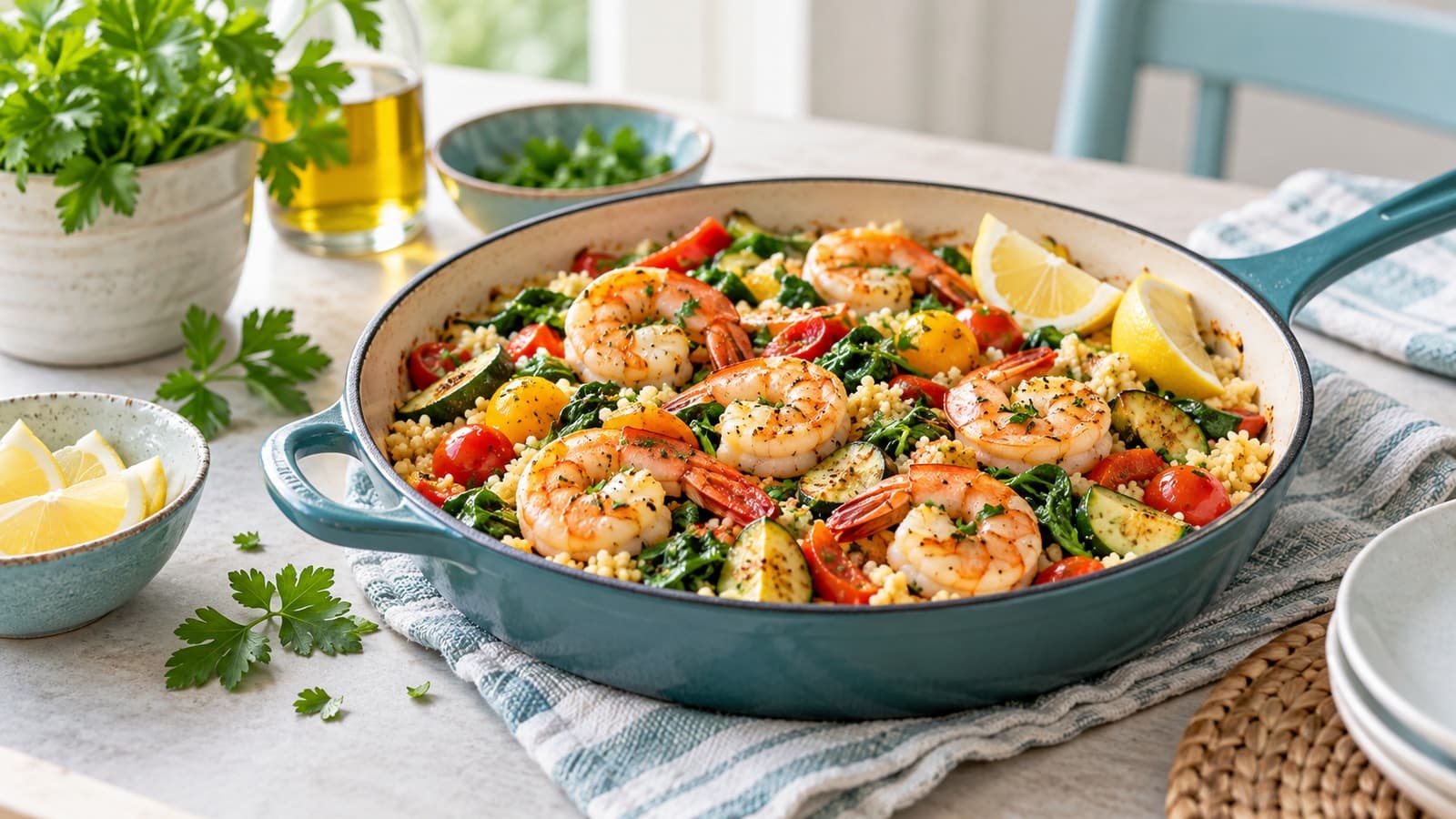
A skillet of shrimp, vegetables and couscous looks like the kind of dinner that took a lot of planning. It doesn’t have to. The main trick is cooking each part separately enough that the shrimp don’t sit in the pan while everything else catches up.
Choose a skillet with a lid and make room for a clean plate or two as you go. It’s still a one-pan meal, even if the food takes turns in the pan.
Before you start
Gather shrimp, a quick-cooking couscous, a vegetable or two, and a little oil. Zucchini and bell pepper are easy to cut into small pieces. Lemon and parsley can finish the dish, though neither is essential.
Check your couscous package before measuring liquid. Different types and brands need different amounts of water and cooking time; larger pearl couscous may need a different method from the small quick-cooking variety. This idea is easiest with the type that steeps in hot liquid under a lid.
Thaw frozen shrimp following the package instructions, and keep them cold until cooking. Wash the vegetables under running water and cut them on a clean board before handling raw seafood. Keep raw shrimp and their juices away from ready-to-eat foods, and wash hands, utensils and surfaces afterward.
Cook in stages
Warm a little oil in the skillet and cook the vegetables until they reach a texture you enjoy. Cut firm vegetables smaller so they can soften alongside quicker-cooking ones. Transfer them to a clean plate.
Give the shrimp their own space in the pan. Cook them until opaque and the internal temperature reaches 145°F for 15 seconds, checking with a food thermometer. Thick shrimp are easier to check than very small ones. Move the cooked shrimp to a clean plate, not the one that held them raw.
Add the amount of water or broth specified on your couscous package to the skillet. Bring it to the temperature directed on the package, add the couscous and cover as instructed. When it’s ready, fluff it with a fork and return the cooked vegetables and shrimp to the pan. Warm together and serve promptly.
If the pan is too full to cook evenly, make a smaller batch or cook in batches. A timer helps, but the size of the shrimp and the heat of the pan still matter.
Make the plate yours
A squeeze of lemon and some chopped herbs can brighten the couscous. Keep them on the side if someone prefers a milder meal. You can serve the shrimp and vegetables over the couscous rather than stirring everything together; that makes it easy for each person to choose an amount.
Shrimp provides protein, while the couscous and vegetables bring different flavors and textures. If a smaller meal sounds better while you’re taking a GLP-1, start with an amount that feels comfortable and save any extra promptly. Someone else might want a larger helping or another side.
Shrimp is a crustacean shellfish allergen. Couscous is commonly made from wheat. If either is a concern, check every ingredient and choose a suitable meal. For a shellfish allergy, make the alternative with clean separate equipment and avoid contact with the shrimp or its cooking surfaces; simply removing shrimp from the finished pan isn’t enough.
Keep the next meal simple
Refrigerate leftovers in shallow covered containers within two hours, or one hour in temperatures above 90°F. Reheat them to 165°F throughout and check with a food thermometer. Add a splash of water if the couscous looks dry, and stir while reheating so it warms more evenly.
The vegetables can change with what you have: try a different one, cut it to a suitable size and give it the cooking time it needs. Our guide to balanced meals on a GLP-1 has more ideas for making a shared dinner fit different appetites.