










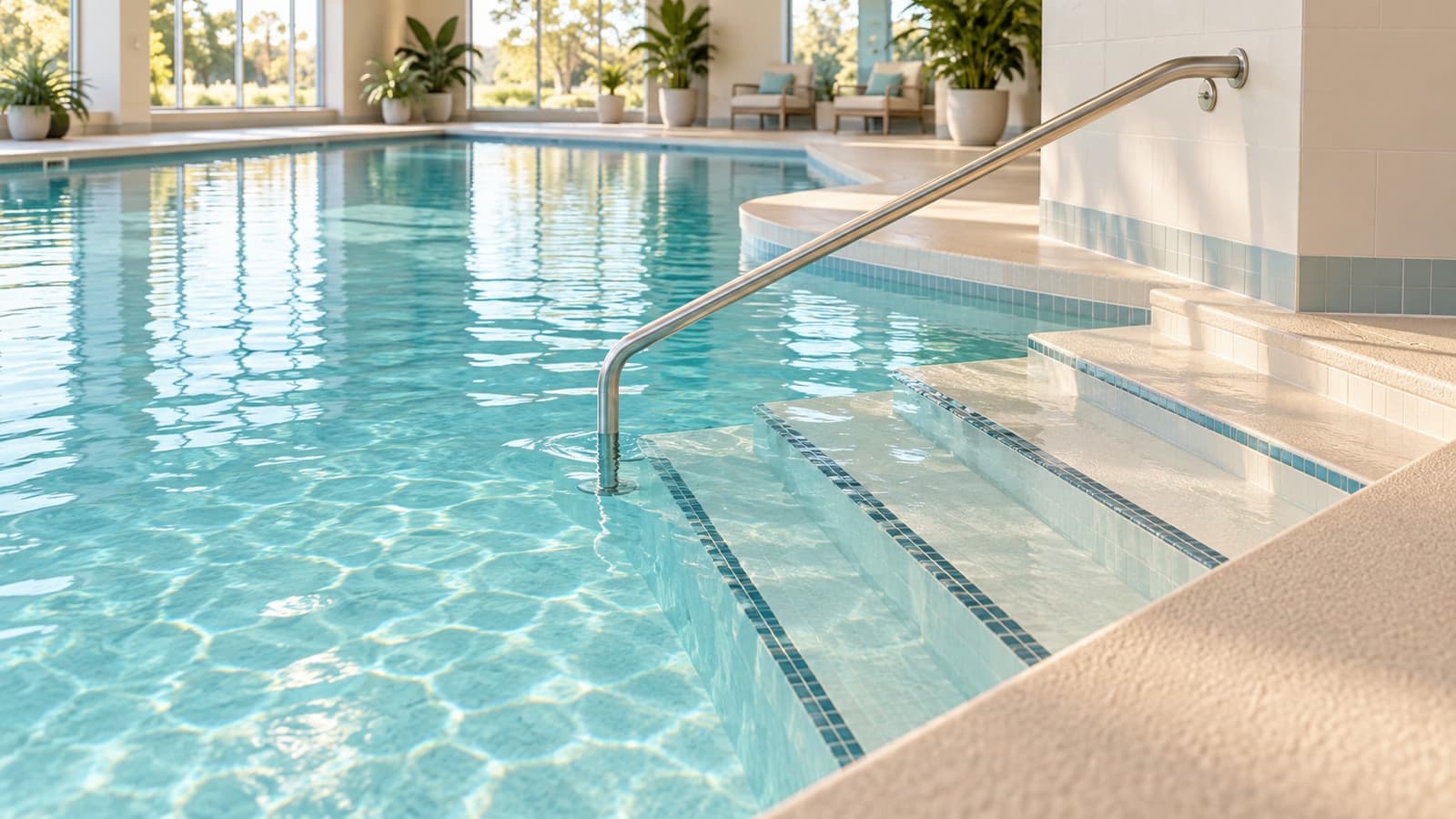
If walking on land feels uncomfortable, moving in a pool may be worth exploring. The water supports some of your weight and gives you a different way to move. It doesn’t guarantee that every movement will feel comfortable, and it’s okay if the pool turns out not to be your favorite option.
A first pool visit can be an introduction, not a workout test. Find out how you’ll get in and out, choose a depth you can manage and give yourself permission to leave after a short visit.
Ask a few questions before you go
Call the pool or check its schedule for open walking times, fees and accessibility. Ask whether there are steps, a handrail, a ramp or a lift, and whether a lifeguard is present. If changing rooms or a particular water temperature matter to you, ask about those too.
Go with a buddy and choose a supervised setting when possible. If you have a condition or take a medicine that affects balance, awareness or your safety in water, talk with your clinician about precautions. A flotation toy is not a substitute for an appropriate safety plan.
You can also ask whether the facility offers an introductory aquatic class or someone who can help you get familiar with the pool. You don’t have to arrive knowing what a water-walking session should look like.
Check when the shallow area is available for independent walking; a pool may reserve it for lessons at certain times. Knowing the schedule can prevent an unnecessary trip.
Choose a comfortable entry and depth
Use the access method that works for you, taking your time on wet surfaces and using a secure handrail where available. Check the depth markings and stay where you can stand and breathe comfortably. The right depth depends on your height, confidence and the pool’s layout; don’t follow another person into deeper water just because they are comfortable there.
Water shoes may provide a more comfortable grip for some people, but the pool’s own rules and the shoe’s fit matter. Keep a clear route to the exit. If you’re unsure how to enter or leave safely, ask staff before getting in.
Let the first few minutes be simple
Start with a comfortable forward walk in an uncrowded area. Notice the feel of the pool floor and how the water moves around you. You might walk a short distance, pause near the side and decide whether you want to continue. There is no need to race a lap swimmer or copy a class routine.
If a movement hurts, makes you unsteady or leaves you unusually breathless, stop and get assistance. A physical therapist or qualified aquatic instructor can help identify a version that suits your needs. Some people may prefer a different activity altogether.
It can be easy to lose track of time when the water feels pleasant. Leave enough energy to walk to the exit, use the steps and change afterward. A brief first visit can tell you plenty about the practical details.
Keep the rest of your day in mind
Follow the facility’s hygiene rules, and stay out of the pool if you have diarrhea. If GLP-1 symptoms leave you dizzy, vomiting or struggling to drink, deal with those symptoms and contact your care team rather than getting into the water.
Bring drinking water if the facility permits it, and plan a meal or snack around your usual needs. If you use insulin or another medicine that can cause low blood sugar, discuss activity and your monitoring plan with your clinician.
Afterward, note what you liked and what would make another visit easier. Our joint-friendly cardio guide includes other possibilities if the pool isn’t convenient.