










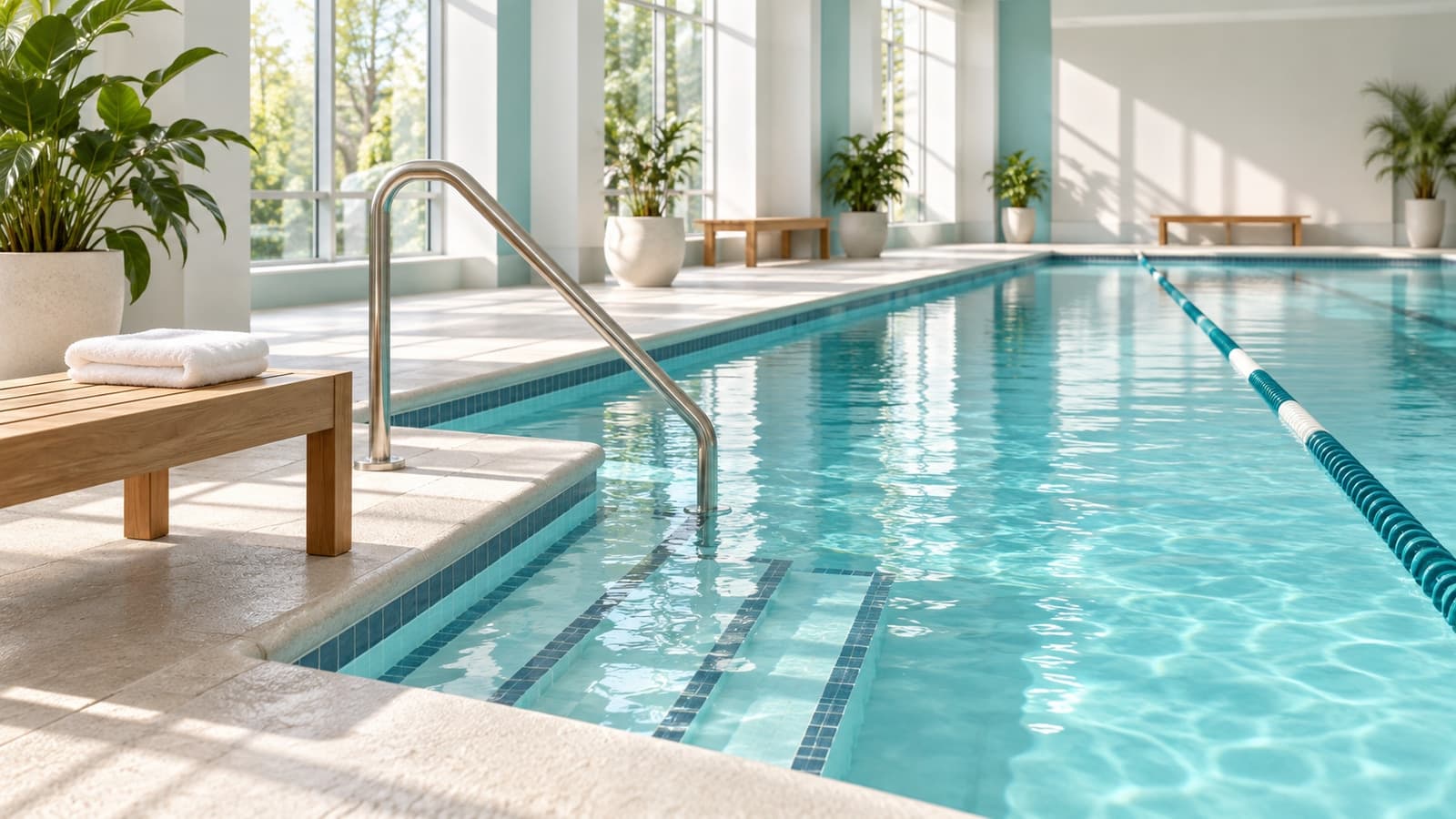
The lap lane looks long from the pool deck. If you haven’t swum in years—or never learned—there’s no reason to jump in and try to keep up with the person doing continuous laps.
Confidence comes before distance. A lesson or a short supervised practice can be a useful first visit, even if you spend much of it getting familiar with the water.
Choose the right starting point
Ask the pool about adult beginner lessons, accessible entry, water depth and lifeguard coverage. Explain what you’re comfortable doing now. An instructor can help you work on the skills you need, whether that means entering the water, floating, breathing or moving a short distance.
Bring a swimming buddy, and look for a pool with a lifeguard on duty. If a health condition or medication could affect your balance or awareness in the water, talk with your clinician about precautions before you go. Inflatable toys aren't safety equipment; ask the pool about suitable support if you need it.
Find out where you can stand, how to get out and what to do if you need assistance. Use the entry method that works for you. Depth and access vary, so don’t assume a pool is shallow because it looks that way from the side.
Learn the lane before sharing it
Pool schedules may separate lessons, open swim and lap times. Ask staff which lane is appropriate for a beginner and how swimmers share it. Some facilities use a circular pattern; others ask a pair to split the lane. The pool’s own instructions take priority.
Let another swimmer know before entering a shared lane, and leave space at the wall for turns. If the lane feels crowded or the pace makes you uncomfortable, ask whether there’s a quieter time or another option. You can practice a skill without joining a fast group.
Goggles and a comfortable swimsuit can make the visit more pleasant. Ask about changing facilities, lockers and any equipment rules before buying gear. You don’t need a full collection of accessories for an introductory lesson.
Give breathing and breaks their own time
An instructor can show you breathing skills in a setting that matches your ability. There’s no prize for holding your breath underwater. Don’t hyperventilate before going underwater or try to hold your breath for a long time; that can be dangerous.
Once you’re ready to swim a short distance, plan where you can rest and how you’ll reach the side. You might practice one length or a shorter distance under an instructor’s guidance, then pause. The length of the break is up to you and the pool’s rules.
If you aren’t ready to swim in a lane, ask whether a lesson area or another supervised section is available. Getting comfortable in a place suited to your skills is more useful than feeling rushed in the wrong part of the pool.
Avoid comparing your first session with someone else’s established routine. Learning how the water, lane and breathing feel can take more attention than you expect. Leave enough energy to get out, shower and change comfortably afterward.
Pay attention to the rest of your day
Stay out of the pool if you have diarrhea. If a GLP-1 has left you vomiting, dizzy or unable to drink normally, contact your care team and address that before swimming. Conditions or medication effects that make water less safe deserve a conversation with your clinician.
Stop and get help if you feel unwell, unusually breathless or in pain. Your buddy and pool staff can help you get out safely. If chest pain is new or unexplained, or you notice other signs of a heart attack, call 911 right away—or ask someone nearby to call for you. Other severe symptoms also need emergency attention.
Afterward, ask yourself whether you liked the setting and what you’d like to practice next. Swimming is one option among many; our joint-friendly cardio guide includes others if a pool isn’t accessible or appealing.