










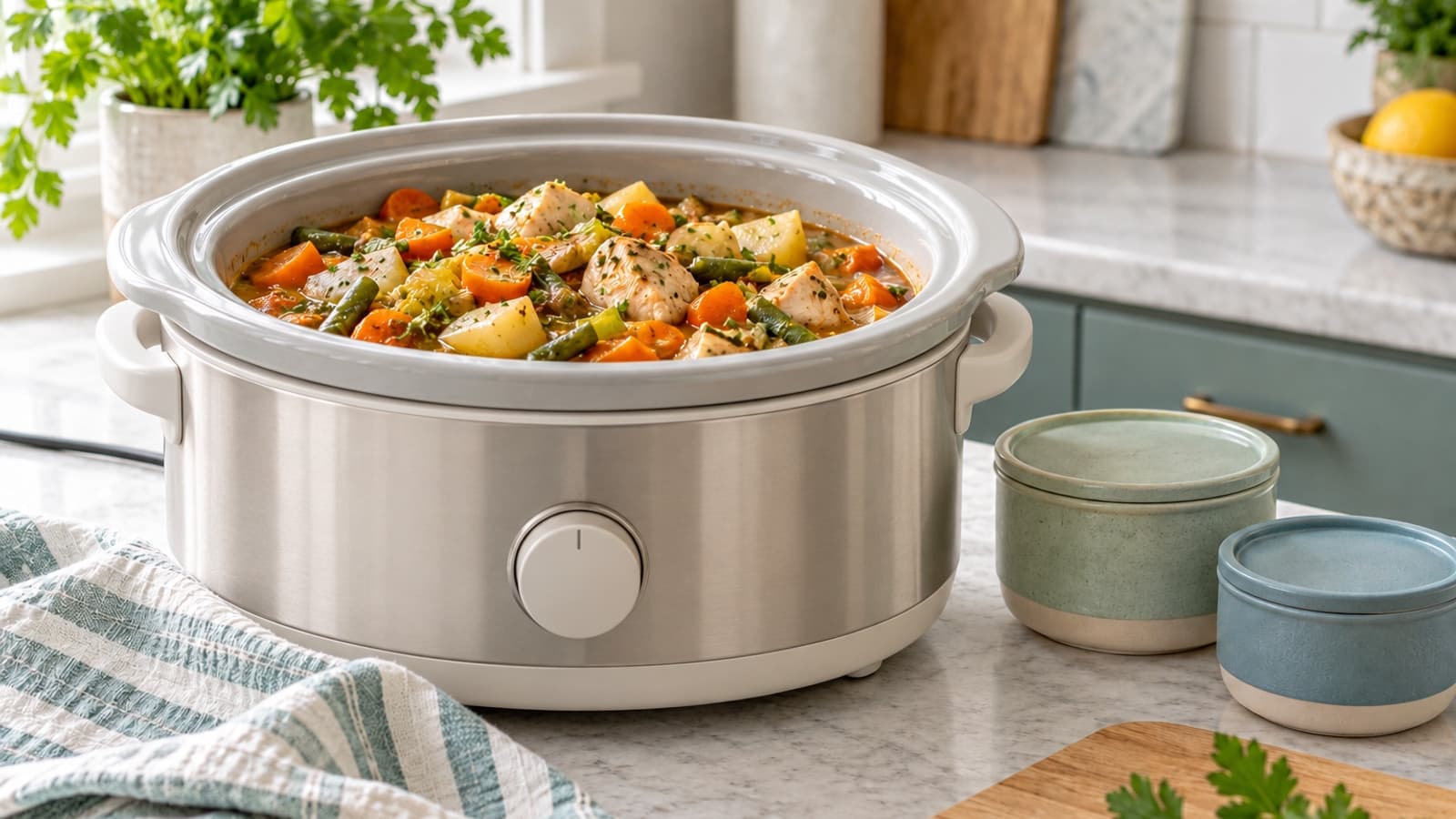
A slow cooker can make dinner easier, but a recipe written for a crowd may leave one person facing the same stew all week. The answer starts before you fill the pot.
Choose a batch that fits the cooker, then plan the extras. A smaller household may benefit from a smaller appliance or a recipe sized for the cooker you already own.
Match the amount to the appliance
Check the maker's instructions and choose a recipe designed for your cooker's size. General food-safety guidance calls for a slow cooker to be about half to two-thirds full. An overfilled cooker may not heat food properly; an extremely small batch may not cook as the recipe intends.
Don't add an arbitrary amount of water just to reach a line if it changes the recipe. Instead, use a recipe and appliance that work together. If you have a large cooker, a suitable batch can be divided after cooking and stored for future meals.
Think about what you'll actually eat. A simply seasoned chicken and vegetable dish might become a bowl with rice one day and a wrap another. Keep additional toppings separate so the base can change direction.
Prepare the ingredients safely
Thaw frozen meat or poultry safely before adding it to the cooker. The refrigerator is a practical option when you can plan ahead; don't thaw food on the counter. If you use cold water or a microwave to thaw, begin cooking immediately afterward.
Wash your hands and keep raw meat and its juices away from foods you'll serve without further cooking. Use separate utensils and clean the preparation surfaces. Start the cooker promptly after assembling the ingredients rather than leaving the filled pot at room temperature for a delayed start.
Dry kidney beans need special preparation before they go into a slow cooker. Don't put raw or merely soaked kidney beans straight into the pot. Use properly prepared beans or precooked canned kidney beans, and follow reliable preparation guidance for any dry beans you choose.
Cook until the food is actually done
Follow a reliable recipe and your appliance instructions. Use a food thermometer to check the safe internal temperature of meat and poultry rather than assuming several hours on the counter guarantees doneness. Poultry should reach 165°F.
If the recipe includes vegetables, cut them as directed and put ingredients in the order recommended. Avoid repeatedly lifting the lid just to look; that lets heat escape and can change the cooking time.
When dinner is ready, serve an amount that feels comfortable. If your appetite is smaller with a GLP-1, keep more available if you want it. You can also add a suitable side or have another eating opportunity later.
Give the leftovers a job
Divide the food into shallow containers and refrigerate or freeze promptly, within two hours or one hour if exposed to temperatures above 90°F. Label containers with the dish and date. A few smaller containers give you more flexibility than one large one.
Keep one portion for an upcoming meal and freeze suitable extras within their safe storage window. Vary the sides or add a different topping after reheating, rather than expecting the same bowl to stay exciting every day.
Don't use the slow cooker to reheat cold leftovers. Reheat by a safe method such as the stove or microwave, check leftovers reach 165°F and bring leftover soups to a boil. Our meal-prep guide has more ideas for a week with less cooking.
The aim is a batch that fits your equipment and gives you useful choices later. A little planning before you start makes the leftovers feel like a benefit rather than an obligation.