










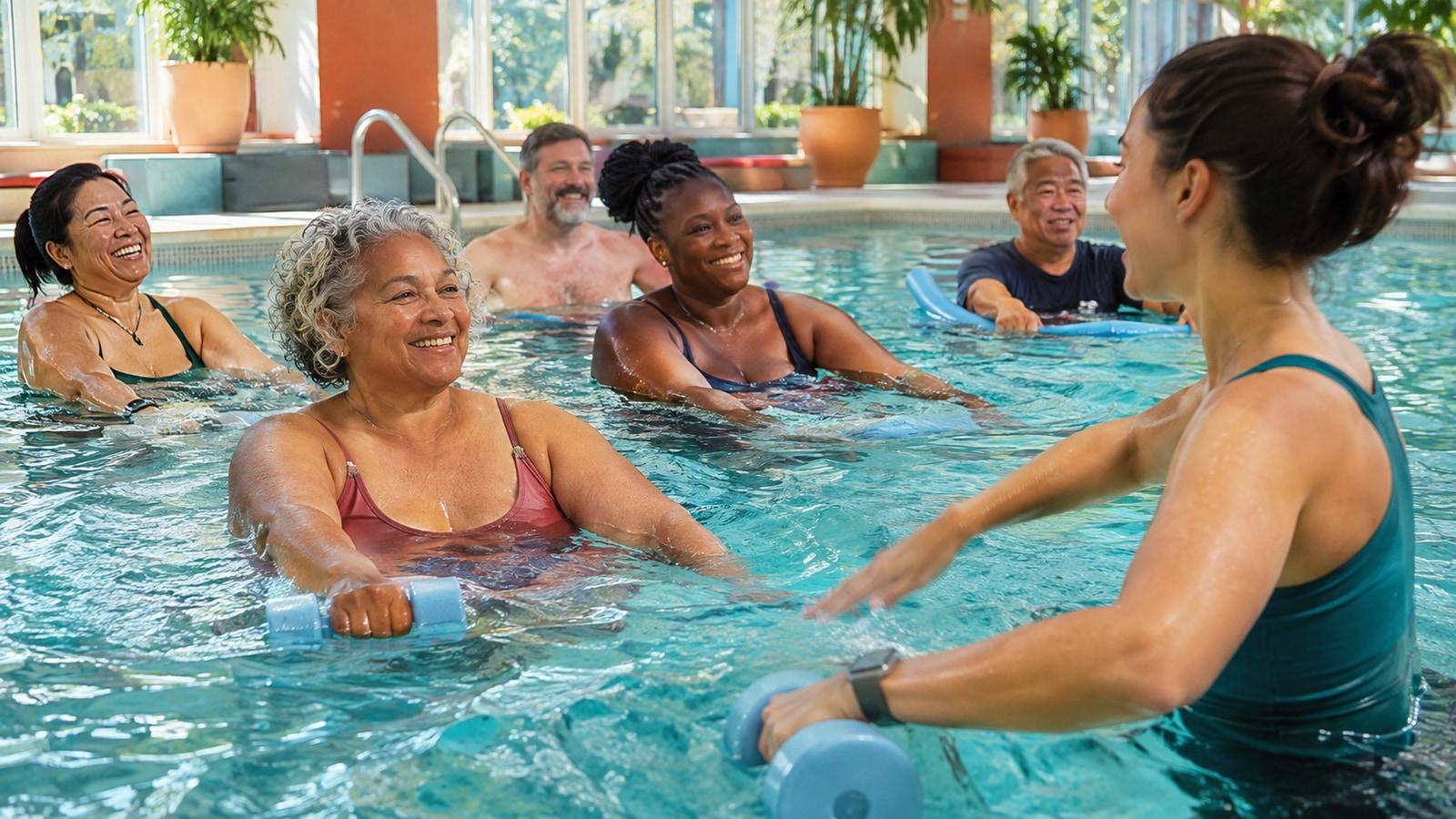
If the words “water aerobics” bring to mind a pool full of people doing the same moves at the same speed, the first visit may feel intimidating. In practice, classes can be quite different. Some are in shallow water and involve walking or gentle movements; others use deeper water, equipment, or a faster pace.
You don't have to guess which one will suit you. A few questions before you go can make the experience much more comfortable.
What happens in a class?
An instructor usually leads a group through movements in the water. Depending on the class, that may mean walking, moving your arms and legs against the water, or using equipment such as foam weights. Some classes include time to warm up and slow down at the end.
Water supports some of your body weight and provides resistance when you move through it. That can make pool exercise feel different from doing the same movement on land. It doesn't make the activity effortless: a faster pace or bigger movement can still be demanding.
You can ask the instructor to describe the class in plain terms. Is it aimed at beginners? How deep is the water? Are people expected to swim, or do they generally stand? Answers vary, so don't assume a class is appropriate for your comfort level just because it's called gentle.
Before you book
Call or message the facility with the questions that matter to you. You might ask:
- How do people enter and leave the pool? Are there steps, a ramp, a lift, or a handrail?
- Is the class in shallow or deep water, and is a lifeguard present?
- Can the instructor offer a slower option or a place near the edge?
- Are changing rooms, showers, and the route to the pool accessible for my needs?
- What does the class cost, and can I try one session before committing?
If you don't feel confident in water, say so. Ask which class is appropriate and what water-safety support is available. A flotation device or a shallow area should be discussed with the facility, not assumed to make every situation safe.
If you have a heart or lung condition, an injury, balance concerns, or another reason you're unsure about pool exercise, ask your healthcare professional or physical therapist what would be suitable. You can describe the class and its water depth rather than asking only whether “exercise” is okay.
Why the class may feel different from a walk
In a group class, the instructor may alternate a walking pattern with arm movements, side steps, or a slower recovery. Moving through water creates resistance, while buoyancy supports some of your weight. You can still find a sequence challenging even when it looks gentle from the deck.
The pace and the size of a movement can change the effort. If the group is moving faster than you can follow comfortably, ask whether you can slow the movement or use a smaller range. You can pause without leaving the session; tell the instructor if you need help finding a stable place to do that.
Some classes use foam equipment or flotation belts. Ask what each item is for and how the instructor expects it to be used. A foam aid isn't a substitute for the facility's water-safety plan, and you don't have to buy equipment before you know whether the class uses it.
Wear pool-approved clothing and bring a towel. Ask whether water shoes are allowed and whether the facility supplies any class equipment. Give yourself enough time to change and reach the pool without rushing.
During your first session
Tell the instructor it's your first class. Choose a spot where you can see the demonstration and reach the support you need. Start with a comfortable range of motion; it's fine to make a movement smaller, slow down, or pause while the group continues.
Pay attention to your breathing and how the effort feels. You don't need to match someone who has attended for years. If a movement causes pain or you feel dizzy or unwell, stop and tell the instructor. Seek medical help when symptoms are severe or concerning.
The pool deck can be slippery, so use the entry and exit that work for you and take your time. If you need assistance, ask the staff what is available before the class begins rather than waiting until you are in the water.
Make room for the rest of your day
If you're taking a GLP-1, consider how you've been feeling and whether you've been able to eat and drink comfortably before choosing an activity. Persistent nausea, dizziness, or trouble keeping fluids down is worth discussing with your care team. A class can wait when you're unwell.
Afterward, notice more than whether you finished every movement. Did the pace feel manageable? Was it easy to hear and see the instructor? Could you get in and out comfortably? Would a different class time or water depth make you want to return?
You might enjoy the social part and choose to come back. You might prefer walking in the pool on your own at an appropriate time, or decide that cycling or a land-based class suits you better. One visit is information, not a commitment.
For other movement ideas, see Joint-friendly cardio options during GLP-1 weight management. A good beginner class should give you room to learn at a pace that works for you.