










Sodium and potassium often appear in the same conversation: on a food label, in a sports drink advertisement, or on a blood-test report. They're both minerals your body needs, but that doesn't mean they do the same thing—or that everyone should aim for the same amount.
Here's what those names mean in everyday terms, and why it's worth checking with your care team before reaching for an electrolyte supplement.
They help cells do ordinary jobs
Sodium and potassium are electrolytes. That means they carry an electrical charge when dissolved in body fluids. Your body uses them as part of systems that help manage fluids and allow nerves and muscles to work.
Sodium helps regulate fluid balance and supports nerve and muscle function. Potassium also supports nerve signals and muscle contraction, including the normal work of the heart. These are everyday functions, not benefits reserved for athletes or people on a particular diet.
Your body has ways of regulating these minerals, including through the kidneys. Health conditions and medications can affect that regulation, which is one reason advice that works for one person may not work for another.
Sodium on a label isn't the same as table salt
Table salt contains sodium, but the two terms don't mean exactly the same thing. Sodium also appears in many packaged and prepared foods, from bread and soup to sauces, cheese and restaurant meals. Some foods contain it naturally; in others, it is added during preparation.
The Nutrition Facts panel lists sodium for a stated serving. If you want to compare two soups, check the serving size and whether the directions call for adding water. Then consider the amount you usually eat. A bowl may be larger or smaller than the serving on the label.
You don't have to eliminate every food that contains sodium. If a clinician has recommended a limit for a condition such as heart or kidney disease, ask how to apply it to foods you enjoy and what to do when eating away from home. The advice should fit your medical plan, not a generic number from an advertisement.
A salt substitute can change the question
Sodium and potassium are different minerals, even though some products make it easy to confuse them. A salt substitute may replace some or all of the sodium chloride with potassium chloride. That can change both what you are trying to reduce and what you are adding to your meals.
If you have kidney disease or heart failure, or take a medicine that can affect potassium, ask your clinician or pharmacist whether the particular substitute is appropriate for you. Bring the label: products differ, and “salt-free” does not tell you how much potassium a serving contains.
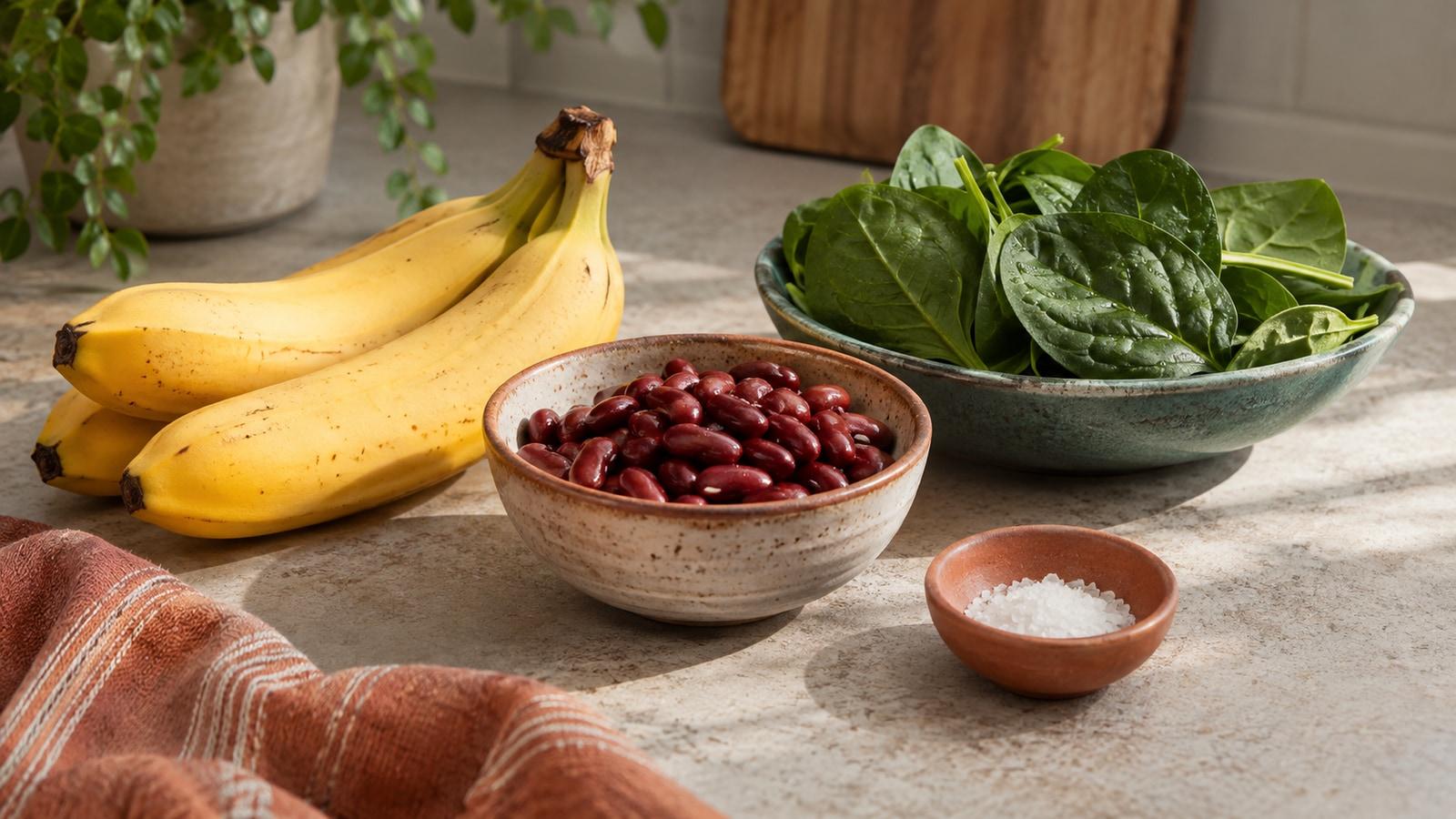
Potassium is also found in many ordinary foods. Our guide to potassium-rich foods beyond bananas has examples. Follow any individual advice you've been given rather than assuming everyone needs the same food restrictions.
Does a workout require an electrolyte drink?
Not automatically. Needs depend on the activity, weather, duration, individual health and how much fluid is lost. Marketing can make a supplement sound necessary after every walk, but a drink's label is not a personal assessment of your needs.
Look at what is in the product, including serving size, sodium, potassium and added sugar, and think about the situation in which you would use it. If you have a fluid restriction or have been given instructions for a health condition, follow that plan and ask before adding a concentrated product.
If you're exercising in heat, take the conditions seriously. Stop activity and move to a cool place if you feel faint or weak, and seek medical help for concerning heat symptoms. If someone collapses or becomes confused in the heat, call 911 and move them to a cooler place. A product alone doesn't make it safe to continue when you feel unwell.
Blood levels and food choices aren't a simple equation
Your clinician may order a blood test that includes sodium and potassium. A result outside the reference range can have several possible causes, including changes in fluid balance, medications or health conditions. It takes context to understand it.
Don't try to correct a result by taking a supplement or avoiding a food group without asking the clinician who ordered the test. Too much as well as too little potassium can be harmful, and an abnormal sodium result is not necessarily solved by adding or removing table salt.
If you take a GLP-1 medicine and vomiting or diarrhea makes it hard to drink, contact your care team. If you cannot keep fluids down, seek urgent medical care. Your team can advise you based on your symptoms, medications and any existing fluid guidance.
Questions worth asking
If you're unsure what applies to you, bring the actual product or a photo of its label to an appointment. Ask whether you need a sodium or potassium target, whether a supplement or salt substitute is appropriate, and what to do if you can't keep fluids down.
Sodium and potassium are useful parts of a complex system. For most everyday food decisions, it helps to look at the whole meal and your own health needs instead of treating either mineral as a shortcut to better weight results.