










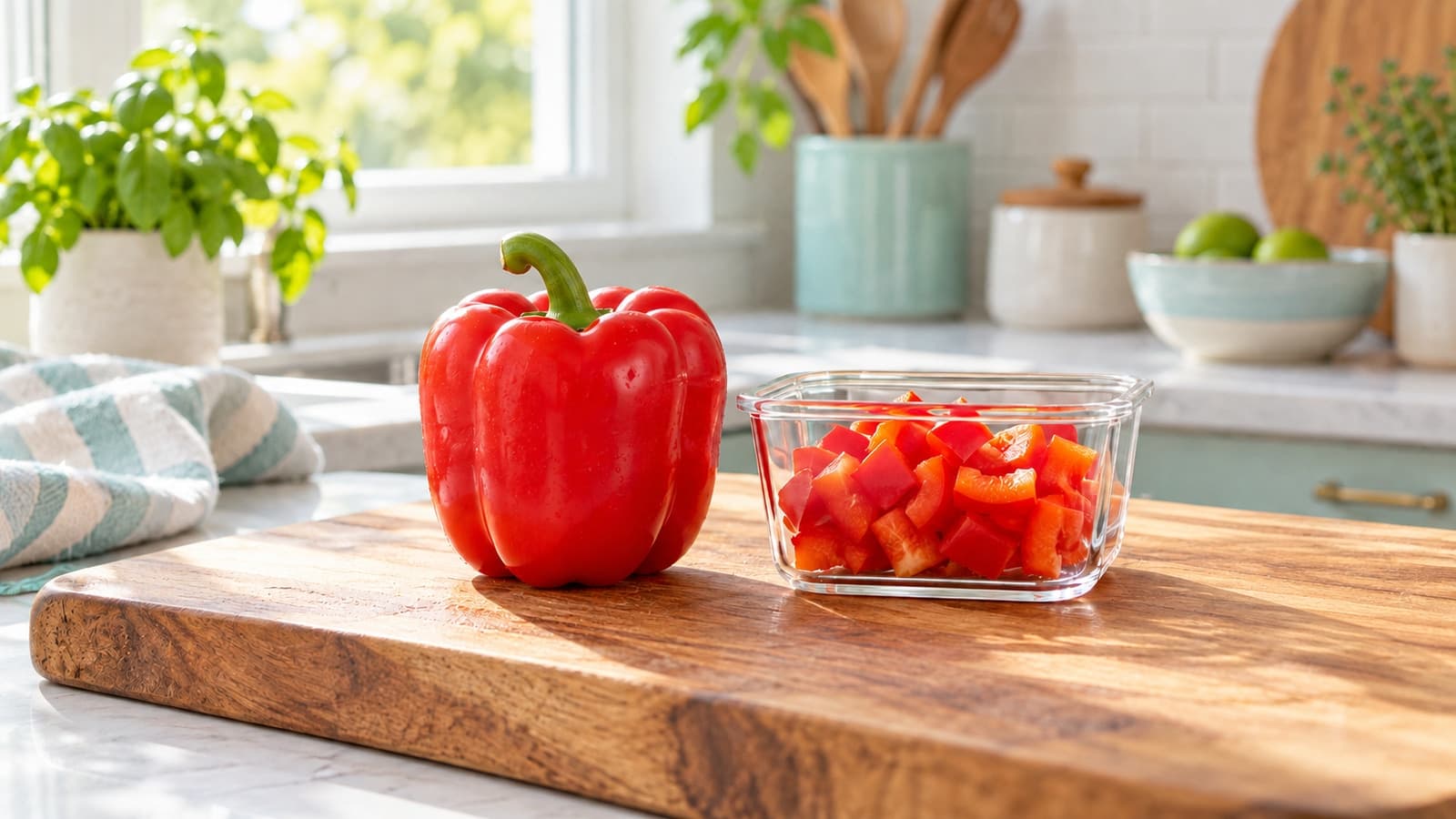
There are two ways to get peppers into tonight’s dinner: buy a whole pepper and chop it, or pick up a container that’s already cut. Imagine the second one costs more per ounce on the shelf. Is it a bad deal?
Not necessarily. It depends on the amount you’ll use, how much time and energy you have, and whether chopping is realistic today. The best deal is the produce you can actually use.
Compare what ends up in the meal
Here’s an imaginary example, not a store price. Suppose a whole pepper costs $3 and weighs 12 ounces. After you remove its stem and seeds, imagine you have eight ounces to eat. That works out to 37.5 cents per usable ounce if you use all of it.
A container of eight ounces of cut pepper might cost $3.50, or about 44 cents per ounce. In this example, the whole pepper costs less when you use the entire prepared amount.
But if you only get around to using four ounces of the whole pepper before the rest spoils, you’ve spent $3 for four ounces used, or 75 cents per ounce used. If you use all eight ounces from the container, its cost per ounce used remains about 44 cents. These are made-up numbers to show the tradeoff; actual sizes, trimming loss and prices vary.
Don’t eat spoiled produce to improve the math. Instead, let the experience guide the next purchase.
Put a value on the work
Pre-cut produce can help on a busy evening, when your hands hurt, or when you have limited access to a cutting board and sink. It may also make a small portion easier to add to a meal. That convenience is something you’re allowed to value.
Whole produce has advantages too. You can cut it the way you like, buy just one piece and often pay less for a given amount. If you already enjoy preparing vegetables, the extra work might not feel like a burden.
Think about your actual week. A container of sliced peppers could go into an omelet and a rice bowl. A whole pepper could become a snack and part of a stir-fry. If neither plan sounds appealing, another vegetable may be a better buy.
Keep the comparison flexible
Frozen vegetables are another useful option. You can pour out a small amount and return the rest to the freezer, following the package directions. Some are plain; others come with sauce or seasoning, so check ingredients if that matters to you.
For a smaller appetite on a GLP-1, convenience doesn’t have to mean buying a giant tray. A small bag of baby carrots, a single whole cucumber or a modest package of cut vegetables might fit better. The goal is to have food ready when you want it, with enough variety to make eating enjoyable.
Check the total price as well as the unit price. A package that costs less per ounce can still exceed this week’s budget or take up more refrigerator space than you have.
Shop and store safely
Choose fresh-cut produce from the refrigerated section and check that its package is intact. Keep it away from raw meat and refrigerate it promptly at home. Follow the package directions and use-by information.
For whole produce, wash it under running water before cutting, even if you don’t eat the peel. Use a clean board and knife. Refrigerate cut produce in a covered container within two hours, or within one hour if the temperature is above 90°F.
Our budget-friendly shopping guide has more ideas for planning around your week. Buy convenience when it helps and do the chopping yourself when that works better. Either way, dinner gets a vegetable.